Website Development: Why Your Website Feels Hard to Manage
2026.05.06
Many businesses focus heavily on launching a website.
The design matters. The branding matters. The first impression matters.
But after the website goes live, another issue often begins to appear.
Managing the website becomes difficult.
At first, the problems seem small.
Updating content takes longer than expected. Making simple edits becomes frustrating. Adding new pages feels complicated.
Over time, these issues begin to affect daily operations.
And eventually, the website becomes something the business avoids touching altogether.
This happens more often than many companies realise.
Because a website is not only something users interact with.
It is also something the business needs to manage continuously.
Why websites become harder to manage over time
Most websites are initially built around launch goals.
Businesses focus on how the site looks and what it needs to show.
But long-term management is often overlooked.
As the business grows, the website grows with it.
More pages are added. More services are introduced. More content needs updating.
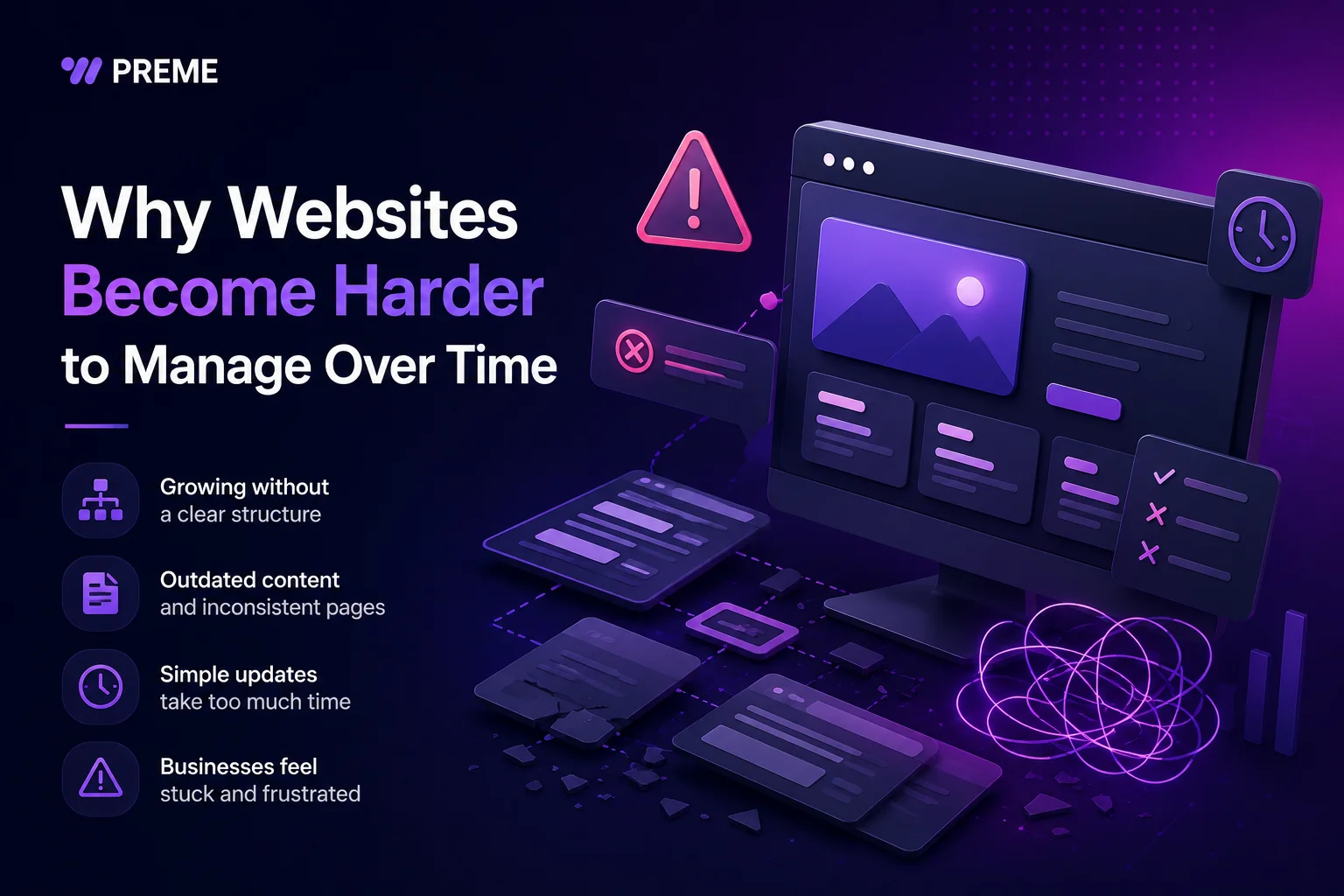
Without a clear structure, the website slowly becomes harder to control.
Navigation becomes inconsistent. Old content stays online. Page layouts stop matching each other.
Eventually, even simple updates require too much time.
This is where many businesses begin to feel stuck.
Why small updates start taking too long
One of the biggest warning signs is when small edits become unnecessarily difficult.
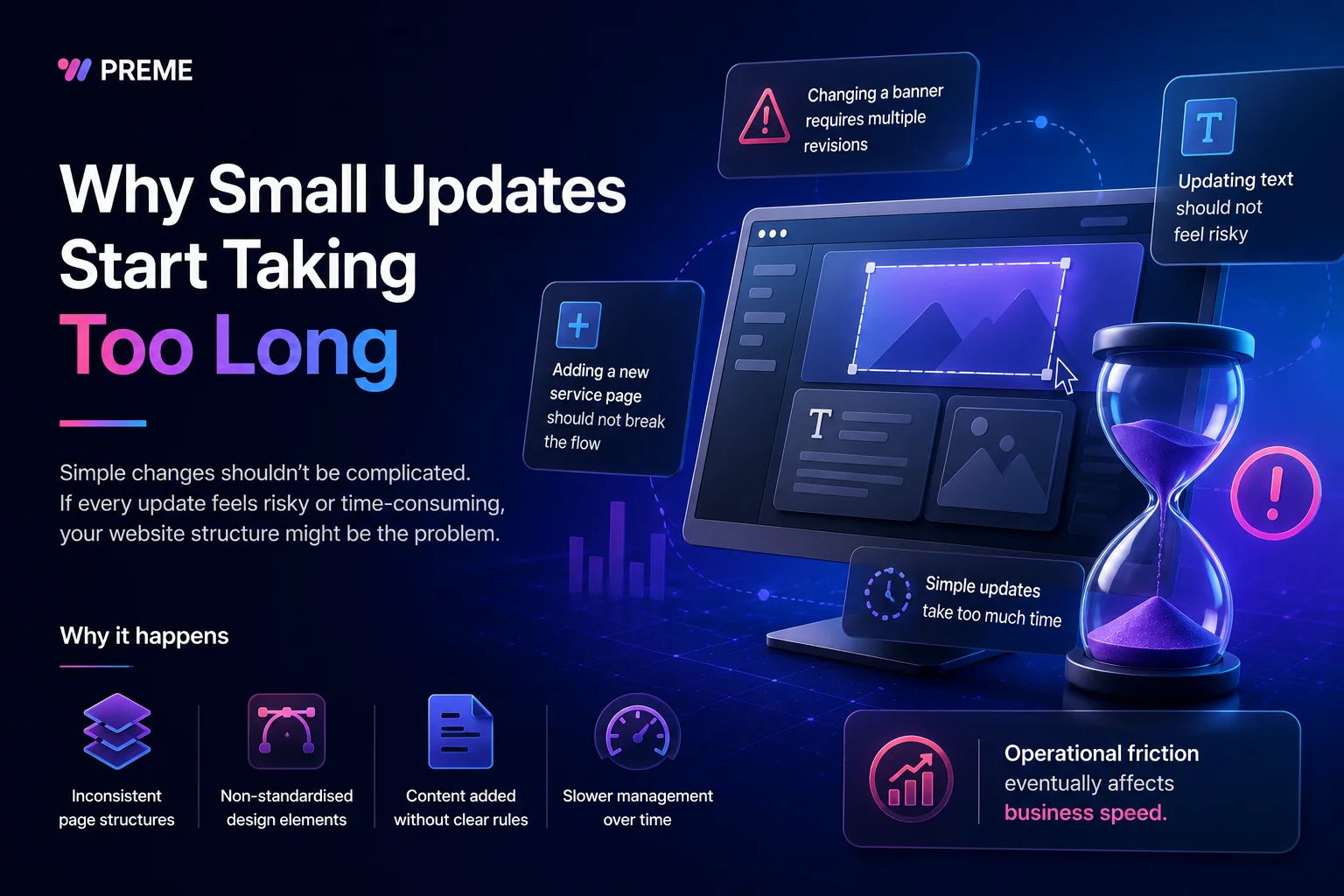
Changing a banner should not require multiple revisions. Updating text should not feel risky. Adding a new service page should not break the flow of the website.
But poorly structured websites create these problems.
In many cases, the issue is not the CMS itself.
It is how the website was organised from the beginning.
When page structures are inconsistent, when design elements are not standardised, when content is added without clear rules,
management becomes slower over time.
This creates operational friction.
And operational friction eventually affects business speed.
Why businesses stop updating their websites
Many companies know their websites need updates.
But they still delay changes.
Not because they do not care.
Because the process feels difficult.
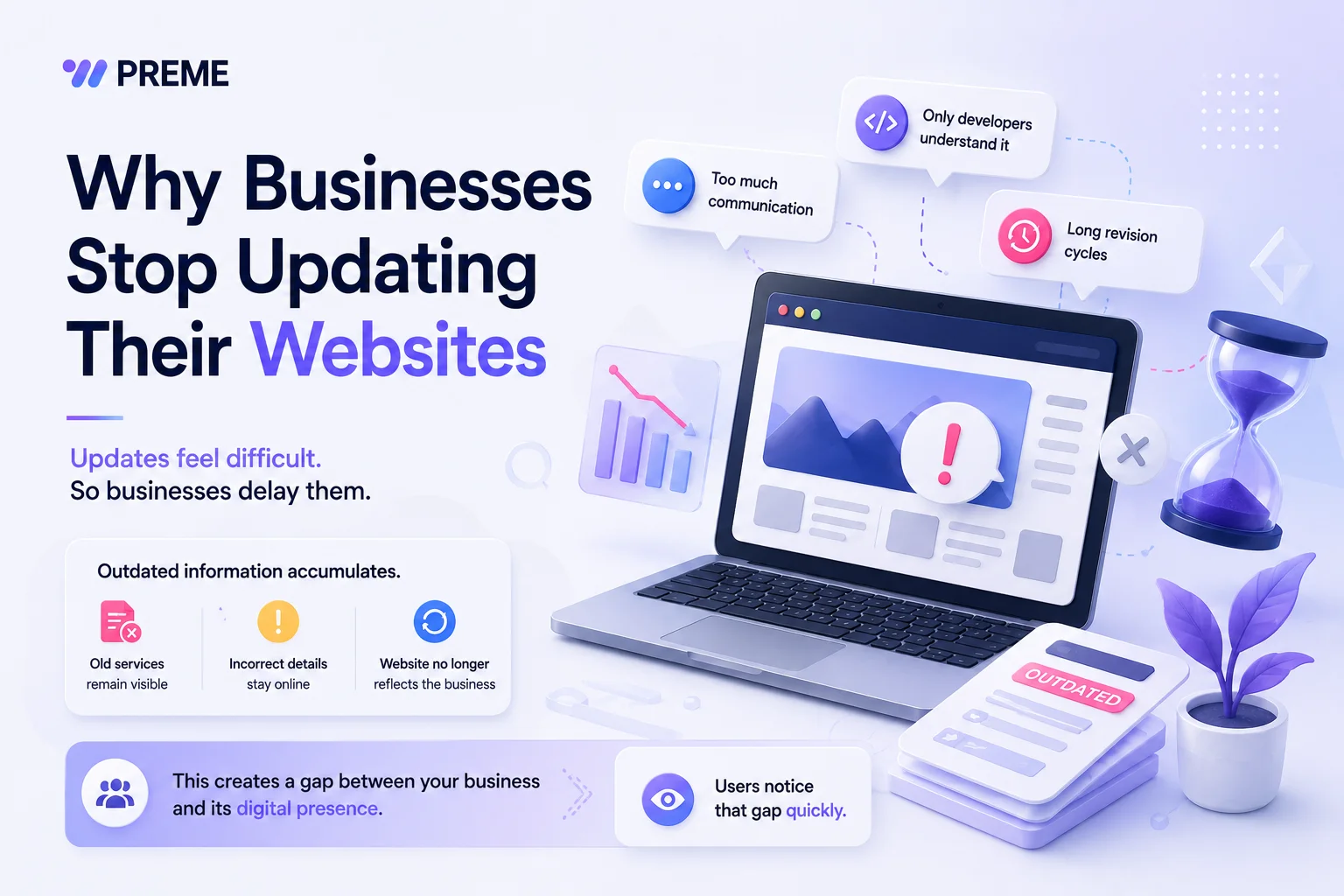
The website becomes something that only developers understand. Small changes require too much communication. Simple requests turn into long revision cycles.
As a result, businesses avoid making updates unless absolutely necessary.
Over time, outdated information begins to accumulate.
Old services remain visible. Incorrect details stay online. The website no longer reflects how the business actually operates.
This creates a gap between the company and its digital presence.
And users notice that gap quickly.
Why structure matters more than features
Many businesses assume website management problems are caused by missing features.
But in reality, structure matters more.
A website with fewer features but clear organisation is usually easier to manage than a complex website with inconsistent structure.
Strong website development focuses on scalability.
Not just visual design.
Pages should follow consistent logic. Content should be easy to update. Navigation should remain clear even as the website grows.
Without these foundations, management becomes harder every year.
Why internal teams struggle with website operations
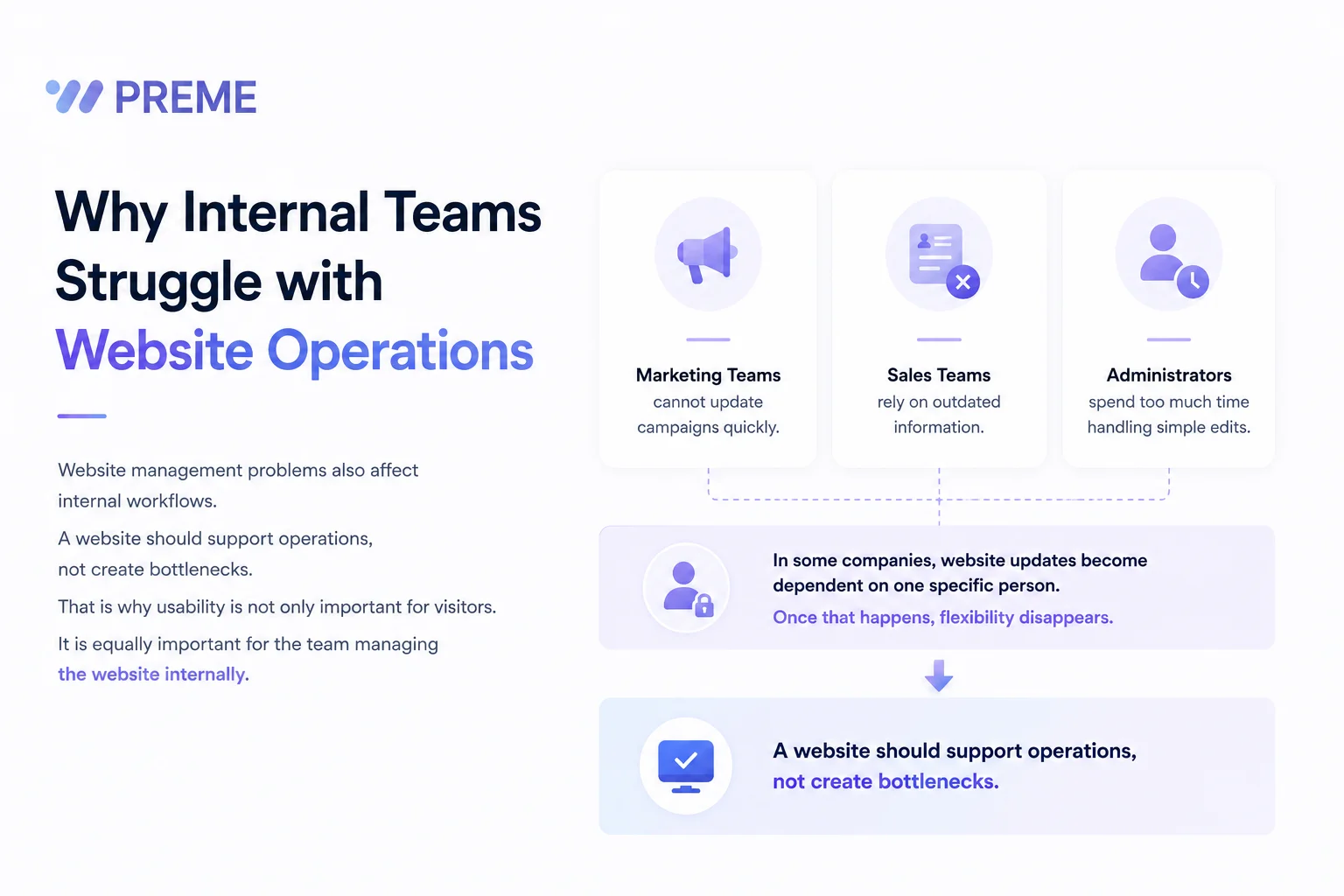
Website management problems also affect internal workflows.
Marketing teams cannot update campaigns quickly. Sales teams rely on outdated information. Administrators spend too much time handling simple edits.
This slows down communication across the business.
In some companies, website updates become dependent on one specific person.
Once that happens, flexibility disappears.
A website should support operations, not create bottlenecks.
That is why usability is not only important for visitors.
It is equally important for the team managing the website internally.
Why website management affects growth
Website management may seem like an internal issue, but it can directly affect business growth.
When updates are slow, new services are not promoted quickly. When content is outdated, potential customers receive the wrong impression. When internal teams cannot edit key pages easily, marketing opportunities are missed.
This becomes more serious as the business grows.
A company may launch new offers, enter new markets, hire new staff, or change its sales process. If the website cannot keep up with those changes, it starts holding the business back.
The website should support growth, not slow it down.
That is why website development needs to consider not only what the site looks like at launch, but how the business will manage it after launch.
Why scalable website development matters
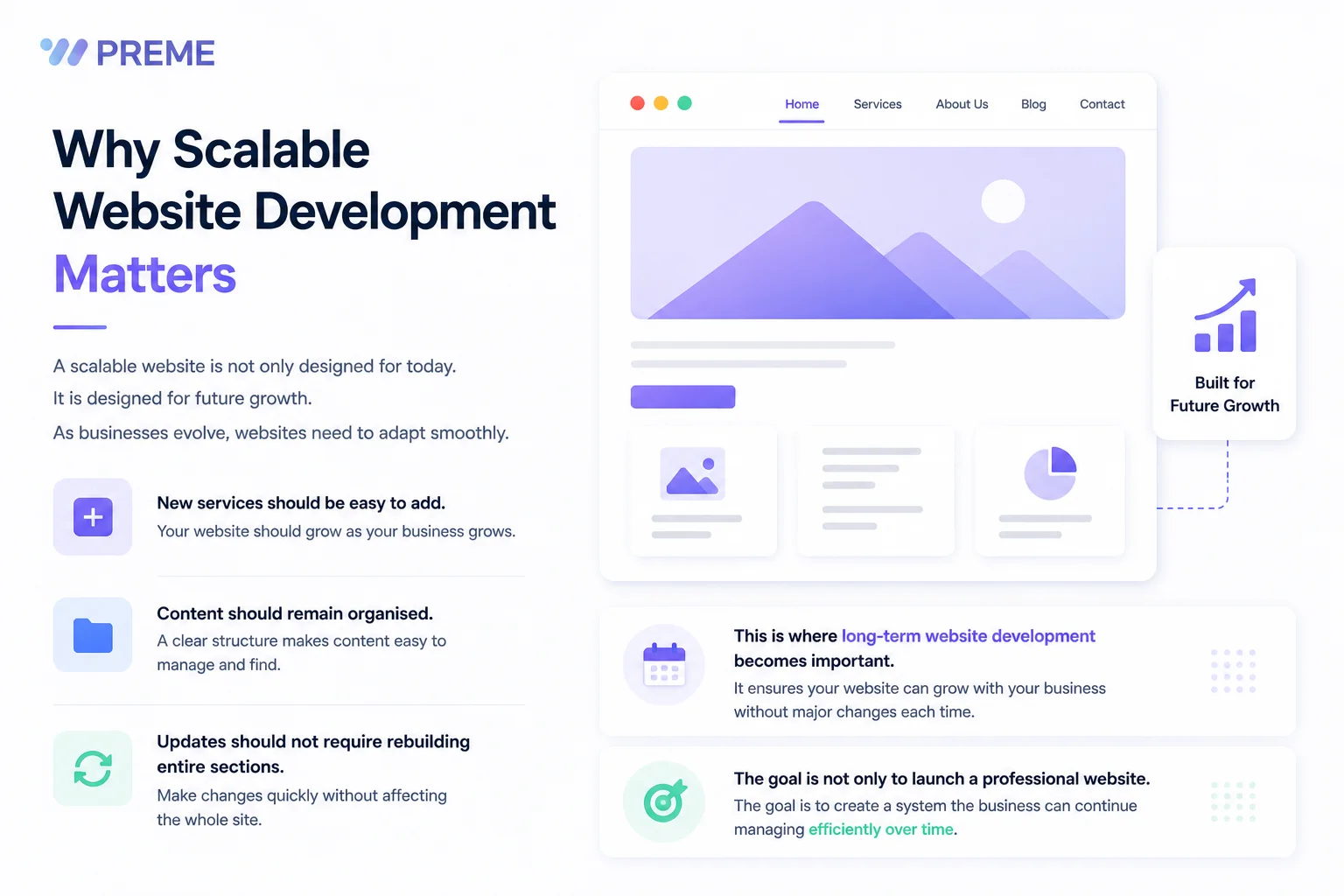
A scalable website is not only designed for today.
It is designed for future growth.
As businesses evolve, websites need to adapt smoothly.
New services should be easy to add. Content should remain organised. Updates should not require rebuilding entire sections.
This is where long-term website development becomes important.
The goal is not only to launch a professional website.
The goal is to create a system the business can continue managing efficiently over time.
A website should become easier to manage as the business grows, not harder.
When management becomes frustrating, the issue is usually not one feature or one page.
It is the overall structure behind the website.