Website Development: Why Your Website Still Feels Outdated
2026.05.04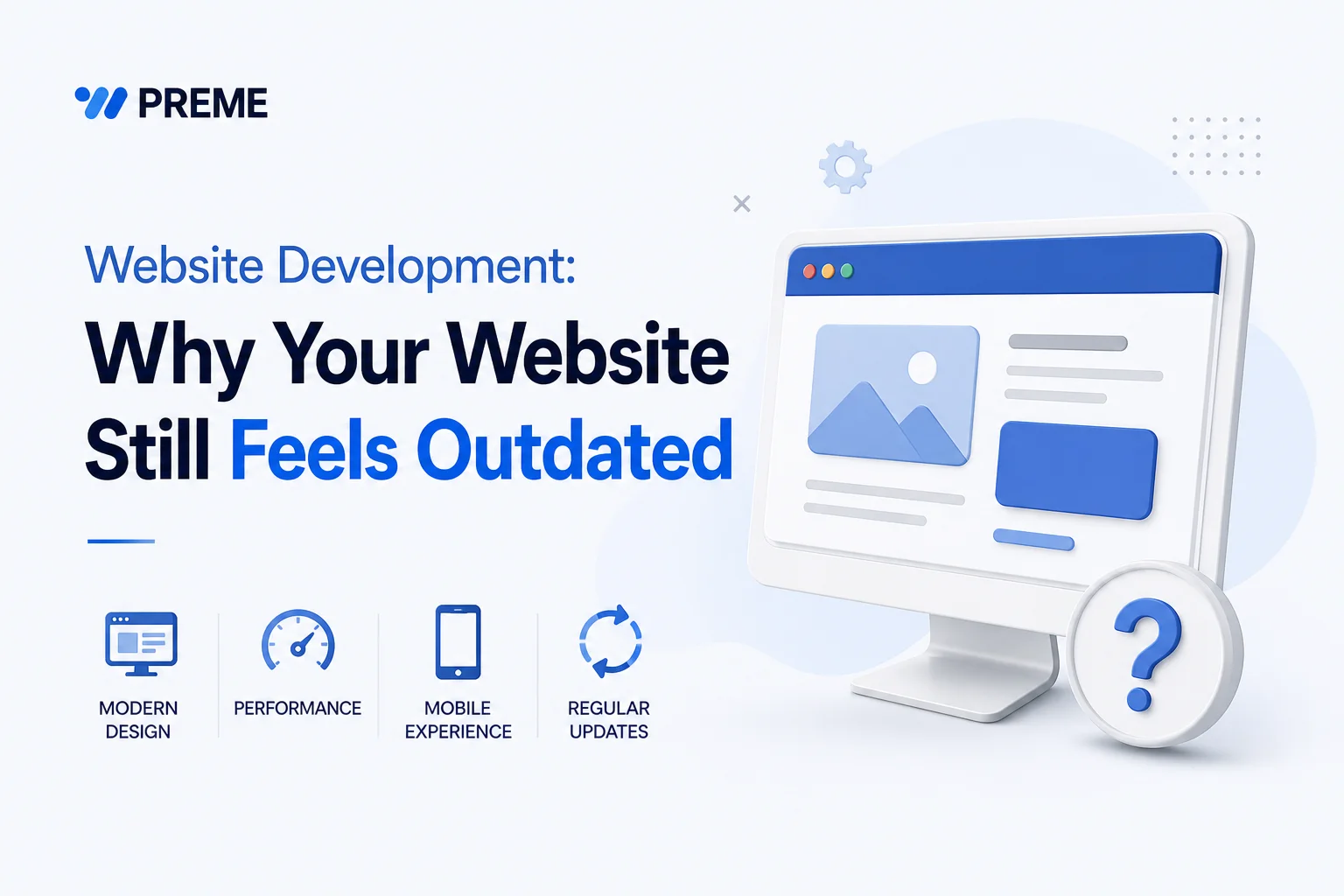
Many businesses invest in building a website and expect it to last for years.
At first, everything works as expected. The design feels clean. The content is clear. The structure seems organised.
But over time, something changes.
Visitors still arrive, but their behaviour shifts. They leave faster. They engage less. Enquiries become inconsistent.
At this point, it is common to assume the issue is traffic or marketing.
But in many cases, the real issue is how the website is perceived.
The site still functions. But it no longer feels current.
And that difference affects how users respond.
Why your website looks fine, but feels outdated
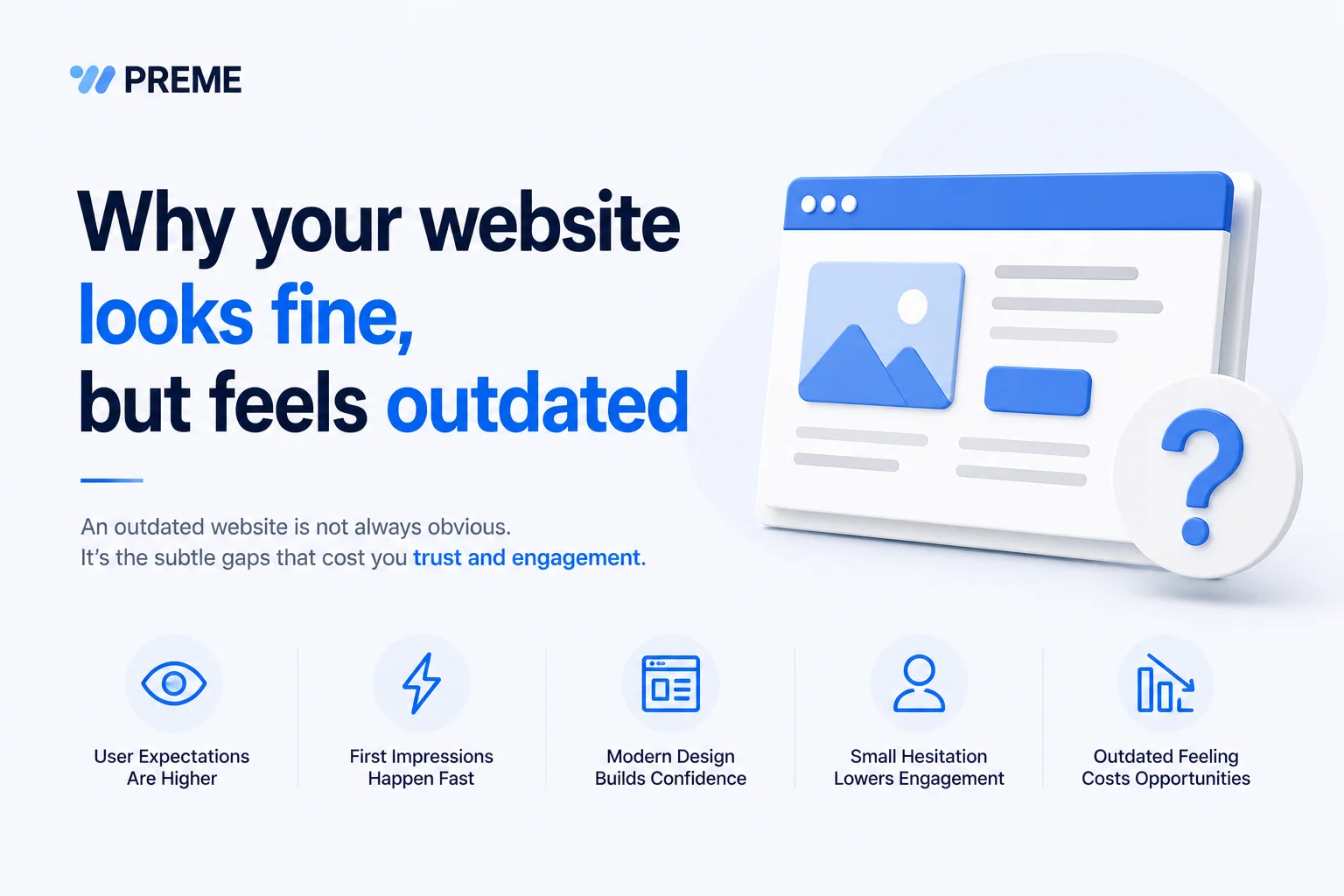
An outdated website is not always visually obvious.
It does not have to look broken or poorly designed.
In fact, many outdated websites still appear “acceptable” at first glance.
But users today evaluate websites much faster than before.
They are constantly exposed to modern digital experiences. Fast loading pages. Clear messaging. Simple navigation.
When a website does not match that expectation, the gap becomes noticeable.
Not as a clear problem, but as hesitation.
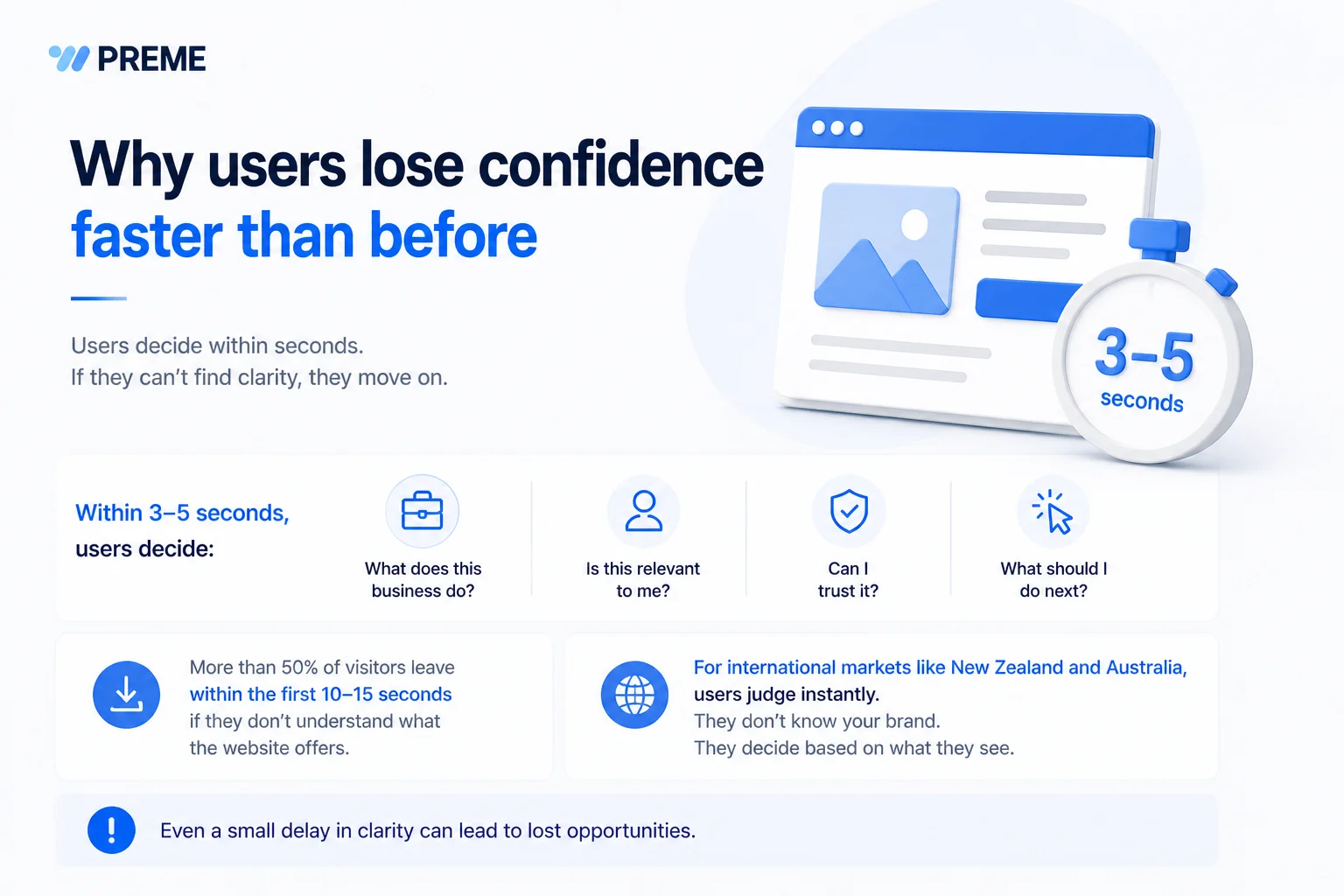
Within 3–5 seconds, users decide:
What does this business do? Is this relevant to me? Can I trust it? What should I do next?
If those answers are not immediately clear, they leave.
In many cases, more than 50% of visitors leave within the first 10–15 seconds when they do not understand what the website offers.
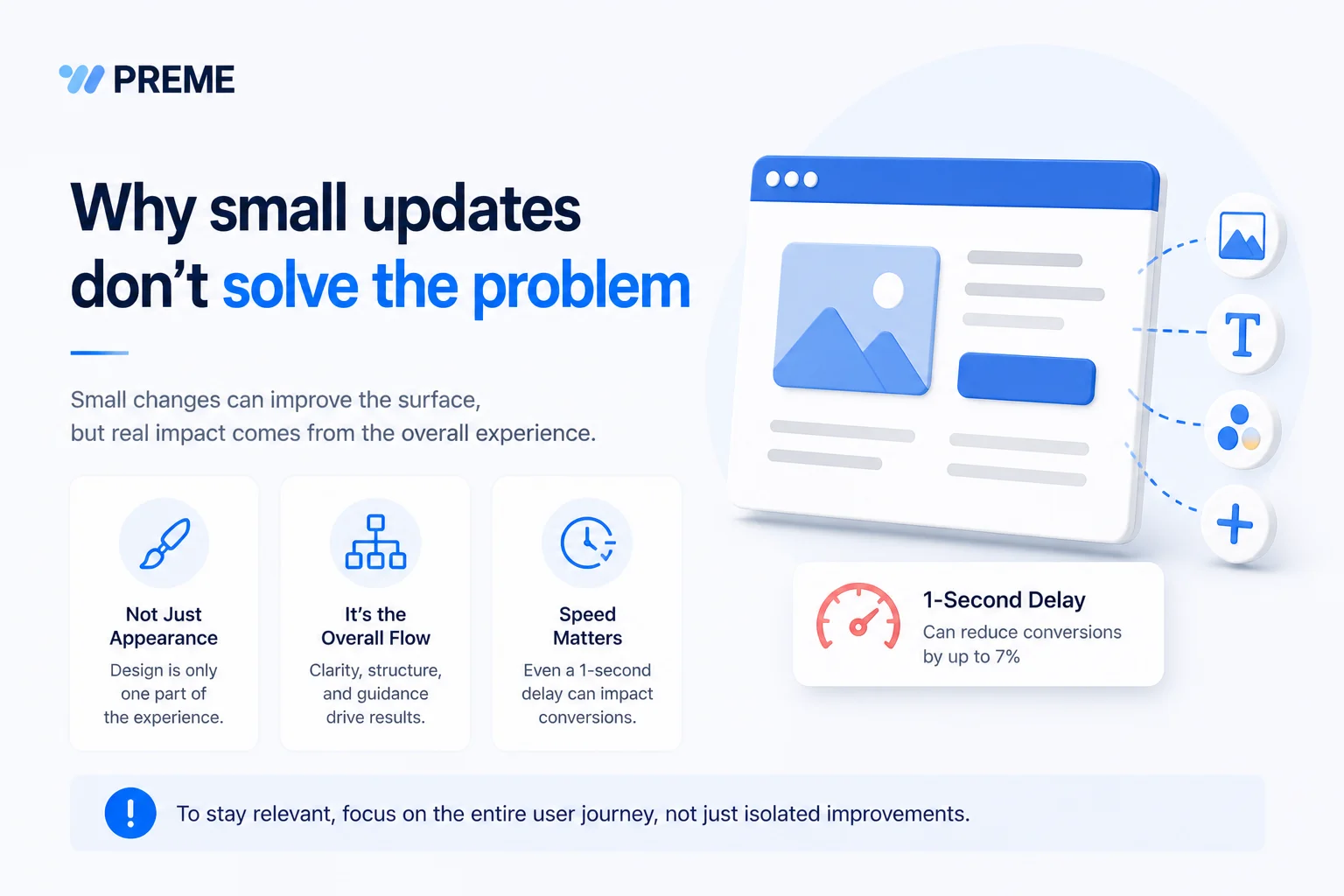
Why small updates don’t solve the problem
Many businesses respond by making small changes.
They update images. Rewrite some text. Adjust colours or add new sections.
These updates can improve appearance, but they rarely fix the issue.
Because the problem is not one element.
It is the overall experience.
If the flow of information feels slow, if the message is unclear, if users do not know what to do next,
then small updates only patch the surface.
Modern websites are not judged by how they look alone.
They are judged by how quickly users can understand and act.
Without improving that flow, the website will continue to feel outdated.
Even a 1-second delay in page load time can reduce conversions by up to 7%, which shows how sensitive users are to small friction points.
Why users lose confidence faster than before
User behaviour has changed significantly.
People no longer try to “figure out” a website.
They expect clarity immediately.
This is especially important in international markets.
In regions like New Zealand and Australia, users rely heavily on websites to evaluate credibility.
They do not have prior knowledge of your business. They do not recognise your brand.
They judge based only on what they see.
If clarity is delayed, confidence drops. If confidence drops, action stops.
This is why websites that once performed well can slowly lose effectiveness.
Why structure matters more than design alone
Many assume an outdated website is a design problem.
But in most cases, it is a structure problem.
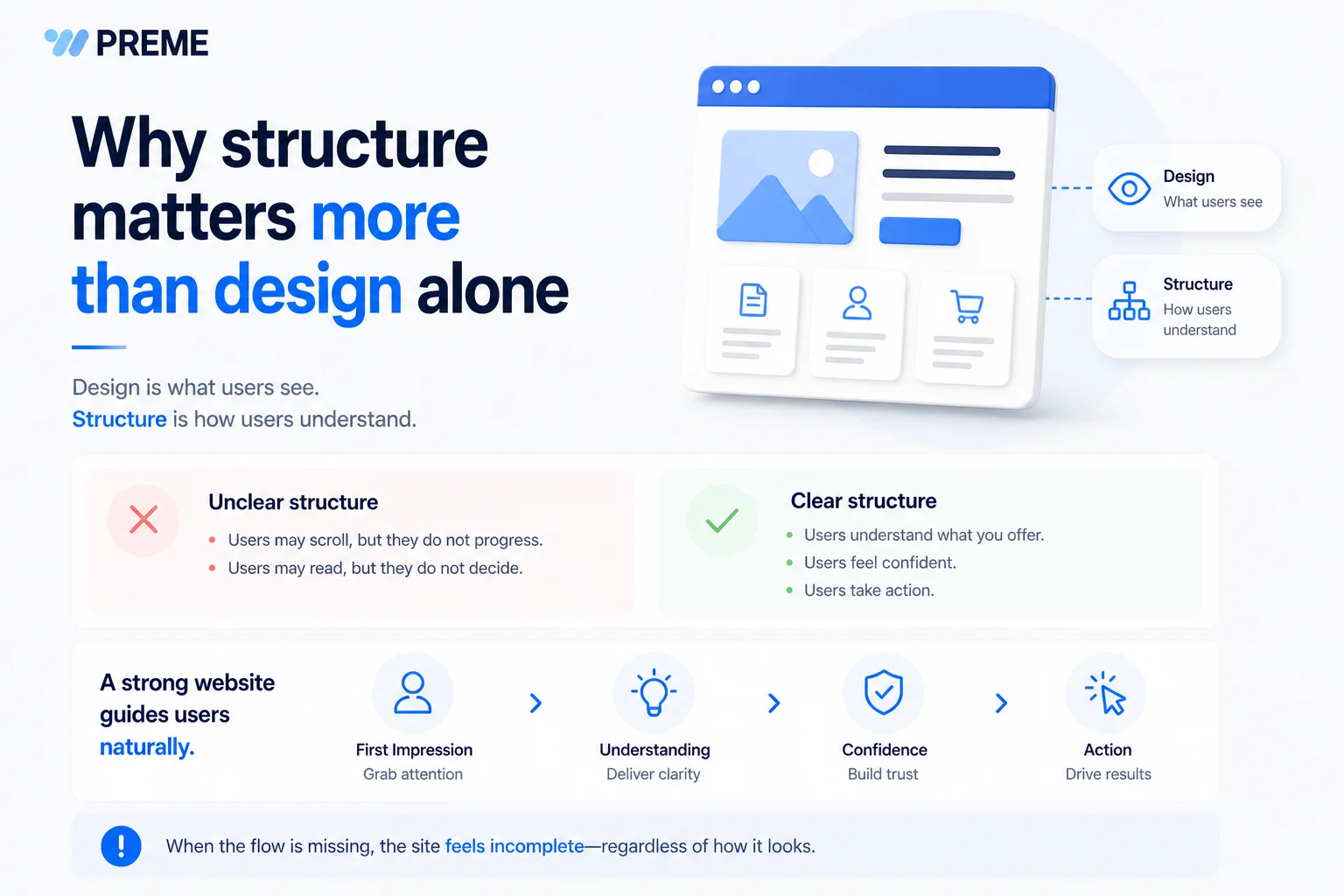
Design is what users see. Structure is how users understand.
A visually modern website with unclear structure will still feel outdated.
Because users cannot move forward.
They scroll, but they do not progress. They read, but they do not decide.
A strong website guides users naturally.
From first impression to understanding to confidence to action
If that flow is missing, the website feels incomplete, regardless of how it looks.
Why internal updates often fall behind
Why outdated websites quietly lose business
Many businesses do not notice the impact immediately.
The website still receives traffic. It still appears functional. Nothing seems obviously broken.
But the problem shows up in small signals.
Fewer enquiries than before. Shorter session times. More users leaving without taking action.
This is where outdated websites become risky.
They do not fail loudly.
They fail quietly.
Opportunities are lost without clear warning.
Potential customers leave without contacting. Comparisons happen, but decisions go elsewhere.
From the outside, it looks like the market is slowing down.
In reality, the website is no longer supporting decisions effectively.
This is why outdated websites are often underestimated.
Because the impact is gradual, not immediate.
And by the time it becomes obvious, the gap has already grown.
Another reason websites feel outdated is not technical, but operational.
Businesses evolve over time.
Services change. Pricing adjusts. Processes improve.
But the website often stays the same.
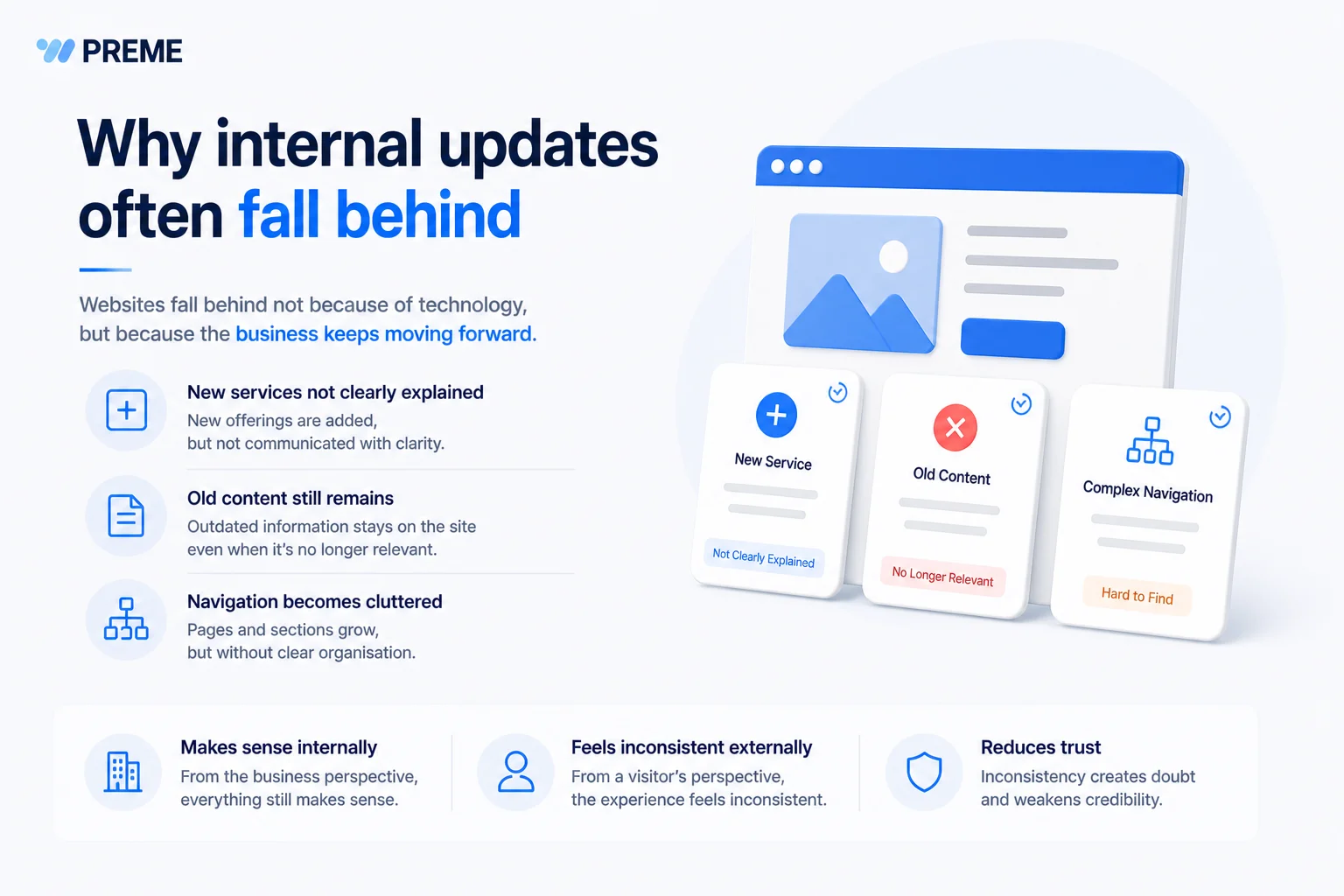
New services are added but not clearly explained. Old content remains even when it is no longer relevant. Navigation becomes more complex over time.
From the business perspective, everything still makes sense.
But from a visitor’s perspective, it feels inconsistent.
And inconsistency reduces trust.
When it’s time to rethink, not just refresh
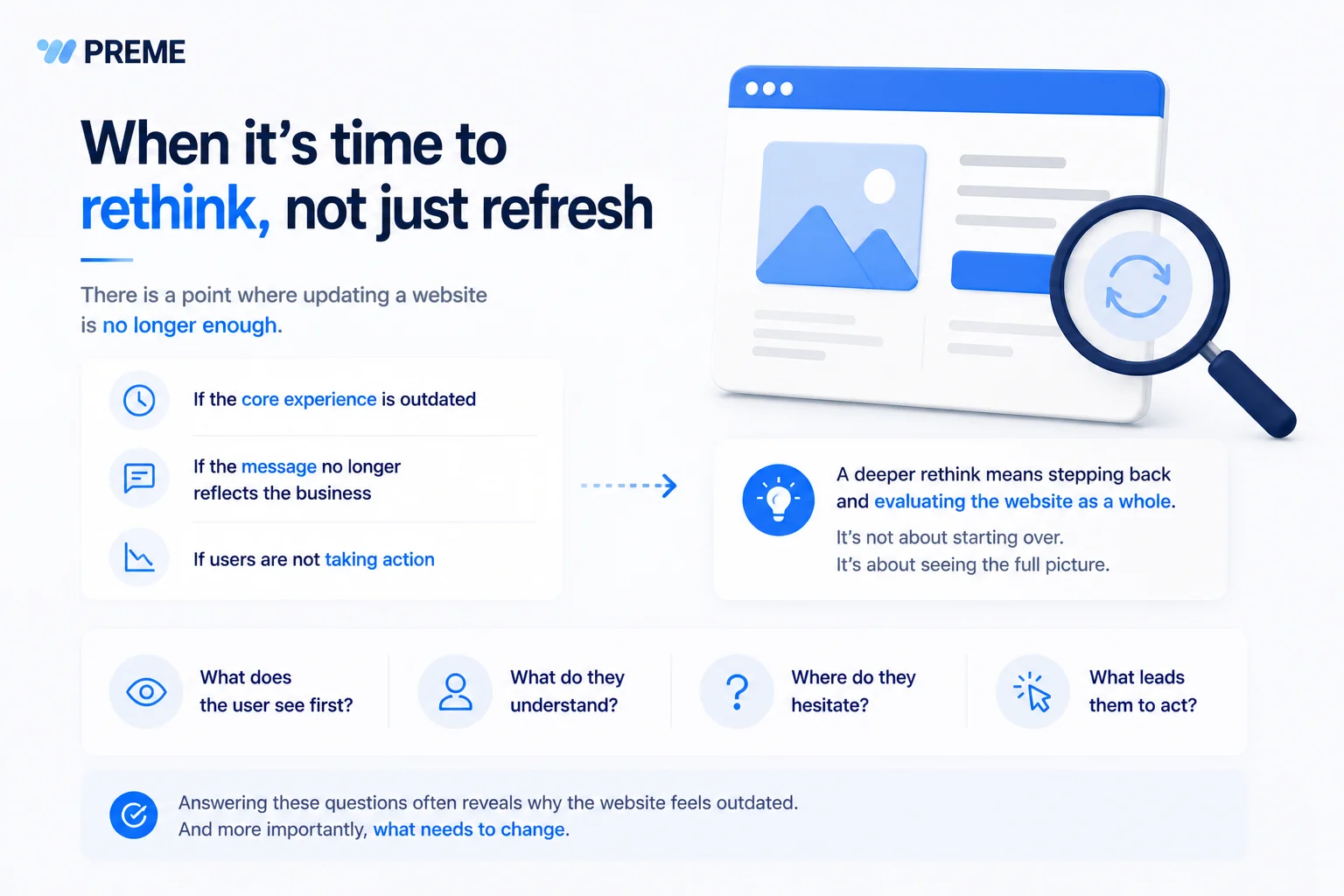
There is a point where updating a website is no longer enough.
If the core experience feels slow, if the message no longer reflects the business, if users hesitate instead of acting,
then a deeper rethink is needed.
This does not always mean rebuilding everything.
But it does require stepping back and evaluating the entire experience.
What does the user see first? What do they understand? Where do they hesitate? What leads them to act?
These questions reveal where the website is falling behind.
A website does not become outdated because it is old. It becomes outdated when it no longer matches how users make decisions.