Business Website: Why Some Companies Look More Trustworthy Online
2026.05.07
Many businesses offer great services.
They have experience. They have real results. They have strong internal operations.
But online, they do not always appear that way.
Meanwhile, some companies immediately feel more trustworthy.
Even before users read everything. Even before they contact the business.
This difference is not always about company size.
And it is not only about visual design.
In many cases, trust is created through clarity, consistency, and how easily users understand the business.
That is why some websites feel professional immediately, while others create hesitation.
Why users decide trust faster than before
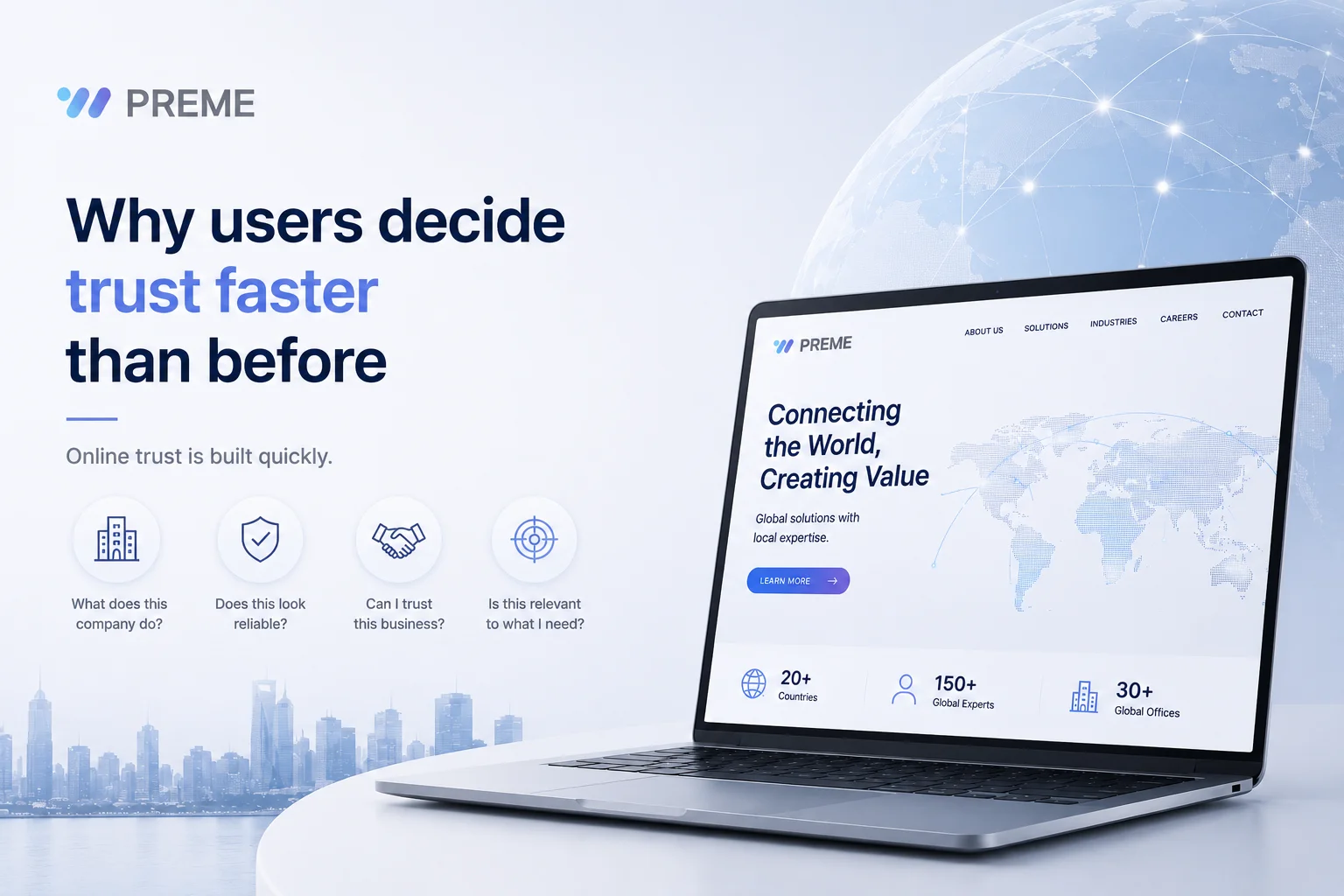
Online trust is built quickly.
Users no longer spend several minutes trying to understand a website.
They make decisions within seconds.
What does this company do? Does this look reliable? Can I trust this business? Is this relevant to what I need?
These questions are answered almost immediately.
If the website feels unclear or disorganised, confidence drops quickly.
Even when the business itself is legitimate.
This is especially important in competitive industries where users compare multiple companies in a short period of time.
The website often becomes the first filter.
And first impressions now carry more weight than before.
Why clarity creates stronger trust
Many businesses try to build trust by adding more information.
More text. More pages. More explanations.
But too much information can create the opposite effect.
When users cannot quickly identify what the business actually offers, uncertainty increases.
Strong business websites usually feel simple.
Not because they contain less information.
But because the information is organised clearly.
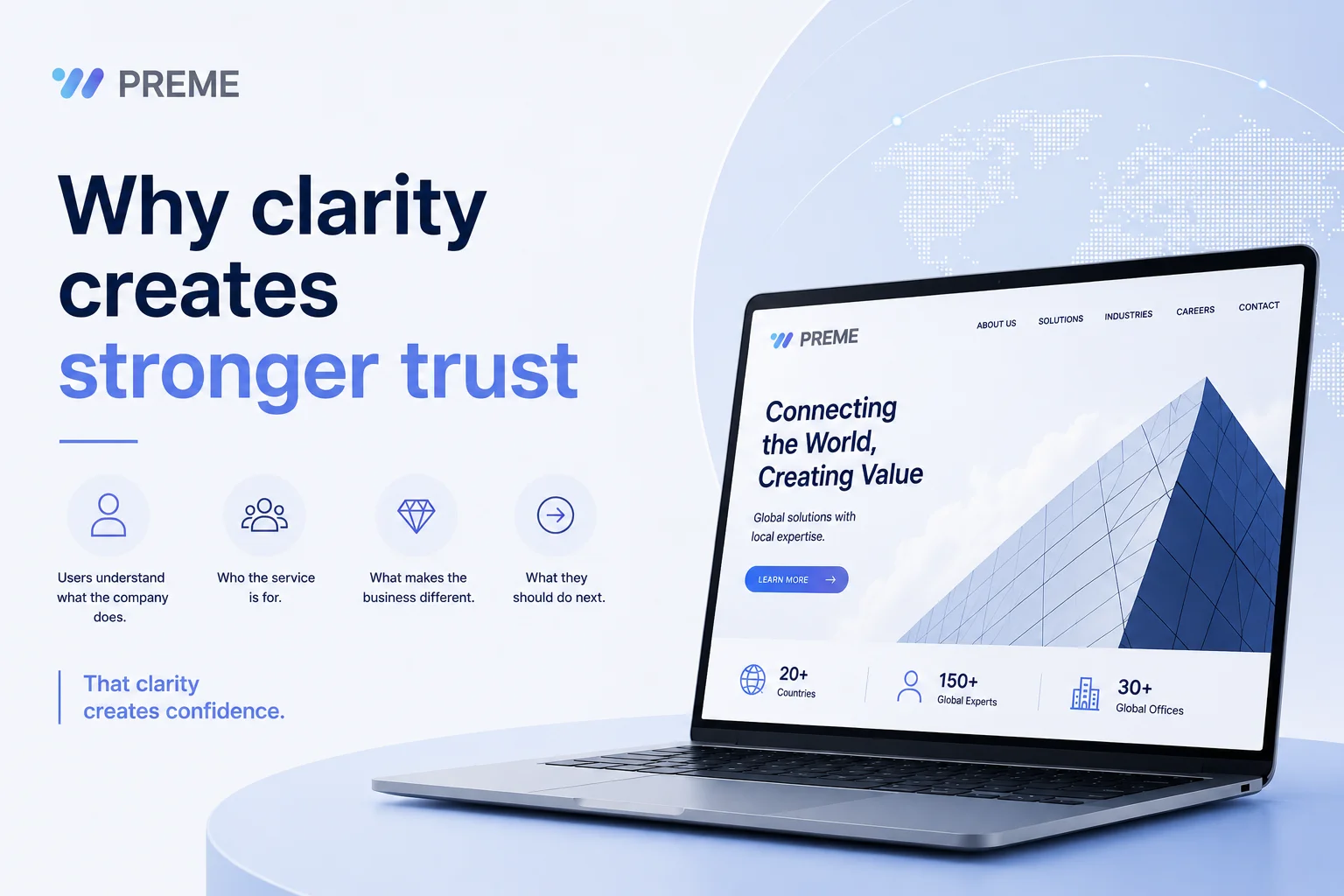
Users understand what the company does. Who the service is for. What makes the business different. What they should do next.
Without confusion.
That clarity creates confidence.
Why consistency matters more than businesses expect
Another major factor is consistency.
Many websites grow over time without maintaining a consistent structure.
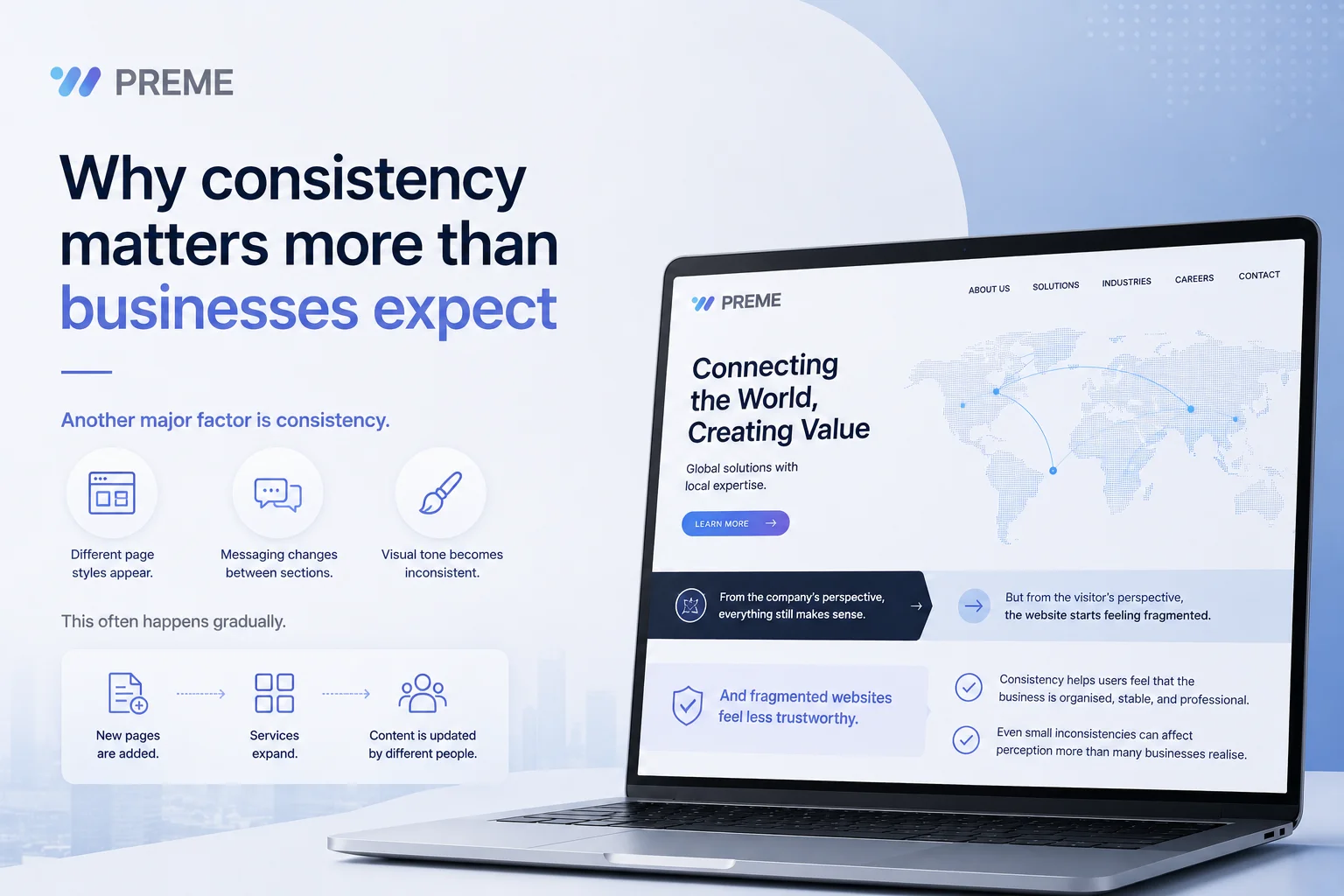
Different page styles appear. Messaging changes between sections. Visual tone becomes inconsistent.
This often happens gradually.
New pages are added. Services expand. Content is updated by different people.
From the company’s perspective, everything still makes sense.
But from the visitor’s perspective, the website starts feeling fragmented.
And fragmented websites feel less trustworthy.
Consistency helps users feel that the business is organised, stable, and professional.
Even small inconsistencies can affect perception more than many businesses realise.
Why trust is affected by small operational details
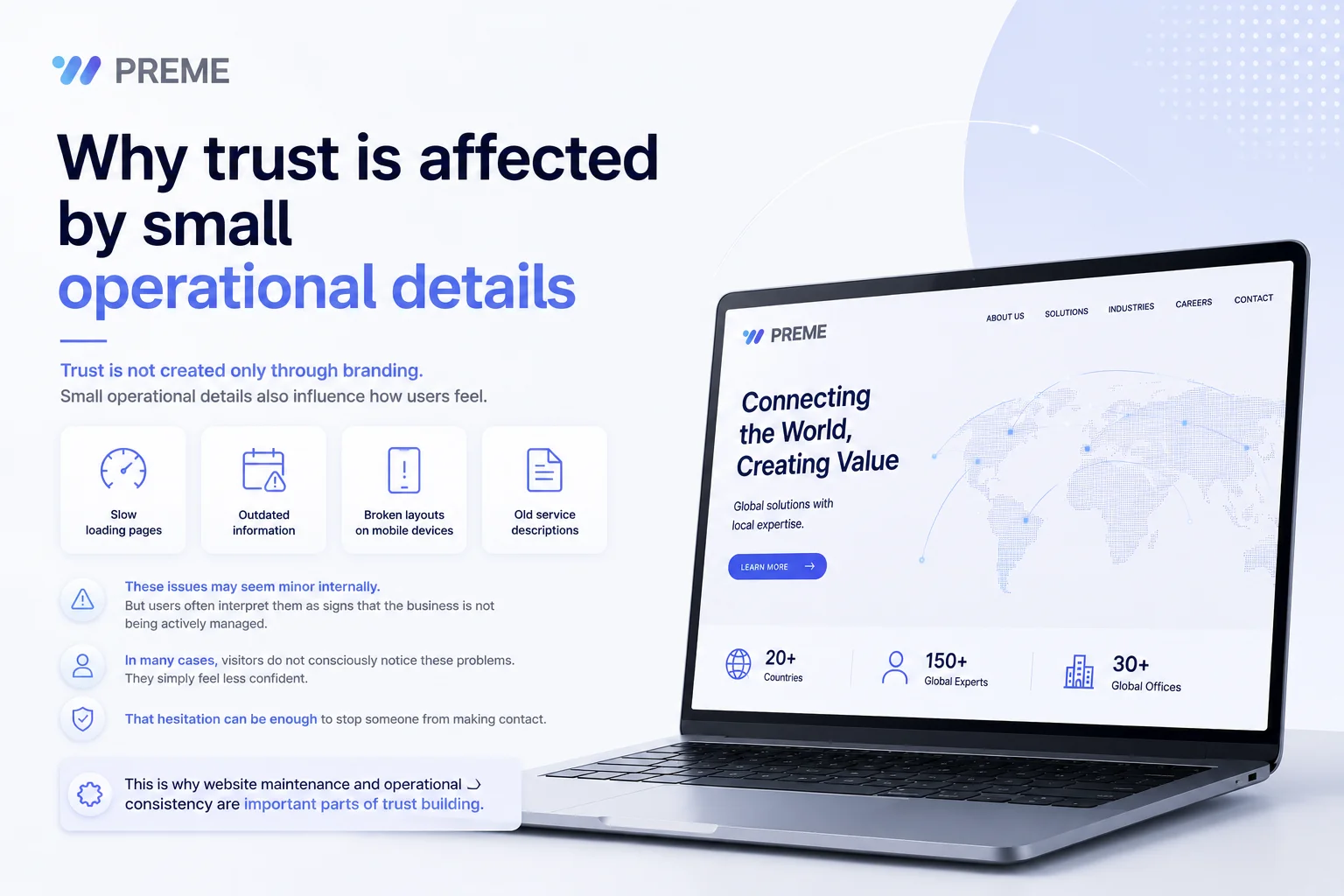
Trust is not created only through branding.
Small operational details also influence how users feel.
Slow loading pages. Outdated information. Broken layouts on mobile devices. Old service descriptions.
These issues may seem minor internally.
But users often interpret them as signs that the business is not being actively managed.
In many cases, visitors do not consciously notice these problems.
They simply feel less confident.
That hesitation can be enough to stop someone from making contact.
This is why website maintenance and operational consistency are important parts of trust building.
Why professional websites guide users naturally
Trustworthy websites usually share one common characteristic.
They guide users naturally.
Visitors know where to look first. They understand the service quickly. Important information appears at the right moment.
The website feels easy to follow.
This does not happen by accident.
It comes from careful structure, content organisation, and user flow planning.
A professional website reduces decision fatigue.
Instead of making users search for answers, it presents information clearly and progressively.
That experience makes the business itself feel more reliable.
Why trust affects enquiries and conversions
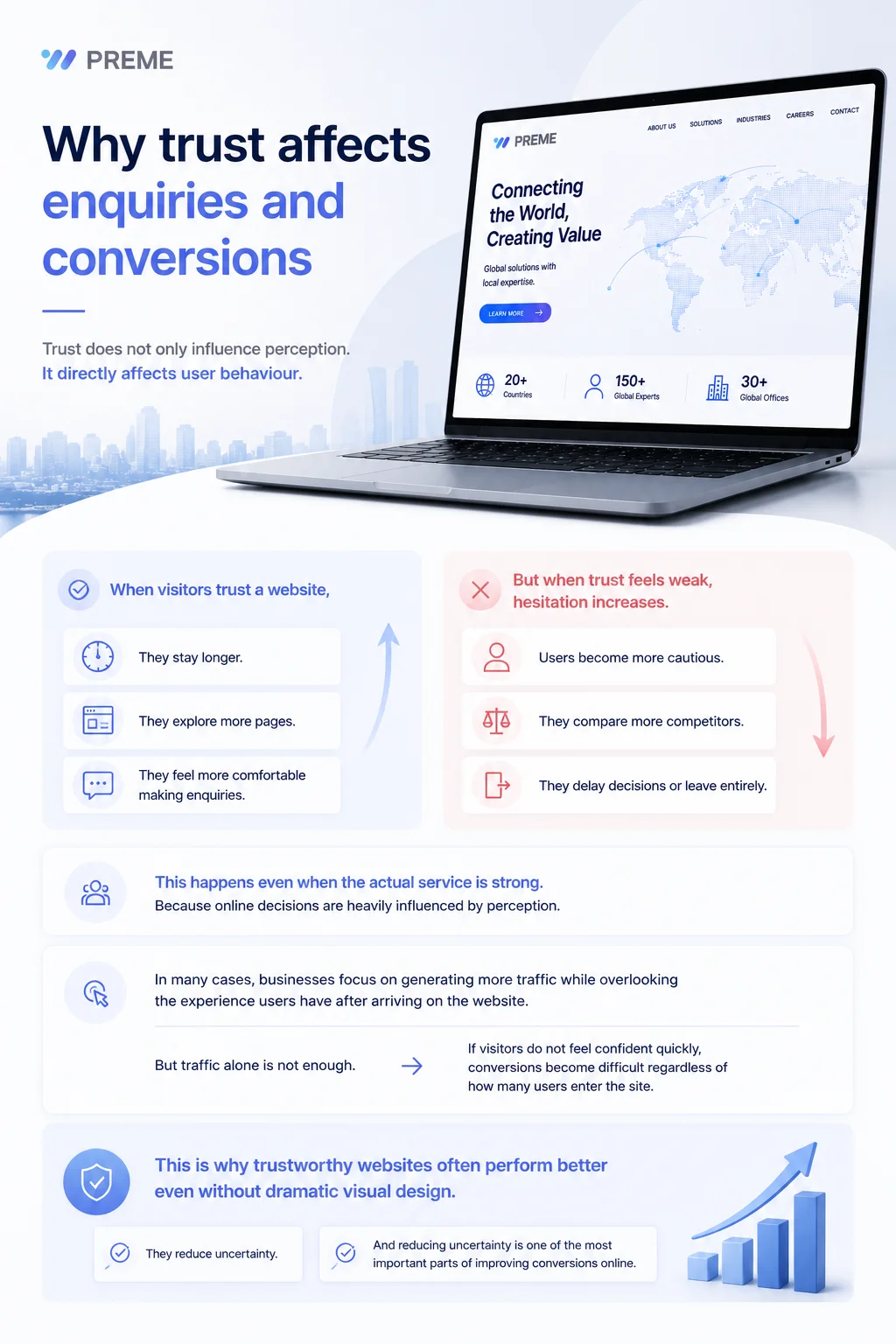
Trust does not only influence perception.
It directly affects user behaviour.
When visitors trust a website, they stay longer. They explore more pages. They feel more comfortable making enquiries.
But when trust feels weak, hesitation increases.
Users become more cautious. They compare more competitors. They delay decisions or leave entirely.
This happens even when the actual service is strong.
Because online decisions are heavily influenced by perception.
In many cases, businesses focus on generating more traffic while overlooking the experience users have after arriving on the website.
But traffic alone is not enough.
If visitors do not feel confident quickly, conversions become difficult regardless of how many users enter the site.
This is why trustworthy websites often perform better even without dramatic visual design.
They reduce uncertainty.
And reducing uncertainty is one of the most important parts of improving conversions online.
Why trust becomes even more important in international markets
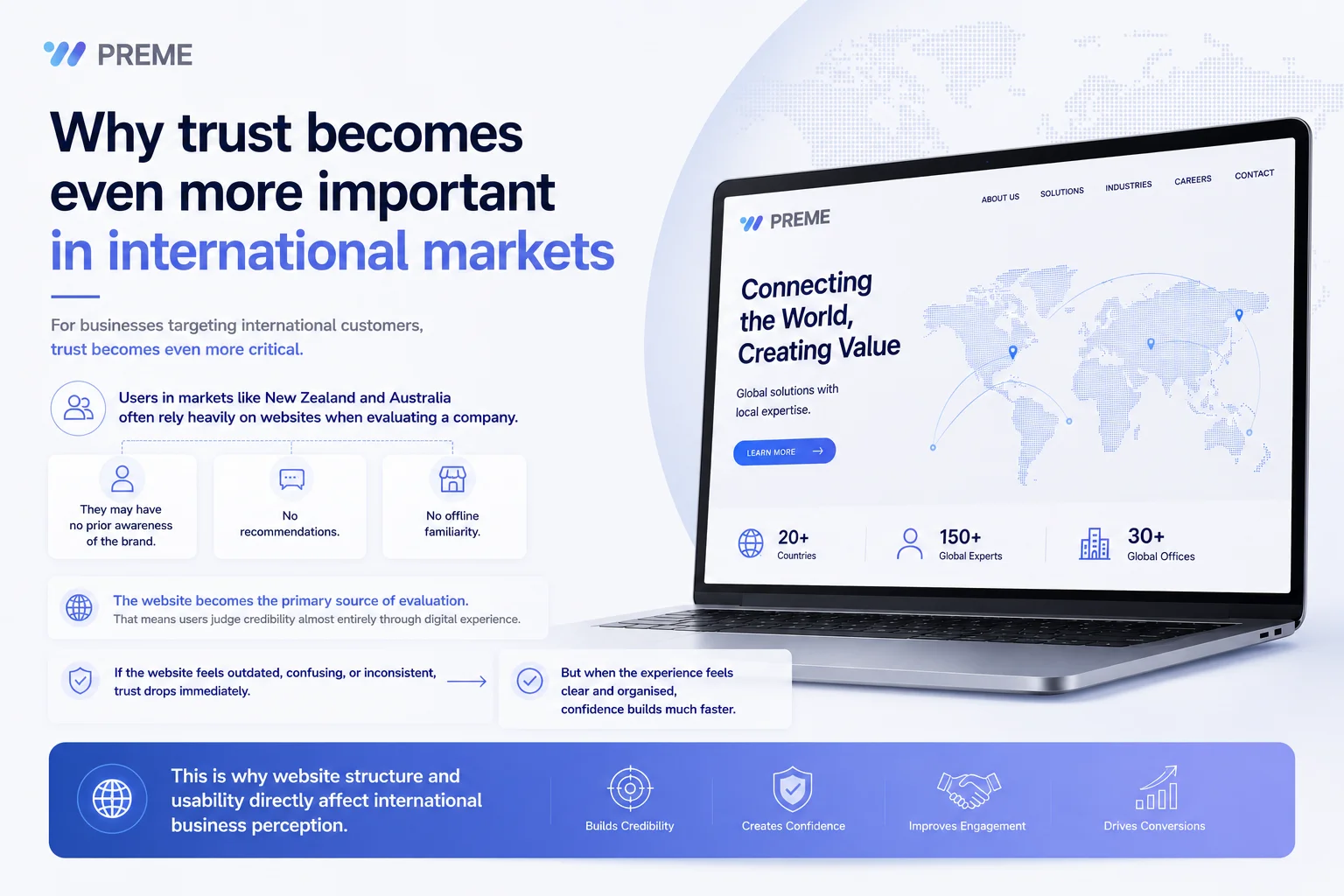
For businesses targeting international customers, trust becomes even more critical.
Users in markets like New Zealand and Australia often rely heavily on websites when evaluating a company.
They may have no prior awareness of the brand. No recommendations. No offline familiarity.
The website becomes the primary source of evaluation.
That means users judge credibility almost entirely through digital experience.
If the website feels outdated, confusing, or inconsistent, trust drops immediately.
But when the experience feels clear and organised, confidence builds much faster.

This is why website structure and usability directly affect international business perception.