Simple Websites Often Create Stronger First Impressions
2026.05.08
Many businesses believe a website needs more information to appear professional.
More pages. More text. More explanations. More features.
At first, this approach seems logical.
Businesses want to show experience, expertise, and credibility.
But in reality, websites often become harder to understand as more content is added.
And when users struggle to understand a website quickly, trust begins to drop.
This is why simple websites often create stronger first impressions.
Not because they contain less value.
But because they make information easier to understand.
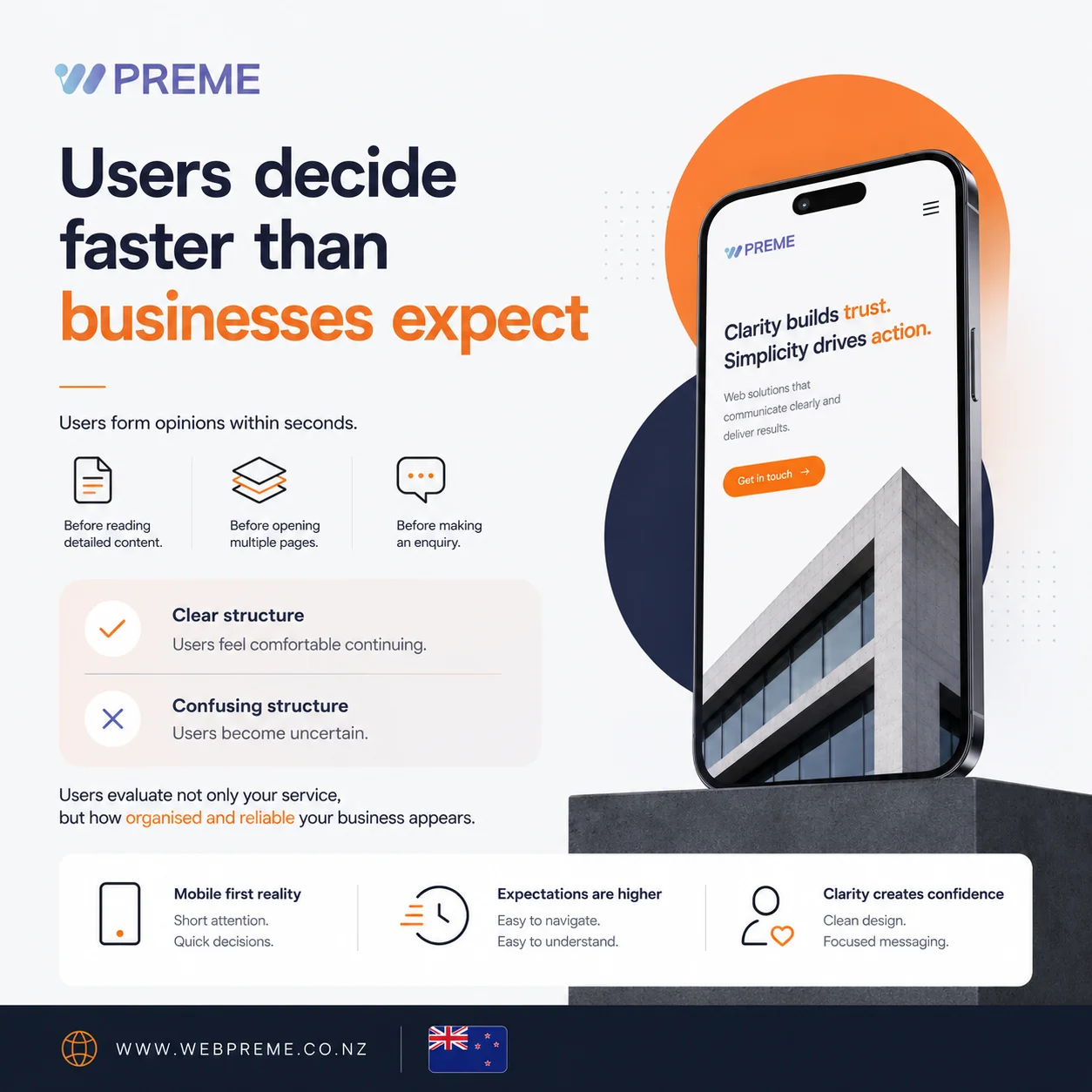
Users decide faster than businesses expect
Many businesses underestimate how quickly users form opinions online.
In most cases, visitors begin judging the website almost immediately.
Before reading detailed content. Before opening multiple pages. Before making an enquiry.
The overall impression is already forming.
If the structure feels clear, users feel comfortable continuing.
If the structure feels confusing, users become uncertain.
This is especially important for service-based businesses and B2B companies.
Users are not only evaluating the service itself.
They are evaluating how organised and reliable the business appears.
A website with clean structure, clear messaging, and focused content often feels more professional than a website overloaded with information.
Even when both businesses offer similar services.
That first impression strongly influences whether users continue exploring or leave the site.
Today, users are exposed to countless websites every day.
Because of this, expectations have changed significantly.
Visitors now expect websites to feel easy to navigate immediately.
If they cannot understand the website quickly, they often leave without exploring further.
This behaviour is becoming even more common on mobile devices, where attention spans are shorter and users interact with content more quickly.
That is why clarity and simplicity are becoming more important than ever before.
Simple websites feel easier to trust
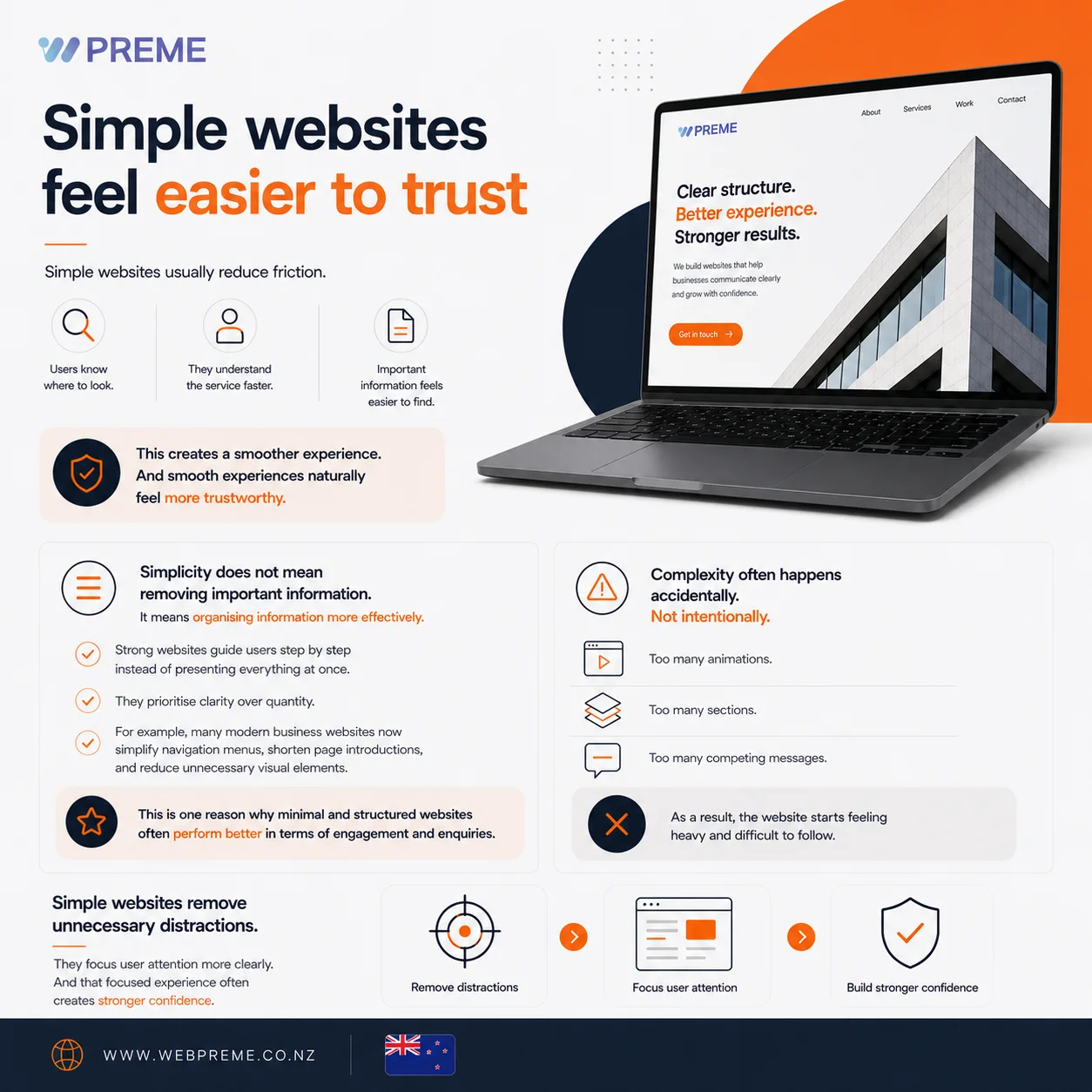
Simple websites usually reduce friction.
Users know where to look. They understand the service faster. Important information feels easier to find.
This creates a smoother experience.
And smooth experiences naturally feel more trustworthy.
Simplicity does not mean removing important information.
It means organising information more effectively.
Strong websites guide users step by step instead of presenting everything at once.
They prioritise clarity over quantity.
For example, many modern business websites now simplify navigation menus, shorten page introductions, and reduce unnecessary visual elements.
Not because businesses have less to say.
But because users respond better when information feels easier to process.
This is one reason why minimal and structured websites often perform better in terms of engagement and enquiries.
In many cases, businesses accidentally create complexity while trying to appear more professional.
They add too many animations. Too many sections. Too many competing messages.
As a result, the website starts feeling heavy and difficult to follow.
Simple websites remove unnecessary distractions.
They focus user attention more clearly.
And that focused experience often creates stronger confidence.
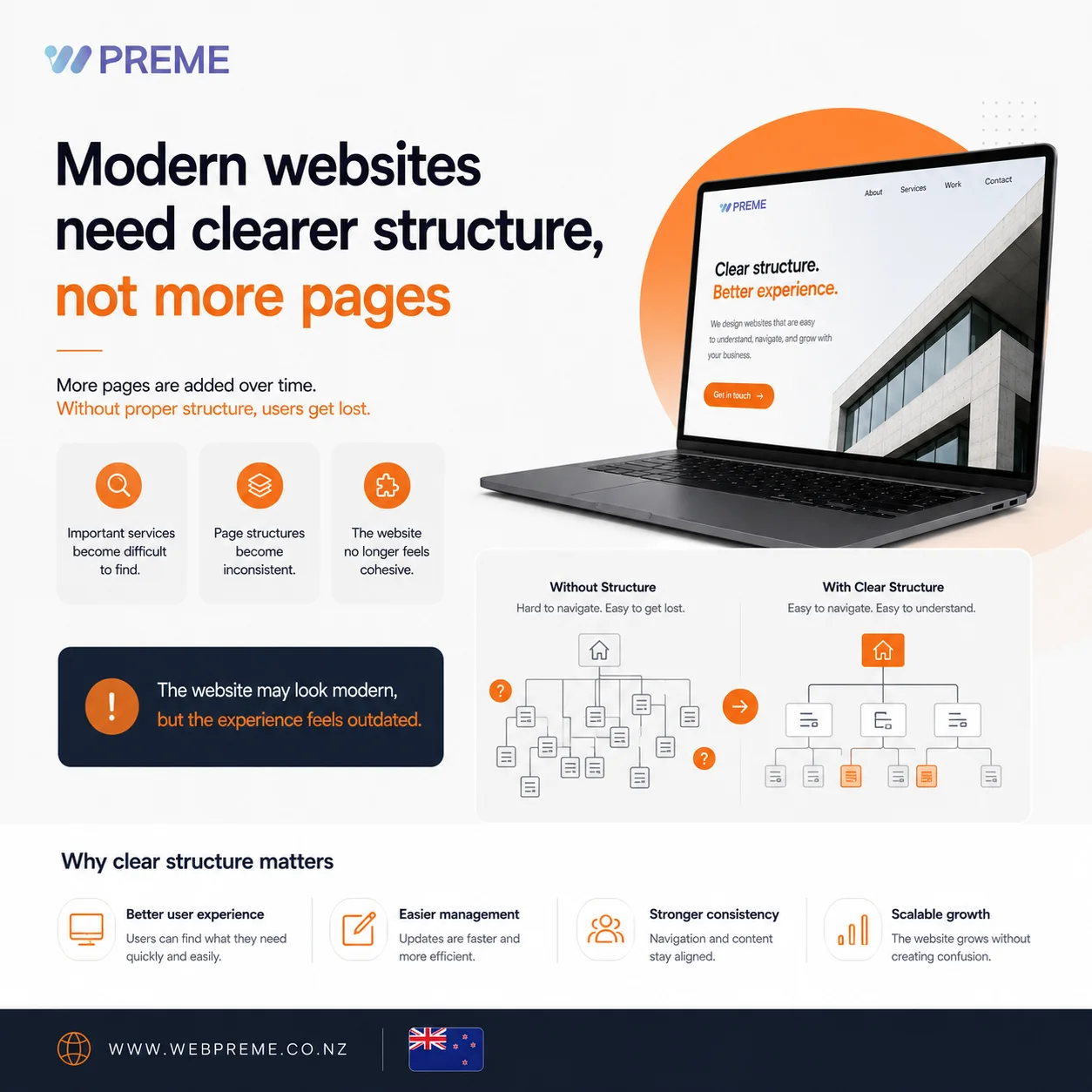
Modern websites need clearer structure, not more pages
As businesses grow, websites naturally become larger.
More services are added. More pages are created. More content needs to be updated.
Without proper structure, websites gradually become harder to navigate.
This often happens slowly.
Businesses continue adding information over time without reorganising the overall experience.
Eventually, users start feeling lost.
Important services become difficult to find. Page structures become inconsistent. The website no longer feels cohesive.
In many cases, the website still looks visually modern.
But the experience itself feels outdated.
This is why modern website development is increasingly focused on structure and usability rather than simply adding more content.
A professional website today is not measured by how much information it contains.
It is measured by how easily users can understand the business.
Clear structure also improves long-term website management.
When navigation and content organisation are consistent, updates become easier and faster.
Internal teams can manage pages more efficiently.
Users can continue navigating naturally even as the website grows.
This creates a more scalable digital experience for both the business and its visitors.
Clarity improves both trust and conversions
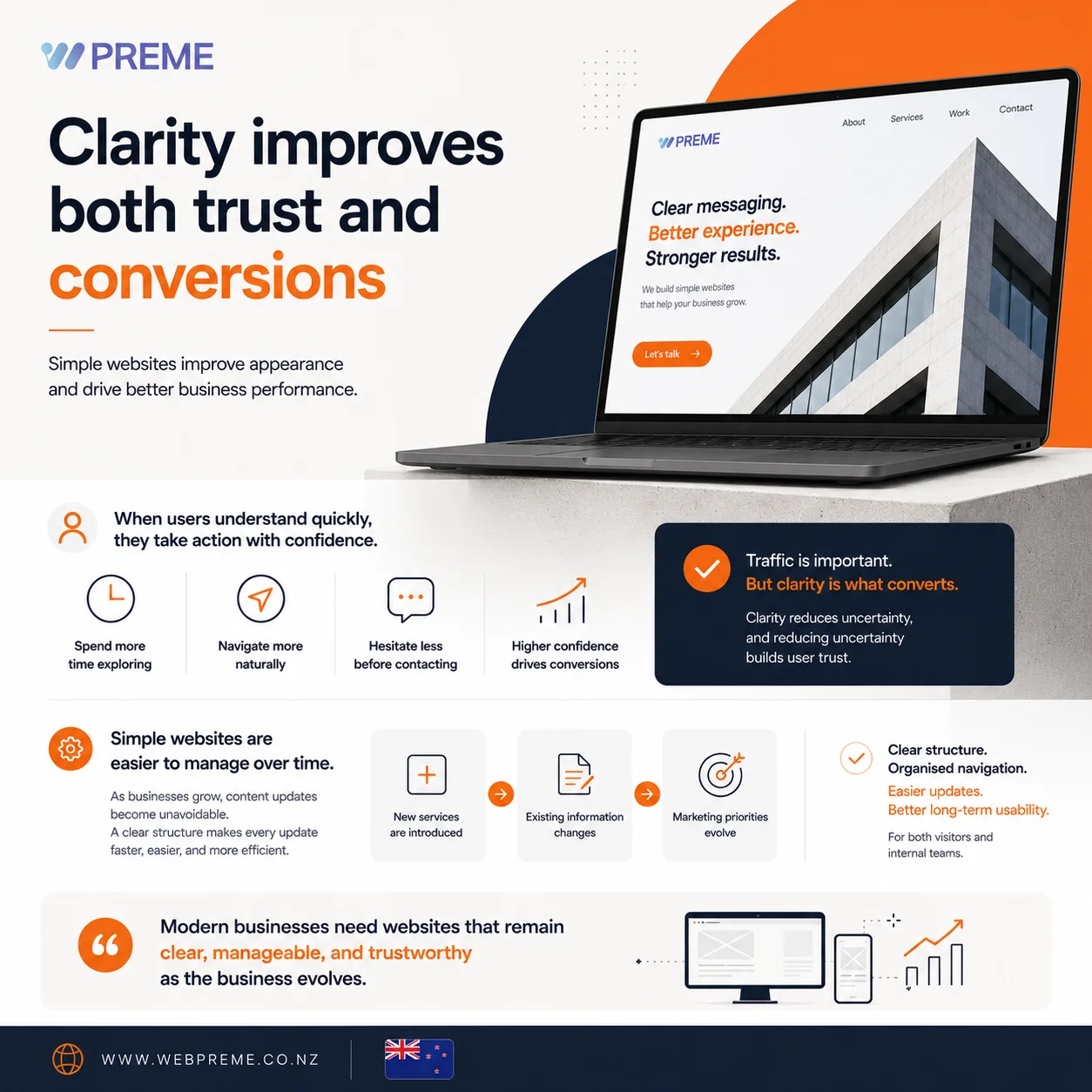
Simple websites do more than improve appearance.
They also improve business performance.
When users understand the website quickly, they feel more confident moving forward.
They spend more time exploring. They navigate more naturally. They hesitate less before contacting the business.
This directly affects conversions.
Many companies focus heavily on generating traffic through SEO, advertising, or social media campaigns.
But if the website experience feels overwhelming, that traffic does not convert efficiently.
Clarity reduces uncertainty.
And reducing uncertainty is one of the most important parts of improving user trust online.
This is why businesses with simpler, more focused websites often create stronger engagement even without aggressive visual design.
Simple websites are also easier to manage over time.
As businesses grow, content updates become unavoidable.
New services are introduced. Existing information changes. Marketing priorities evolve.
When the website structure is overly complex, even small updates become difficult.
But websites built with clear structure and organised navigation remain easier to maintain.
This improves long-term usability for both visitors and internal teams.
Modern businesses no longer need websites that simply look impressive.
They need websites that remain clear, manageable, and trustworthy as the business evolves.
A simple website is not about having less information.
It is about making the right information easier to understand.
And in many cases, that clarity creates a much stronger first impression than complexity ever can.