Growing Businesses Often Outgrow Their Websites
2026.05.11
Many businesses do not notice website problems immediately.
At first, the website feels sufficient.
It introduces the company. It explains the services. It supports basic enquiries.
For an early-stage business, this is often enough.
But as the business grows, the website usually starts changing as well.
More services are added. More pages are created. More information needs to be updated.
Over time, the website becomes larger, more complex, and harder to manage.
This is the point where many growing businesses begin to outgrow their websites.
Growth changes how a website needs to function
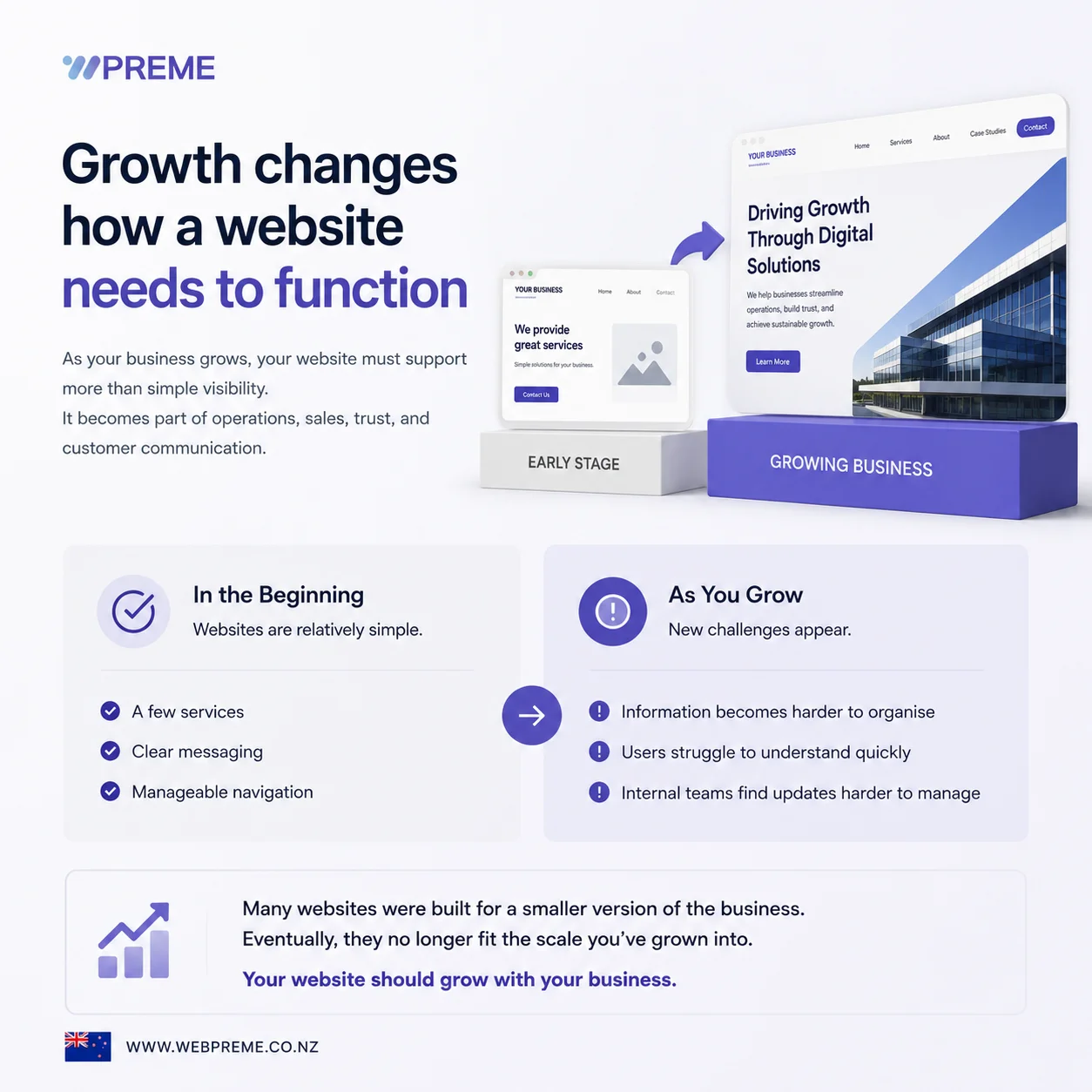
In the beginning, most websites are relatively simple.
The business may only offer a few services. The messaging is clear. The navigation structure is manageable.
As the company expands, however, the website must support more than simple visibility.
It starts becoming part of operations, sales, trust building, and customer communication.
This creates new challenges.
Information becomes harder to organise. Users struggle to understand the company quickly. Internal teams find updates more difficult to manage.
In many cases, the original website was never designed for long-term growth.
It was designed for the business at a much smaller stage.
That is why growing businesses often reach a point where the website no longer matches the scale of the company itself.
More information does not always improve clarity
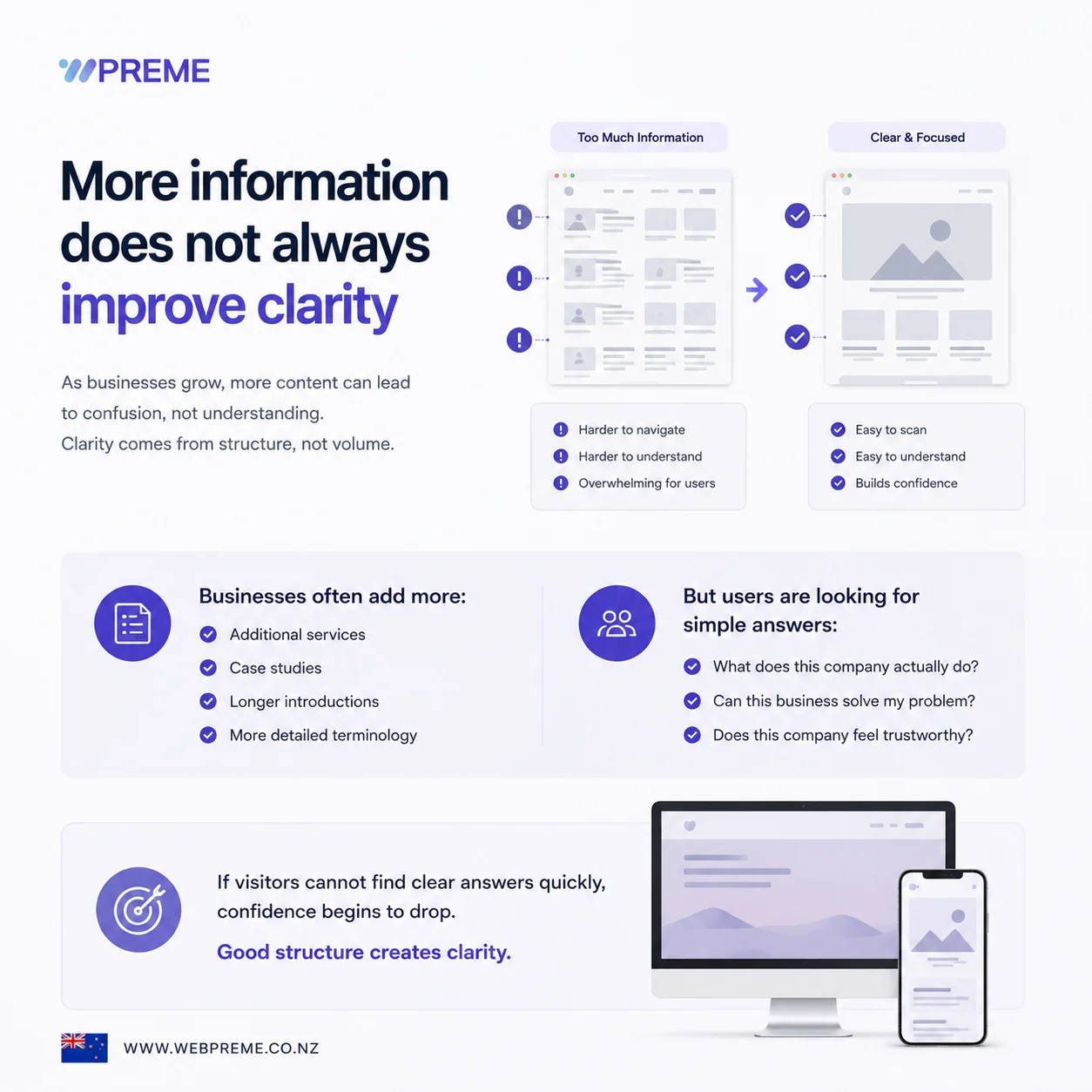
As businesses grow, they naturally try to provide more information online.
Additional services are added. Case studies increase. Company introductions become longer. Industry terminology becomes more detailed.
The intention is understandable.
Businesses want to appear experienced and professional.
But too much information often creates the opposite effect.
Instead of improving understanding, the website becomes more difficult to navigate.
Users start feeling overwhelmed.
This is especially common in B2B industries, technology companies, manufacturing businesses, and service-based organisations where information complexity increases over time.
Visitors usually do not read every section carefully.
They scan quickly while trying to answer simple questions.
What does this company actually do? Can this business solve my problem? Does this company feel trustworthy?
If the website cannot answer these questions quickly, confidence begins to drop.
This is why website structure becomes increasingly important as businesses grow.
Growth often exposes structural weaknesses
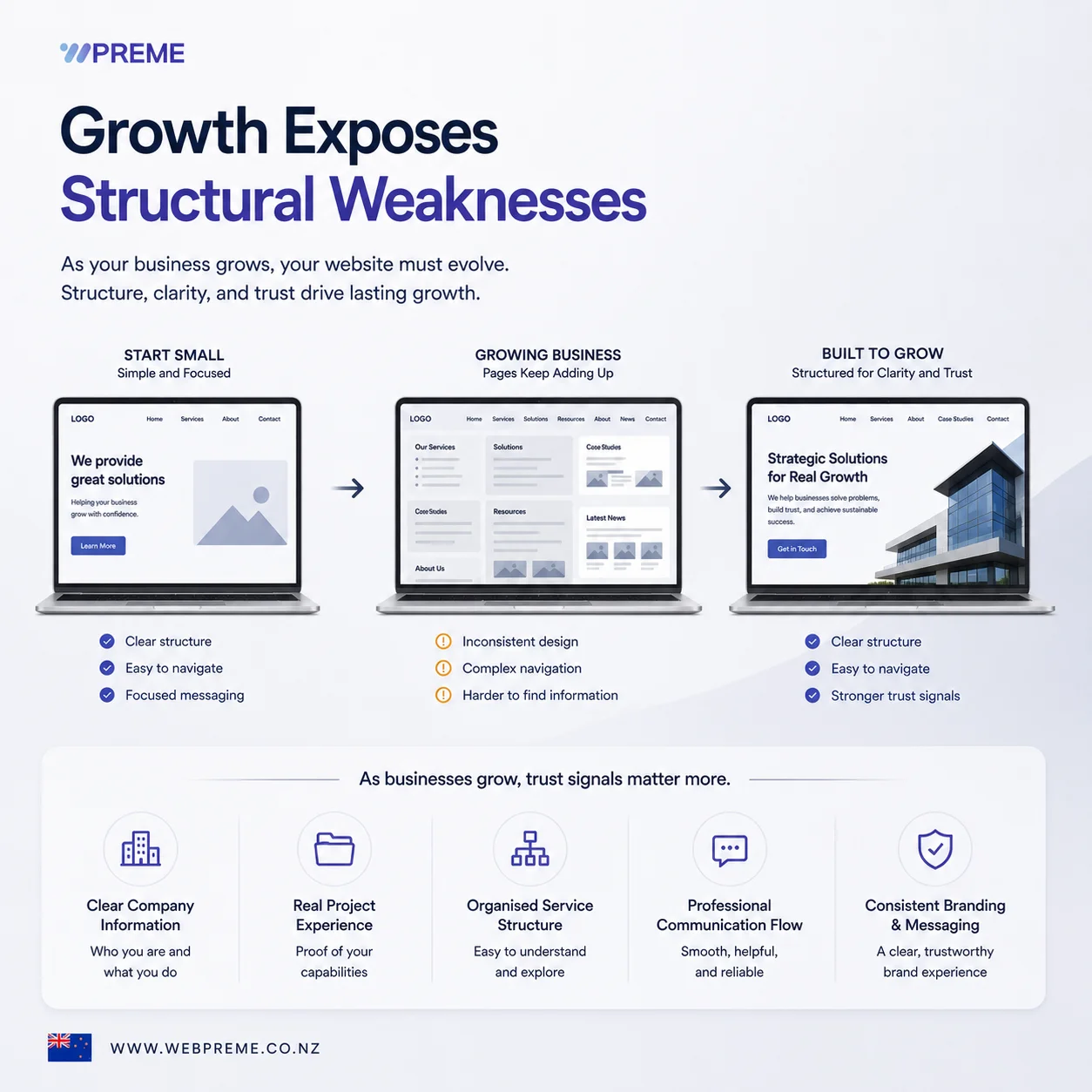
Many businesses continue adding pages without reorganising the overall website experience.
This happens gradually.
A new service page is added. A new category appears. Another section is inserted later.
Over time, the website starts feeling inconsistent.
Different page styles appear. Navigation becomes less intuitive. Important information becomes harder to find.
Internally, the company still understands everything because the structure evolved slowly over time.
But for first-time visitors, the website can feel fragmented and confusing.
In many cases, businesses mistake visual design for the real problem.
The website may still look modern.
But the experience itself feels outdated because the structure no longer supports the way users consume information.
This is one reason why many companies redesign websites after periods of rapid growth.
Not simply to change appearance, but to reorganise how the business is presented online.
Growing businesses need stronger trust signals
Businesses also begin communicating with different
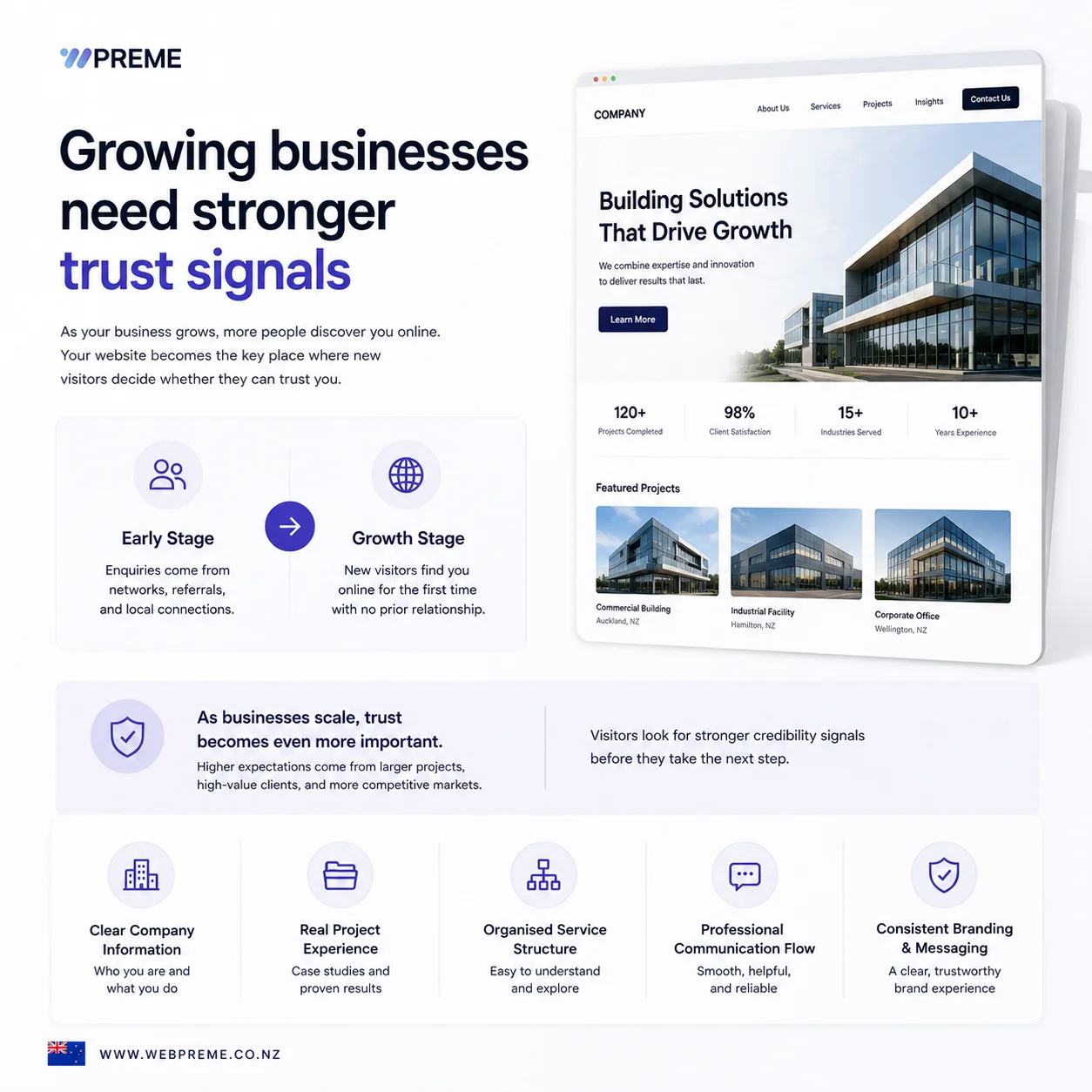
types of customers as they grow.
In the early stages, many enquiries come from existing networks, referrals, or local connections.
But as the business expands, more users discover the company online for the first time.
These visitors have no previous relationship with the brand.
They rely almost entirely on the website to evaluate the company.
This changes the role of the website significantly.
The website is no longer just a simple company introduction.
It becomes part of the business’s credibility, communication, and positioning.
This is why growing businesses often realise that the website which worked well in the beginning no longer feels sufficient later on. As businesses scale, trust becomes even more important.
Larger projects, higher-value clients, and more competitive markets create higher expectations.
Visitors begin looking for stronger credibility signals.
They want to see:
Clear company information Real project experience Organised service structure Professional communication flow Consistent branding and messaging
A growing business cannot rely only on visual presentation anymore.
The website must support confidence and decision-making.
This is especially important for businesses targeting international customers or B2B partnerships.
In these situations, the website often becomes the first and most important evaluation tool.
If the website feels unclear, outdated, or difficult to navigate, users may assume the business itself operates the same way.
That perception directly affects trust.
A scalable website supports long-term growth
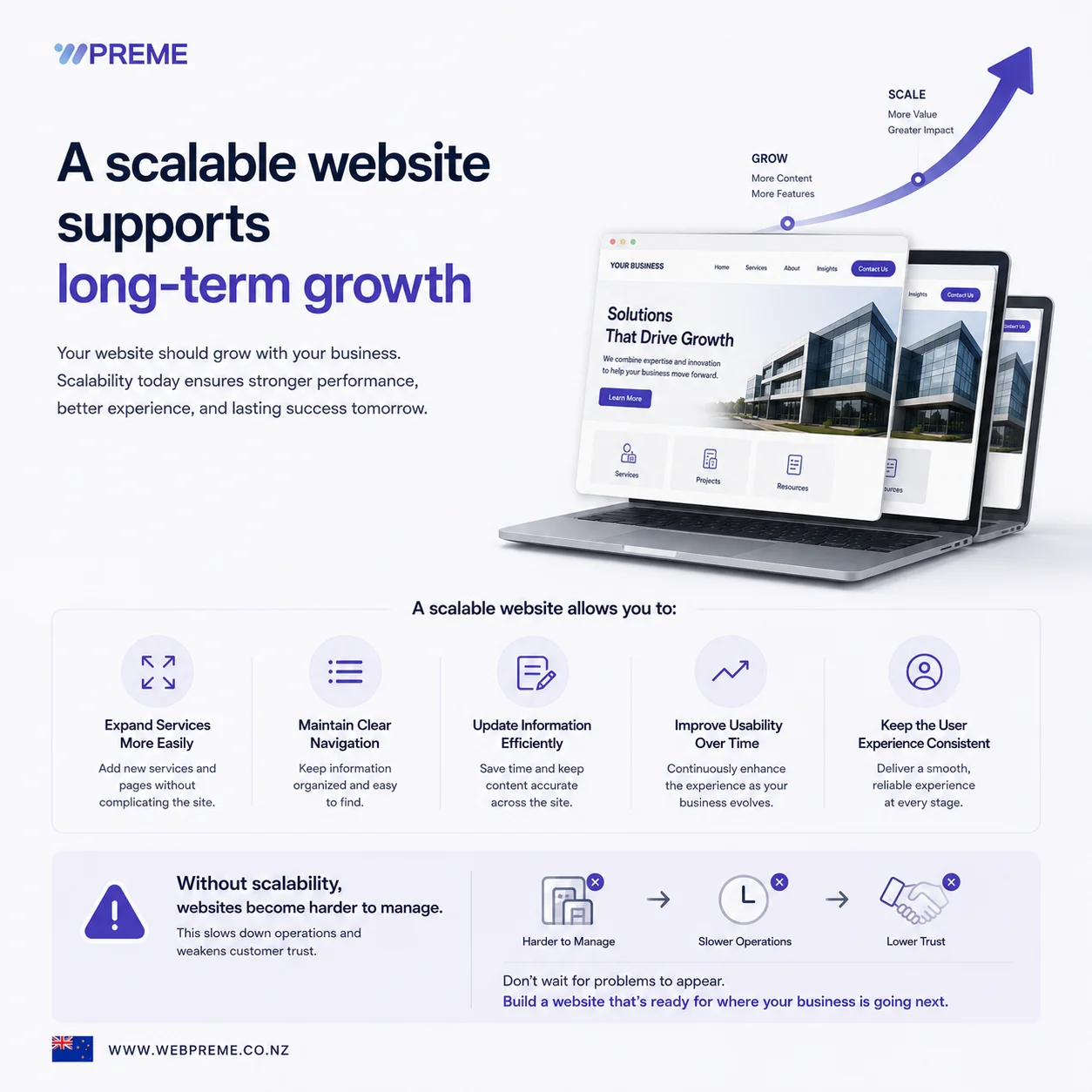
Modern websites should not only support the business today.
They should also support where the business is going next.
This is why scalability matters.
A scalable website allows businesses to:
Expand services more easily Maintain clear navigation Update information efficiently Improve usability over time Keep the user experience consistent
Without scalability, websites become increasingly difficult to manage as the company grows.
This eventually affects both operations and customer perception.
Many businesses wait too long before reorganising their websites.
By the time problems become obvious, the website is already slowing down communication, marketing, and trust building.
A growing business eventually reaches a point where the old website no longer reflects the reality of the company.
At that stage, the issue is usually not just design.
It is structure, clarity, usability, and trust.
And those elements become more important as the business continues to grow.