UX Should Guide Users Toward Action
2026.08.05
UX Should Guide Users Toward Action
A successful business website does more than present information. It helps visitors understand where they are, what they have learned, and what they should do next.
Many companies focus on attractive layouts, animations, and modern interfaces when redesigning their websites. While these elements certainly improve first impressions, appearance alone rarely influences business performance. What truly matters is whether users can move naturally through the website without hesitation.
Good UX reduces uncertainty throughout the customer journey. Every interaction should make it easier for visitors to understand your business, gain confidence, and move one step closer to taking meaningful action.
Why Good UX Is About More Than Design
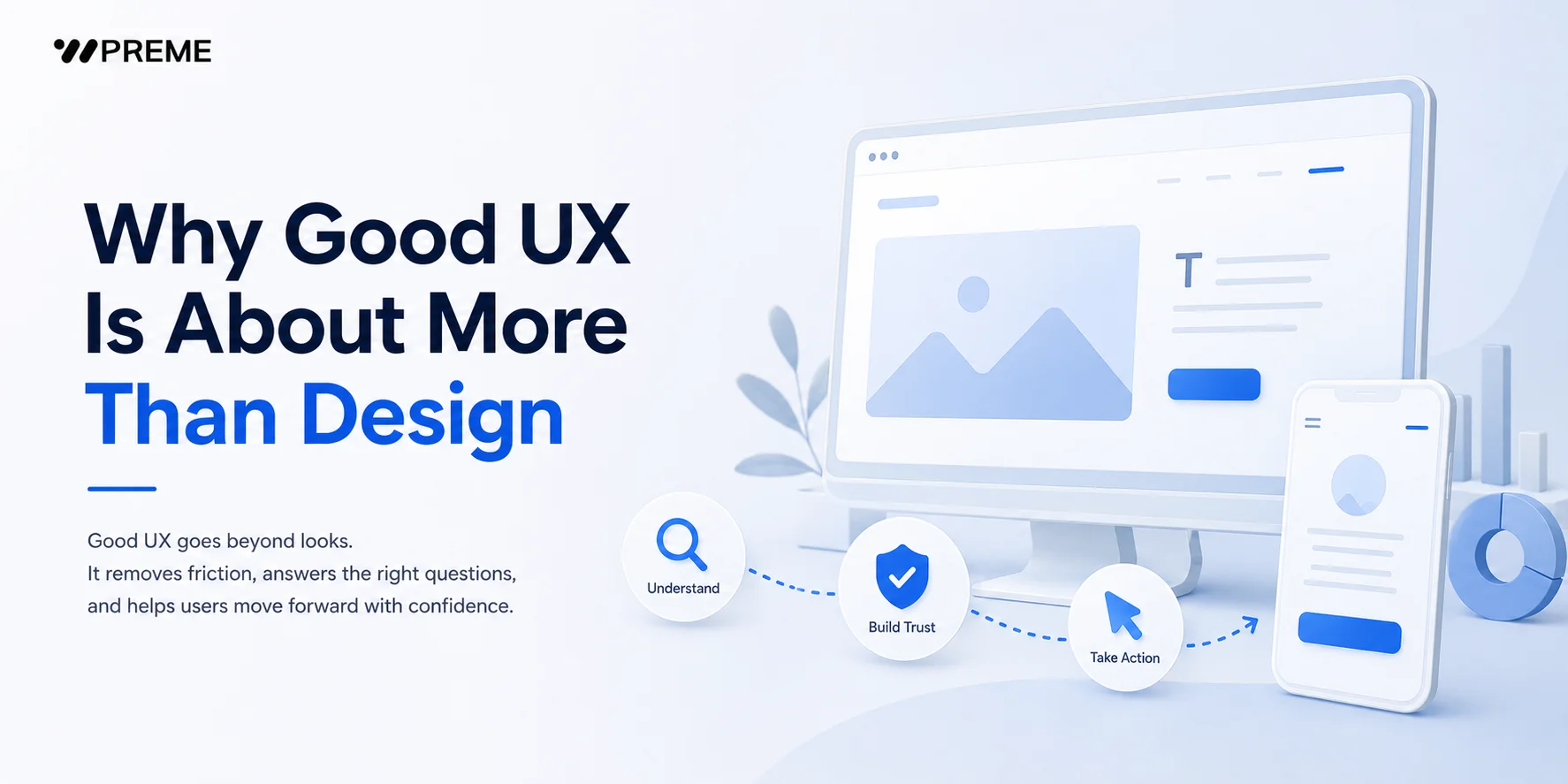
User experience is often confused with visual design, but they serve different purposes.
Visual design captures attention, while UX supports decision-making. Visitors rarely open a website simply to admire its appearance. They visit because they need answers before contacting a company, requesting a quotation, or purchasing a service.
Every page should help users solve a specific question before introducing the next one. A service page should explain what your company does before directing visitors to relevant case studies. A portfolio should demonstrate experience before encouraging users to request a consultation. Company information should strengthen credibility before introducing contact options.
When information appears in a logical order, visitors spend less time searching and more time understanding your business.
Good UX is not about making a website look better. It is about helping users know what to do next.
A website that removes uncertainty at every stage creates a smoother experience and makes business decisions easier.
Every Page Should Guide Users Toward the Next Step
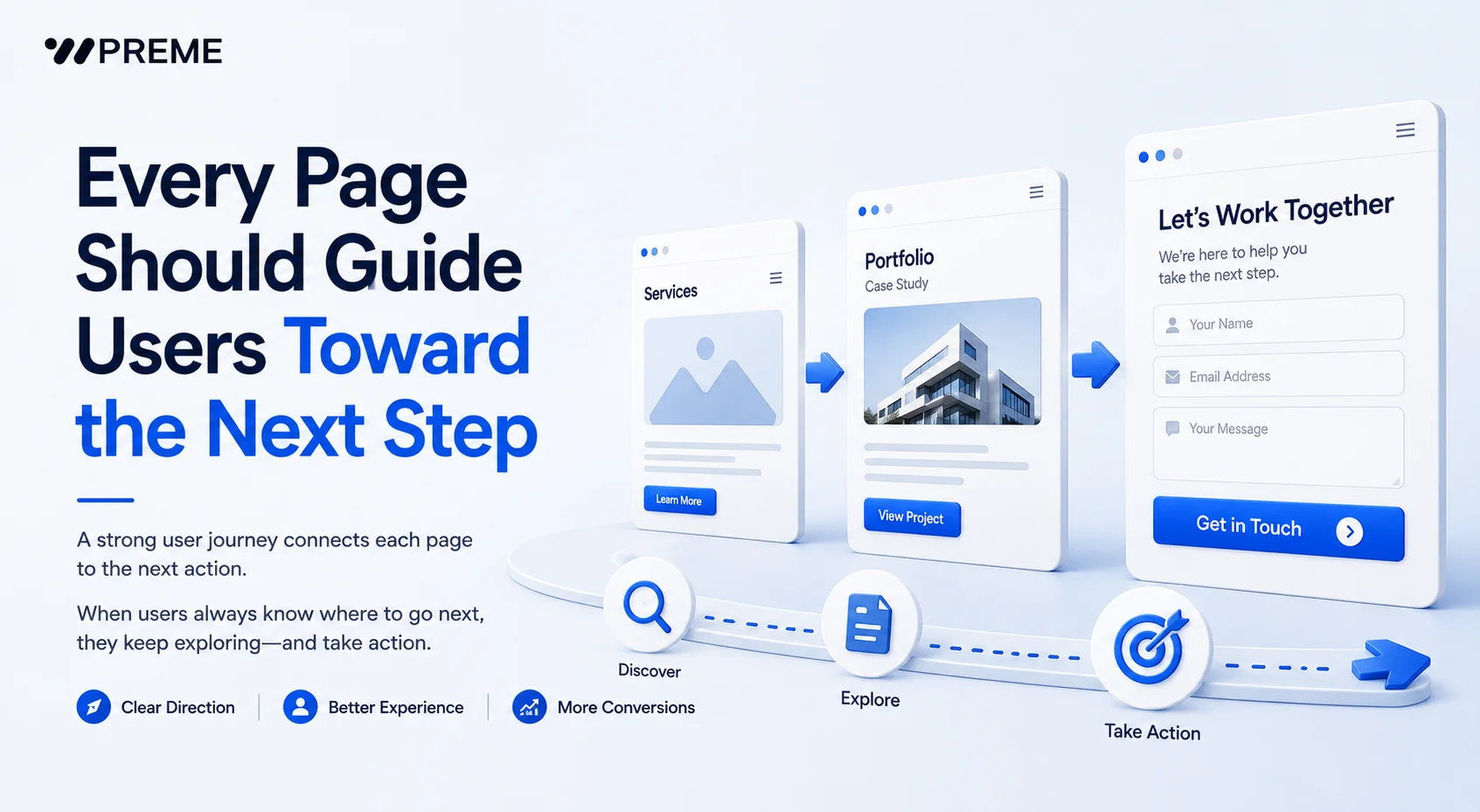
One of the biggest UX mistakes is treating every page as a final destination.
In reality, each page should become the starting point for the next interaction. Visitors should always know where to continue after finishing the current content.
Someone reading about your services may want to see project examples. A visitor reviewing your portfolio may need customer testimonials or technical capabilities. After learning about your company, the next logical step may be scheduling a consultation or requesting more information.
When pages are connected naturally, users continue exploring because every answer leads to another valuable piece of information.
Without this flow, visitors often stop searching—not because they have found everything they need, but because they are no longer sure where to go next.
Remove Friction Before Asking Users to Take Action
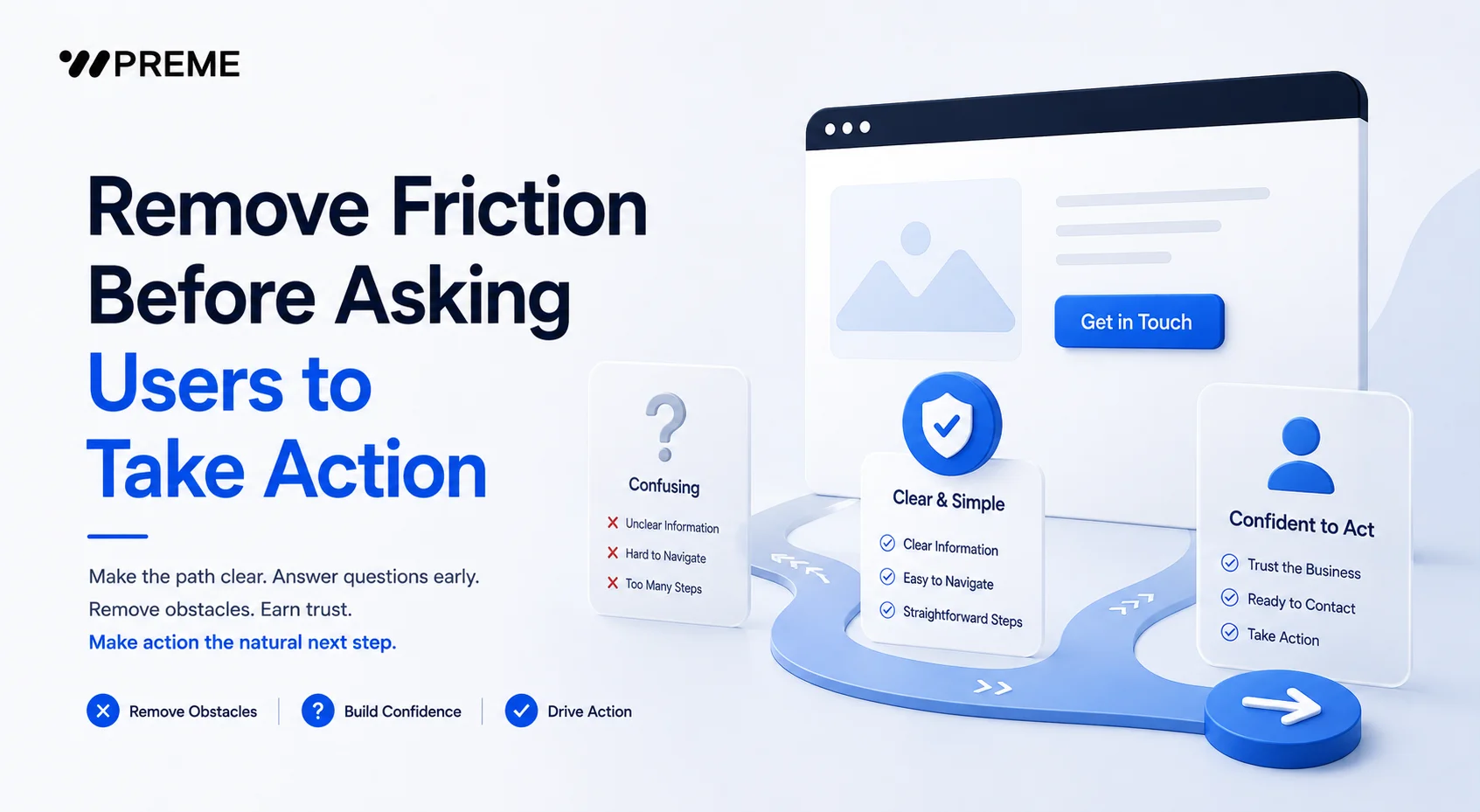
Many websites ask visitors to submit an inquiry before providing enough information to support a confident decision.
People hesitate when important questions remain unanswered. They may wonder whether the company has relevant experience, how the service process works, or whether similar projects have been completed successfully.
Complicated navigation, repetitive content, unclear CTA buttons, and poor content hierarchy all increase this hesitation. Every unnecessary click or confusing decision creates additional friction that slows the customer journey.
Good UX removes these obstacles before asking users to act. Instead of forcing visitors to search for answers, effective websites anticipate their questions and present the right information at the right moment.
The easiest website to use is often the one users notice the least.
When visitors can focus on understanding your business rather than figuring out how to use the website, they are much more likely to continue toward conversion.
Good UX Supports Business Growth
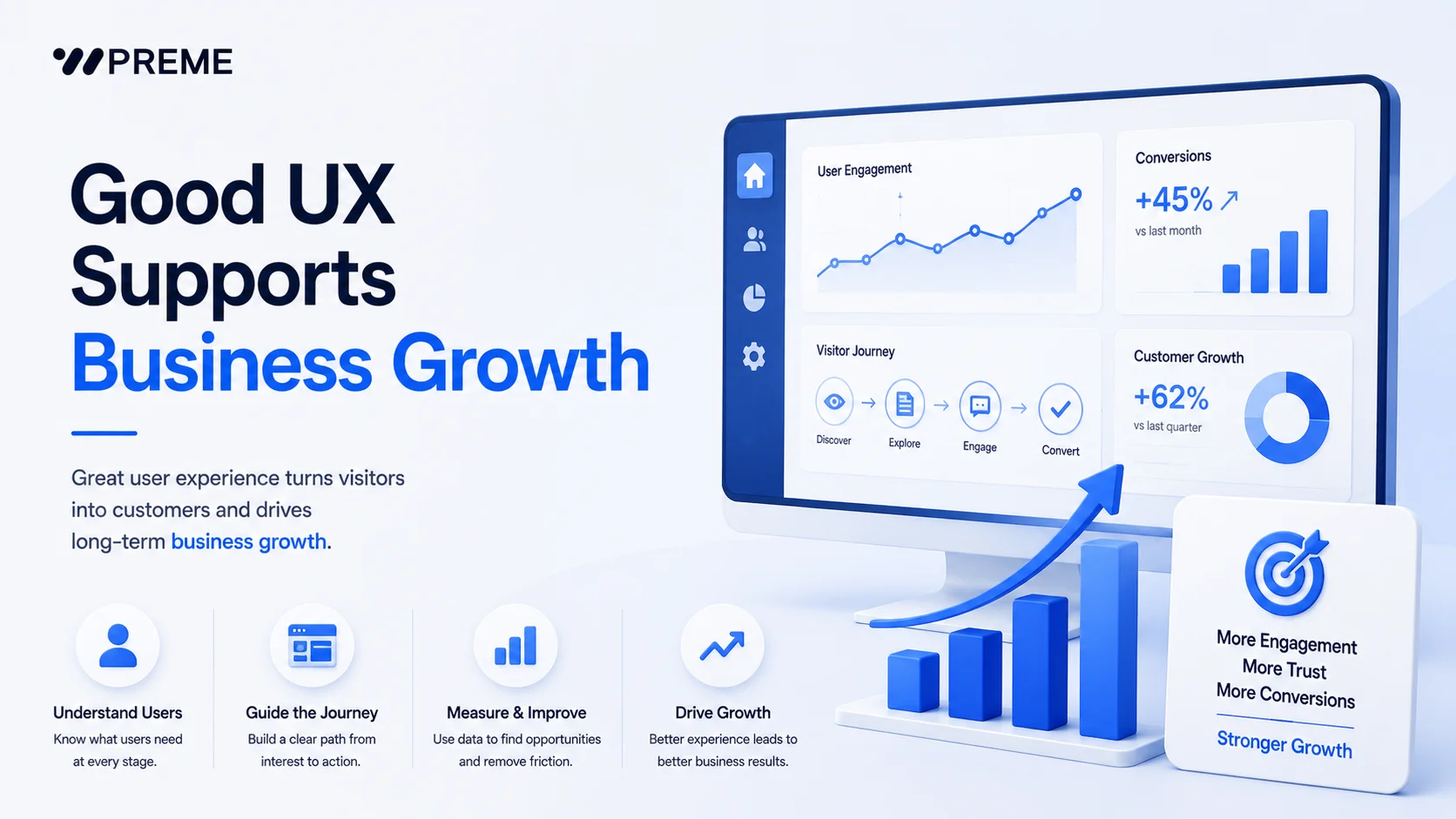
The purpose of UX is not simply to improve usability. Its real value lies in helping businesses achieve measurable results.
Navigation, content structure, internal links, and call-to-action placement should work together to create a seamless user journey. Every interaction should reduce uncertainty while increasing confidence.
Businesses should continuously review user behavior through engagement time, click patterns, page transitions, and conversion data. These insights reveal where visitors hesitate and where improvements can make the experience more intuitive.
Ultimately, great UX is not measured by visual quality alone.
It is measured by how effectively a website guides users from curiosity to confidence, from confidence to action, and from action to long-term customer relationships.
A website that consistently guides visitors toward meaningful next steps creates stronger trust, better engagement, and sustainable business growth.