How Business Websites Can Shorten the Sales Cycle Effectively
2026.08.06
How Business Websites Can Shorten the Sales Cycle
Many companies see their website as a digital brochure, but its role is much larger than simply presenting products or services. A well-planned business website can answer important questions, build trust, and prepare potential customers before the first sales conversation begins.
For B2B companies in particular, purchasing decisions rarely happen after a single visit. Buyers compare multiple suppliers, review technical information, evaluate previous projects, and share findings with colleagues before contacting a company. A website that supports this decision-making process can reduce unnecessary back-and-forth communication and move prospects through the sales cycle more efficiently.
A business website should not only attract visitors. It should help qualified prospects reach confident decisions faster.
A Website Should Answer Questions Before Sales Conversations Begin
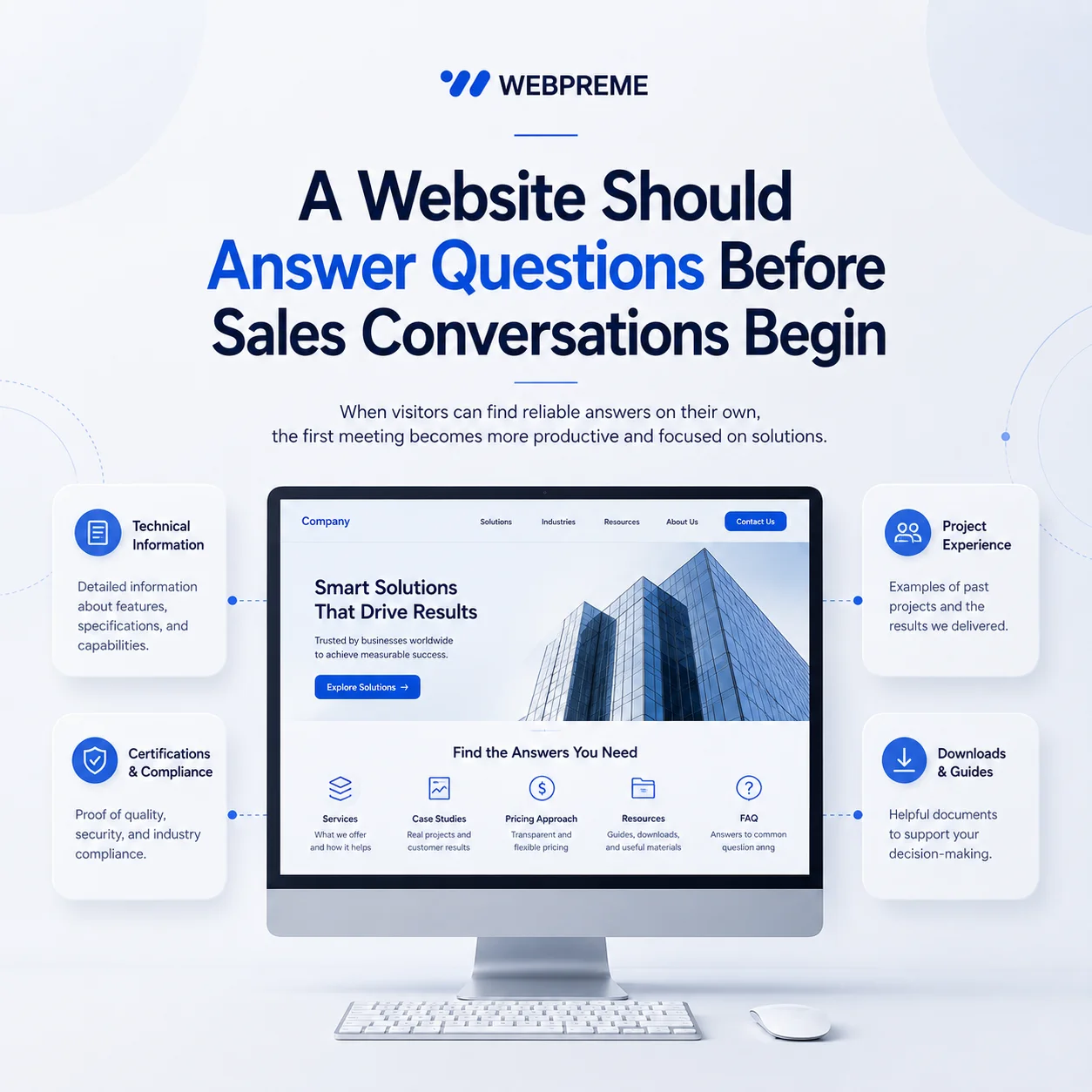
One of the main reasons sales cycles become longer is that customers still have unanswered questions after visiting a website. They may understand what a company offers but still lack enough information to move forward.
Instead of expecting every answer to come from a sales representative, businesses should provide useful information throughout the website. Service explanations, project examples, pricing approaches, technical capabilities, certifications, and frequently requested resources all help visitors continue evaluating a company independently.
When customers can find reliable answers on their own, the first meeting becomes more productive because the discussion focuses on solutions instead of basic introductions.
Every Stage of the Buying Journey Needs Different Content
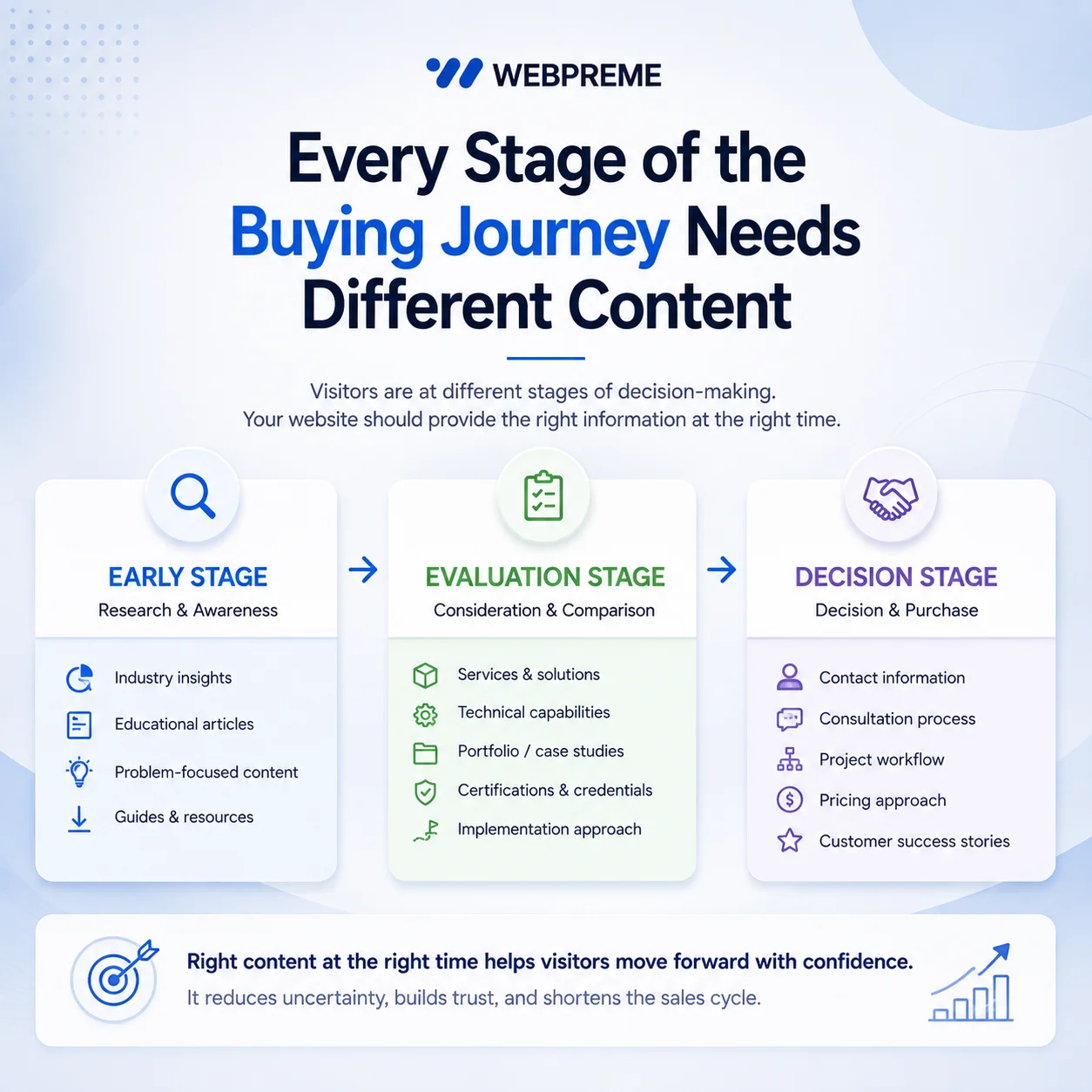
Not every visitor arrives with the same level of knowledge. Some are researching possible solutions, while others are already comparing suppliers or preparing for internal approval.
An effective business website supports each stage of this journey with appropriate content.
Early Stage
Industry insights Educational articles Problem-focused content
Evaluation Stage
Services Technical capabilities Portfolio Certifications
Decision Stage
Contact information Consultation process Project workflow Customer success stories
Providing the right information at the right time helps visitors continue moving forward instead of leaving the website to search elsewhere.
A Website Should Reduce Unnecessary Sales Friction
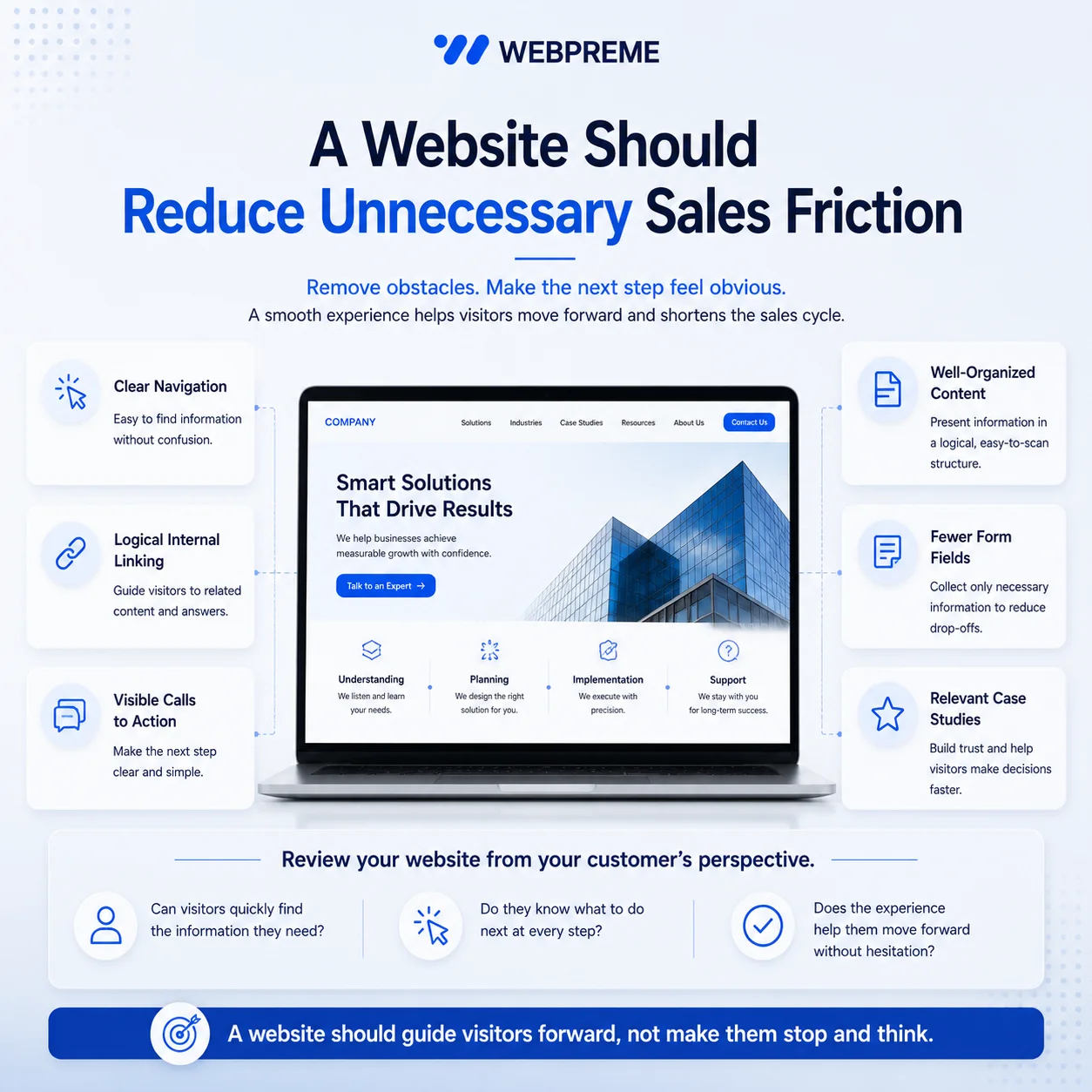
A shorter sales cycle is not achieved by encouraging customers to contact your team sooner. It happens when obstacles are removed before they interrupt the buying process.
Business websites should make the next step feel obvious. Visitors should know where to go after reading about a service, how to compare solutions, and how to request additional information without confusion.
Clear navigation, logical internal linking, visible calls to action, and well-organized content all contribute to a smoother customer journey. Even small improvements—such as reducing unnecessary form fields or adding relevant case studies—can significantly improve the overall buying experience.
Businesses should also review their website from the customer's perspective. If important information requires multiple clicks to find or if visitors repeatedly return to the navigation menu, the experience likely contains unnecessary friction.
A website should guide visitors forward instead of making them stop and think about what to do next.
Better Website Content Leads to Faster Business Decisions
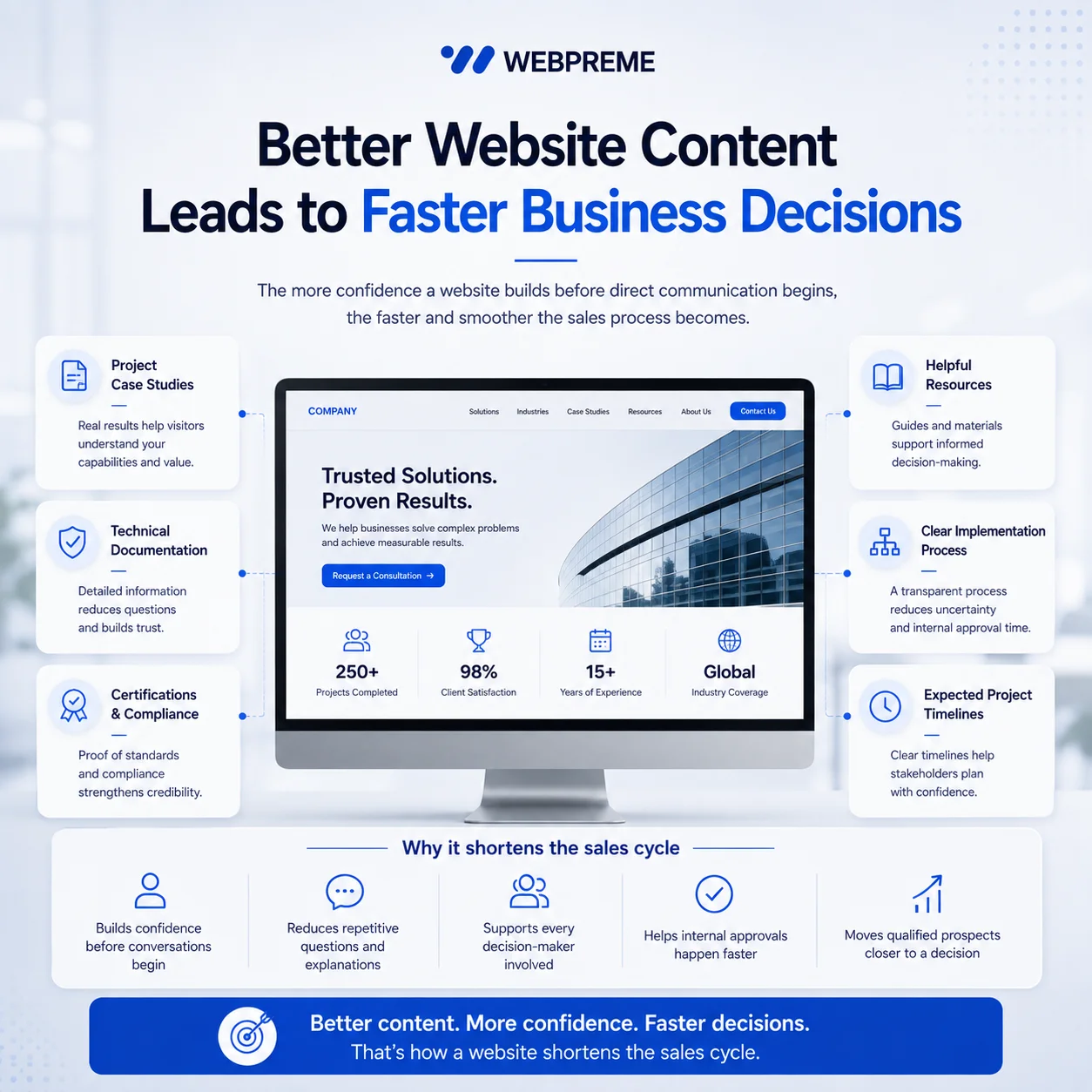
Many purchasing decisions involve multiple stakeholders. Technical teams, managers, procurement departments, and executives often review the same website before approving a project.
For this reason, business websites should provide information that supports every decision-maker involved in the buying process. Instead of focusing only on marketing messages, they should also demonstrate expertise, explain processes, and reduce uncertainty.
Useful content may include:
- Project case studies
- Technical documentation
- Certifications and compliance
- Frequently requested resources
- Clear implementation processes
- Expected project timelines
The more confidence a website builds before direct communication begins, the fewer questions remain during the sales process. This allows discussions to focus on project requirements rather than basic company introductions.