Preparing Your Website for International SEO: A Practical Guide
2026.07.21
Expanding into overseas markets is no longer limited to large enterprises. More businesses are reaching international customers through digital channels, making a website one of the most important assets for global growth. However, simply translating existing content into another language is rarely enough to achieve meaningful visibility in international search results.
International SEO requires careful planning from the beginning. Website structure, regional targeting, technical implementation, and localized content all work together to improve discoverability and create a better experience for users in different countries. Preparing these elements early makes future expansion significantly easier.
Why International SEO Requires a Different Strategy
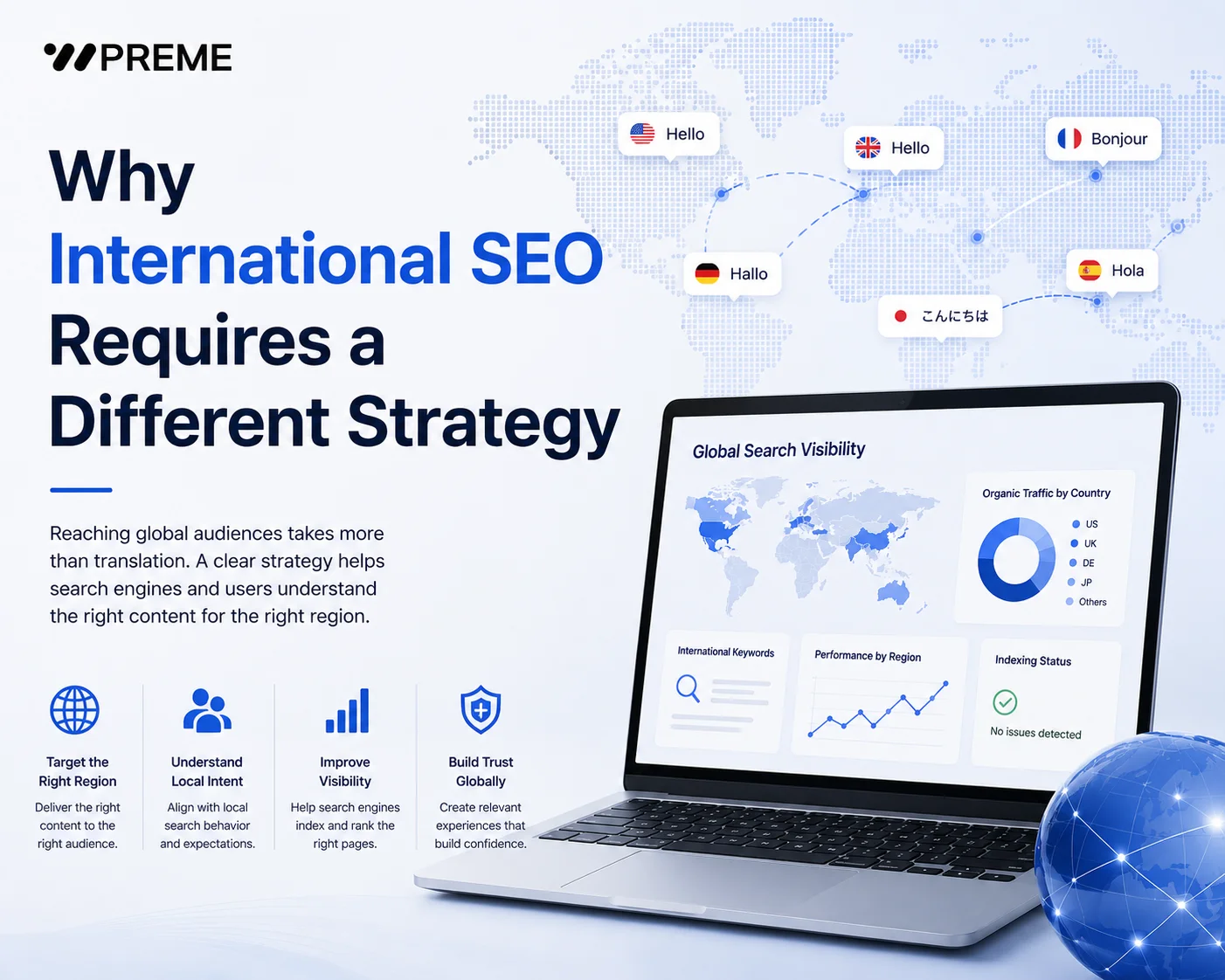
International SEO is different from traditional SEO because search engines must understand which language and regional version of your website should be presented to each visitor. Without a clear structure, multiple versions of the same content may compete against each other, reducing visibility instead of improving it.
Planning for international audiences means thinking beyond keywords. Businesses should consider local search behavior, language preferences, cultural differences, and regional expectations before publishing multilingual content.
A successful international strategy typically focuses on:
Clear country or language targeting Localized user experience Consistent website architecture Search engine accessibility
These foundations help both users and search engines understand exactly who each page is intended for.
Choose the Right Website Structure
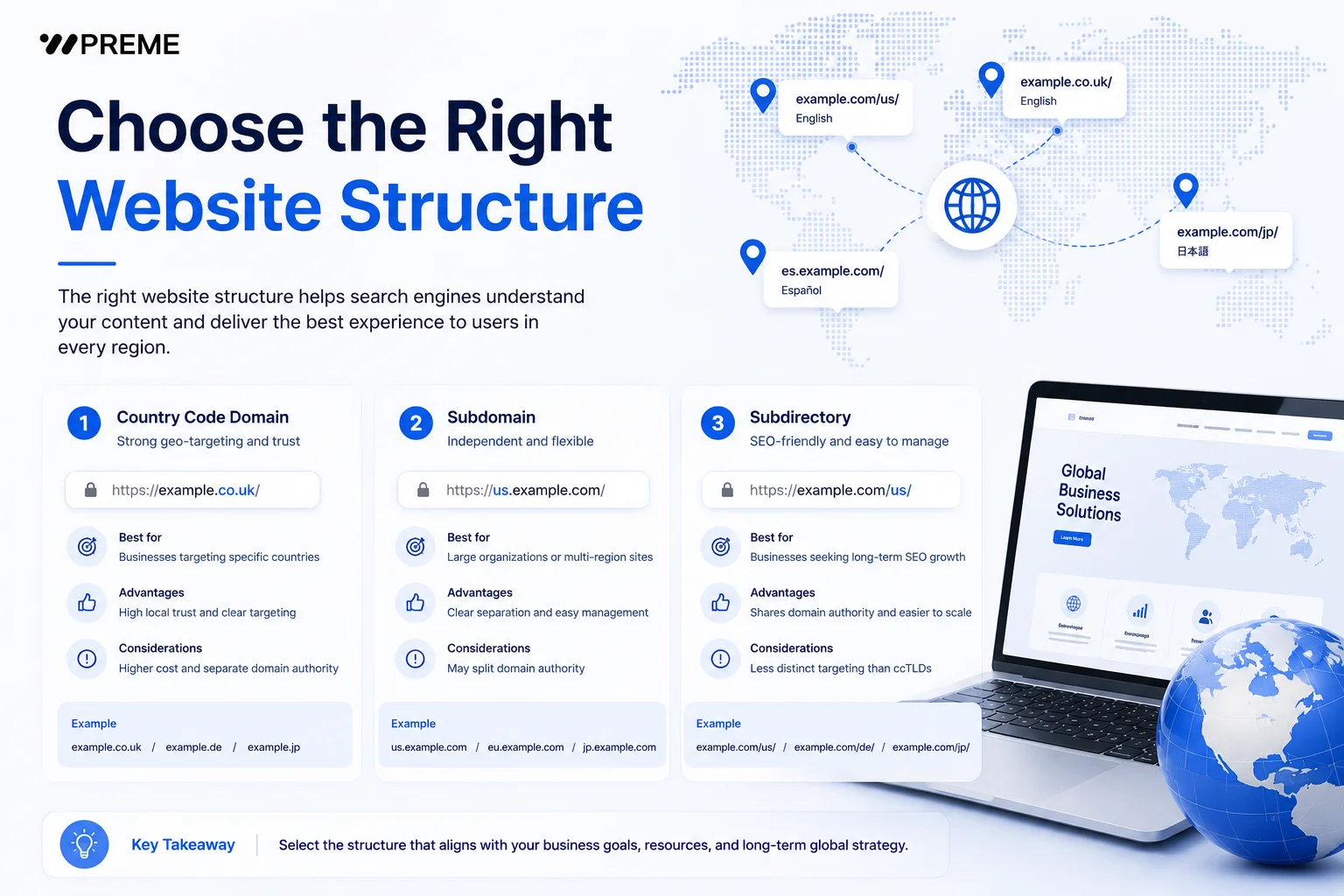
The architecture of a multilingual website directly affects long-term SEO performance. Selecting the appropriate URL structure before development helps simplify management and creates a scalable foundation as additional markets are added.
Structure Best Use Case Example Country Code Domain Strong country targeting example.co.uk Subdomain Independent regional websites uk.example.com Subdirectory Easier management and authority sharing example.com/uk/
Each option has advantages depending on business goals, available resources, and expansion plans. The important point is maintaining consistency across the entire website rather than mixing multiple structures without a clear strategy.
A scalable architecture also makes future maintenance, content management, and technical optimization significantly easier.
Localization Goes Beyond Translation
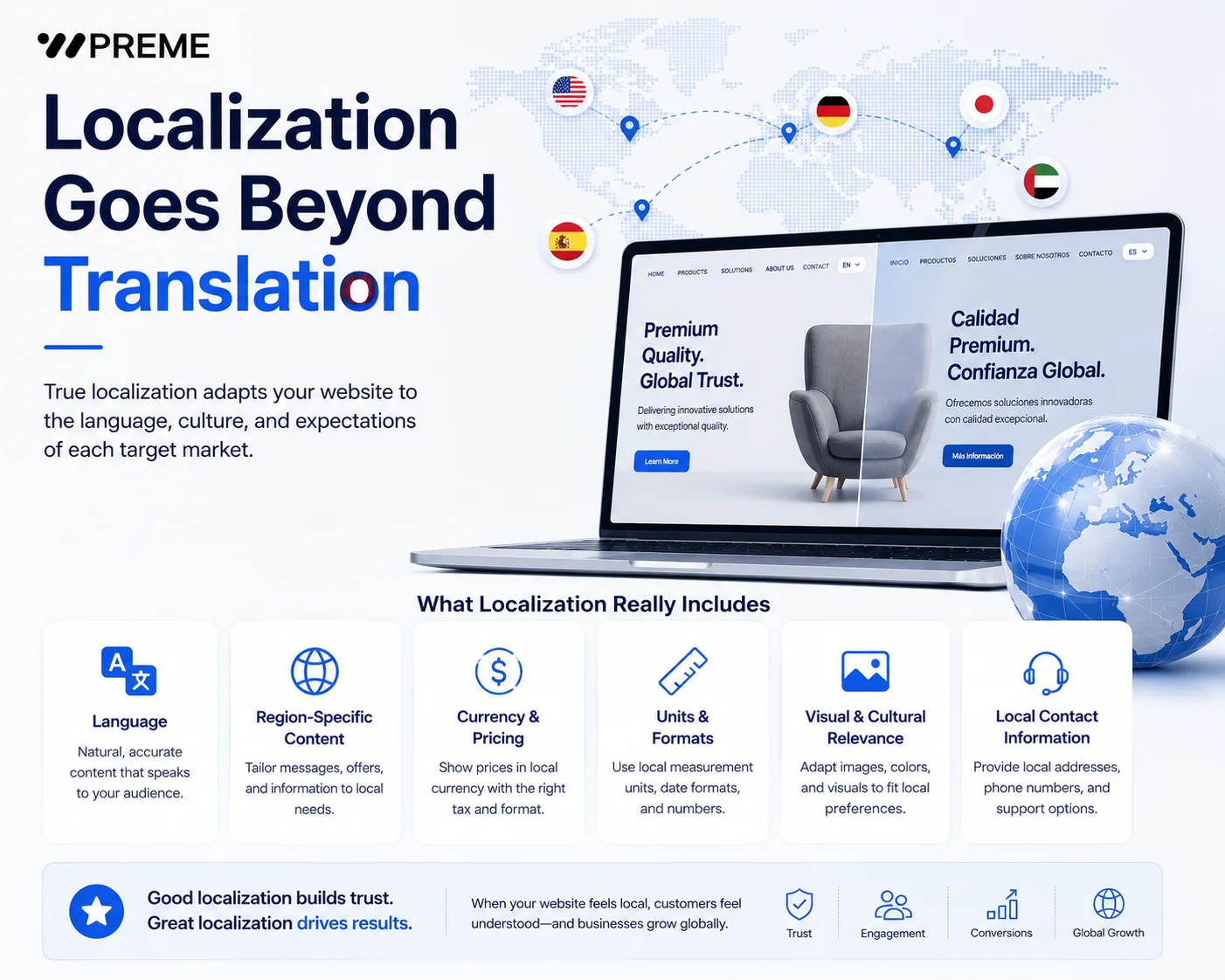
Many companies assume that translating text is enough for international visitors. In reality, localization includes much more than language.
Customers expect pricing formats, measurement units, currencies, contact information, visuals, and even marketing messages to feel familiar within their own region. A page that appears technically correct may still feel foreign if these details are overlooked.
Effective localization often includes:
Region-specific content Local currency and measurement units Appropriate imagery Regional contact information Local business terminology
Creating content that feels natural for local audiences improves engagement while supporting stronger search performance.
Technical SEO Supports Global Visibility
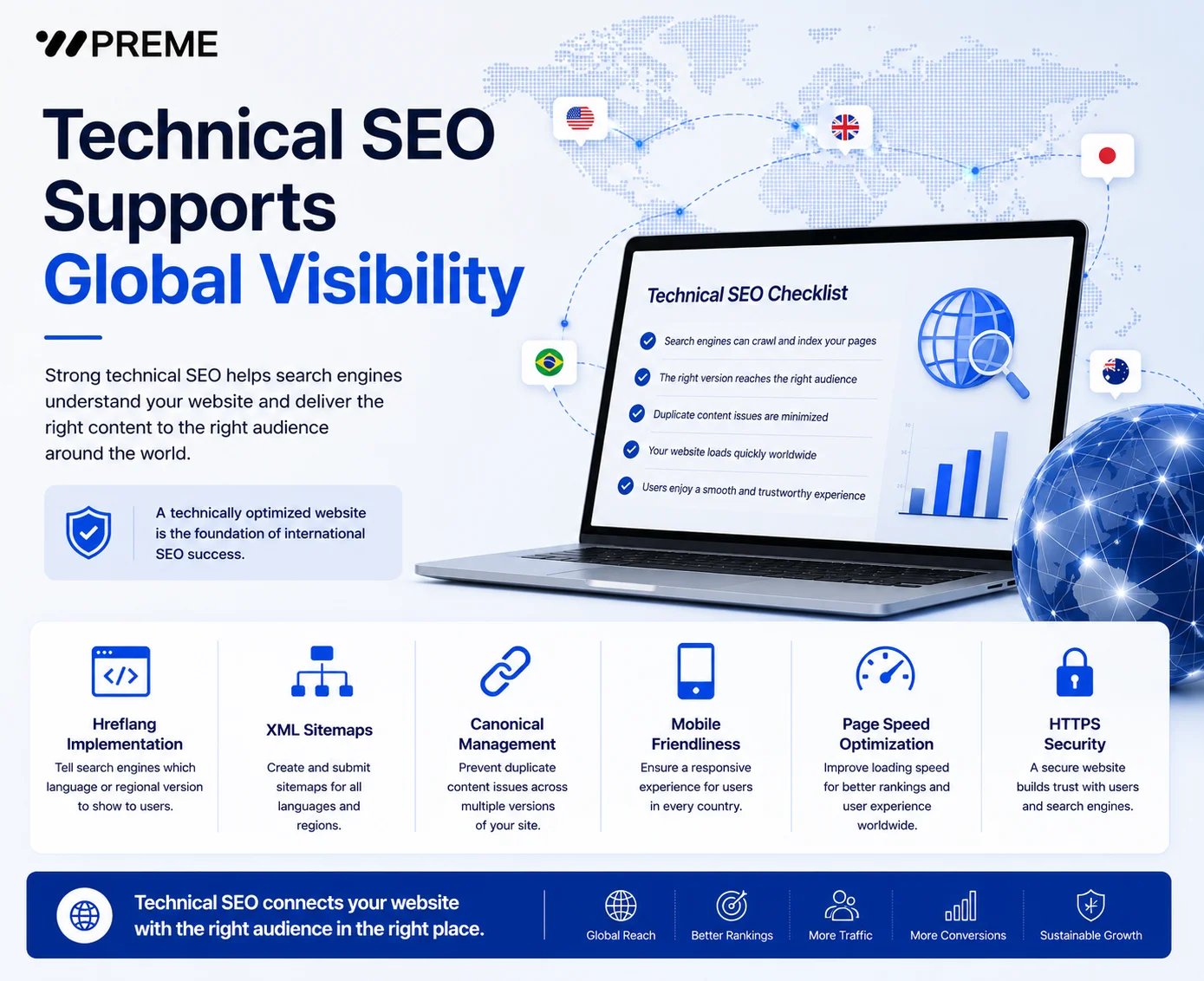
Technical implementation plays an essential role in helping search engines understand multilingual websites. Even well-written content may struggle to rank if technical signals are missing or incorrectly configured.
Important technical considerations include:
Proper hreflang implementation XML sitemaps for multilingual pages Canonical URL management Mobile-friendly design Fast page loading speed Secure HTTPS environment
These technical elements help search engines deliver the correct version of each page while reducing duplicate content issues across multiple languages.
A technically optimized website provides a stronger foundation for every future international marketing effort.
Build for Long-Term International Growth
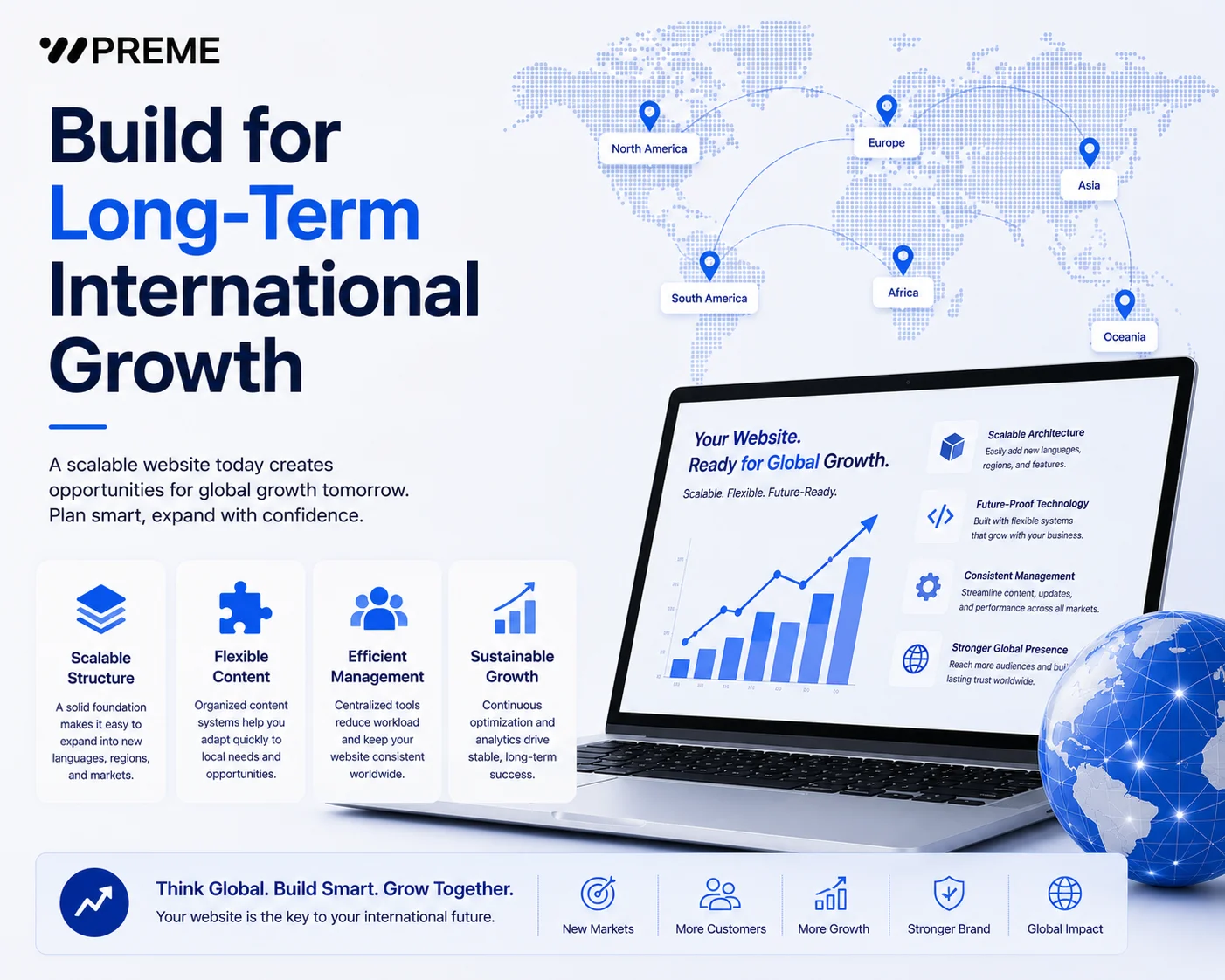
International SEO should not be treated as a one-time project completed after launching a website. As businesses enter new markets, websites continue to grow through additional languages, products, services, and regional content.
Designing a scalable website from the beginning allows companies to expand without rebuilding their entire digital presence. Flexible architecture, organized content management, and consistent technical standards all contribute to sustainable international growth.
Preparing your website with international SEO in mind creates opportunities to reach new audiences more effectively while improving long-term visibility across global search engines.