How to Organize Technical Information for Global Customers
2026.07.22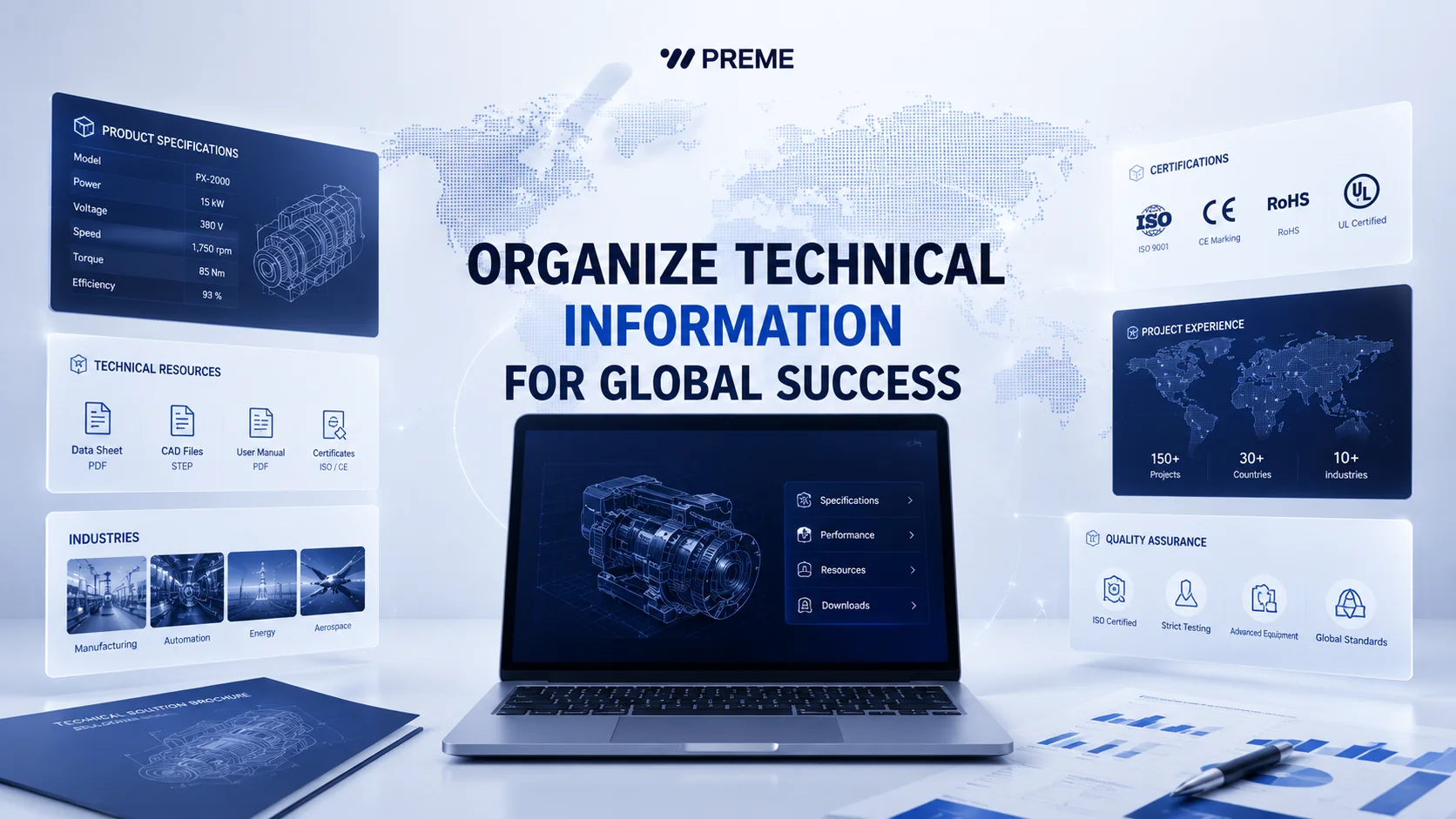
Technical companies often have more information to communicate than other businesses. Product specifications, engineering capabilities, certifications, downloadable files, production facilities, and industry experience may all need to appear within one website.
The problem is not a lack of information. In many cases, the real problem is that the information has not been organized around the way global customers search and evaluate suppliers.
International buyers usually visit a website with a clear purpose. They may be comparing products, checking technical capabilities, reviewing certifications, or preparing to contact a potential partner. When the content is difficult to navigate, even a highly capable company can appear less professional than it actually is.
A successful global website does not simply publish more technical content. It creates a clear path that helps visitors understand the company, find relevant details, and move confidently toward an inquiry.
Organize Information Around Customer Intent
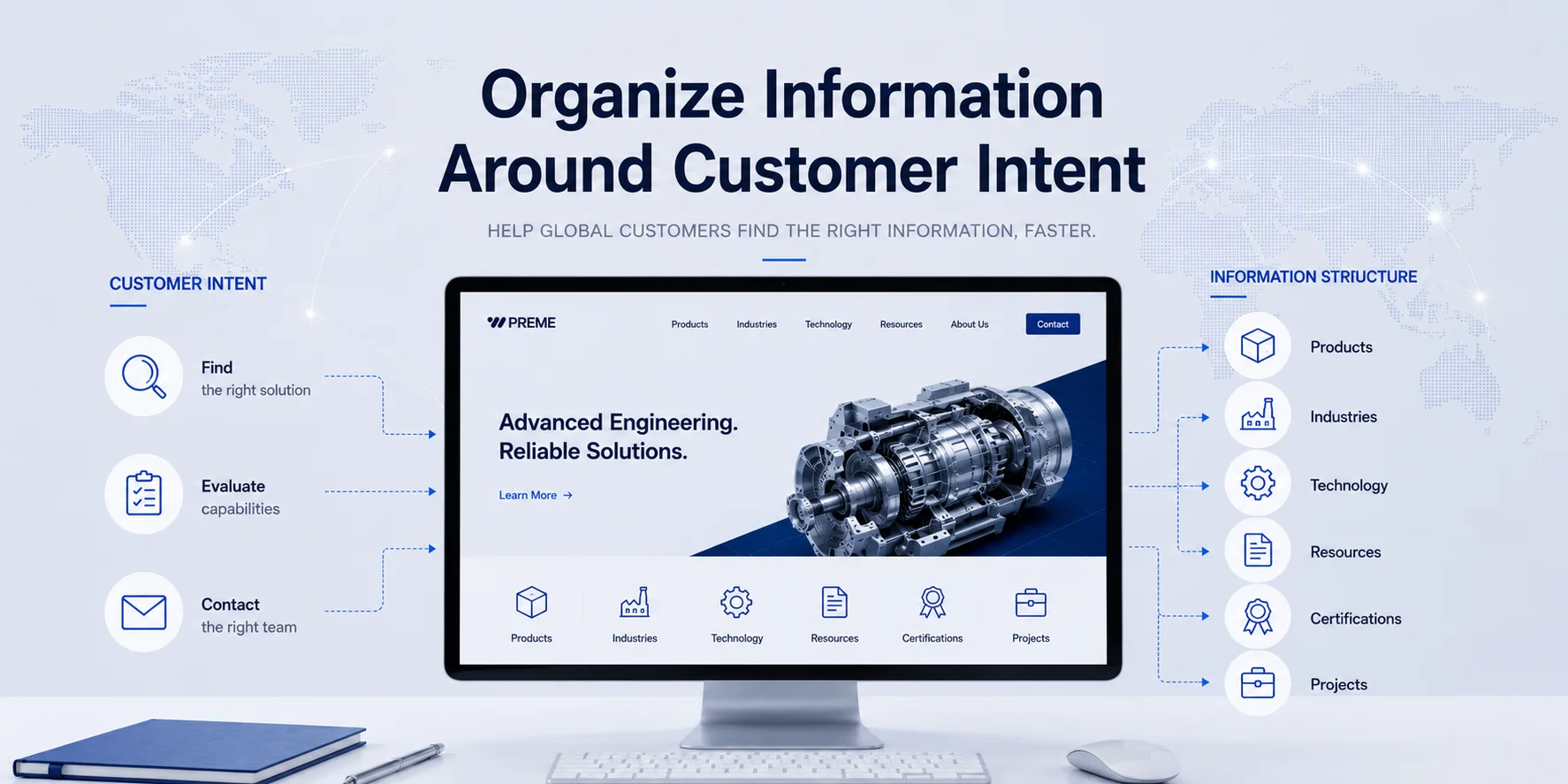
Technical information should be structured according to what customers are trying to accomplish.
A procurement manager may want to compare product specifications. An engineer may need a technical data sheet or CAD file. A business partner may be more interested in manufacturing capacity, quality control, certifications, or previous project experience.
When all of this information is placed on one long page, users must spend too much time searching. A clearer approach is to separate the content into logical categories such as Products, Industries, Technology, Resources, Certifications, Projects, and Contact.
This allows each visitor to follow a path that matches their purpose. Product pages can focus on key functions and specifications, while industry pages can explain where the technology is applied. Resource sections can provide downloadable documents without making the main content feel overloaded.
The goal is not to reduce useful information. It is to place each piece of information where customers naturally expect to find it.
Make Complex Technical Content Easier to Understand
Technical accuracy is essential, but accuracy alone does not guarantee effective communication.
Long paragraphs filled with specialist terminology can create unnecessary friction, especially when a website is being reviewed by people from different departments or countries. Not every visitor will have the same level of technical knowledge.
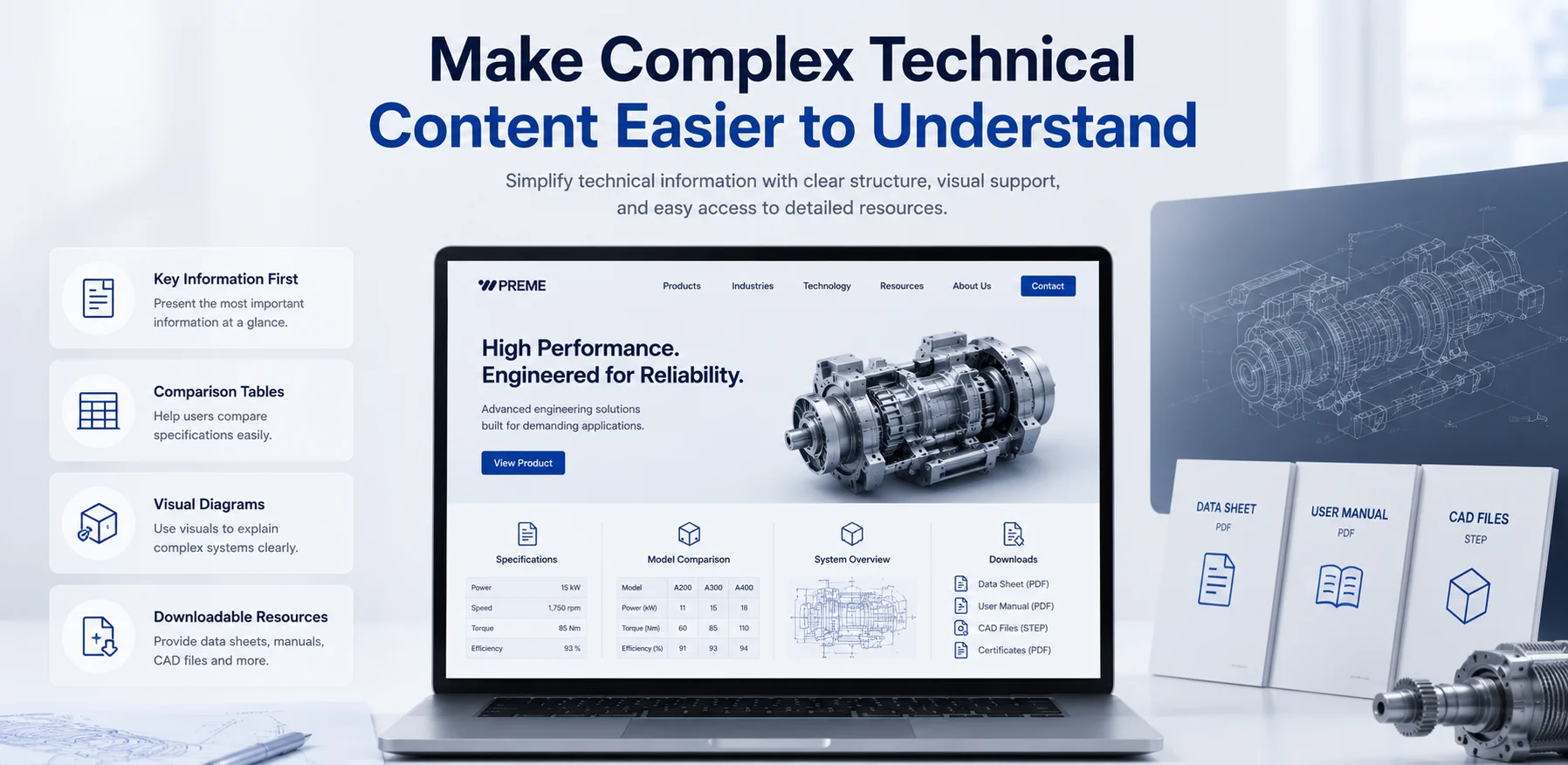
A better structure presents the most important information first. Key functions, advantages, applications, and product differences should be easy to scan before users move into detailed specifications.
Comparison tables can help customers understand differences between product models. Icons and diagrams can explain processes or system relationships. Technical data sheets, PDF documents, CAD files, and manuals can then provide deeper information for users who need it.
This layered approach supports both quick evaluation and detailed technical review. It also prevents the main page from becoming too dense or difficult to read.
Clear content does not make a company appear less technical. It makes the company’s expertise easier to recognize.
Build Trust with Supporting Evidence
Global customers often use a company website as part of their supplier evaluation process.
They are not only looking at what a company sells. They are also checking whether the business has the experience, systems, and reliability required for a long-term partnership.
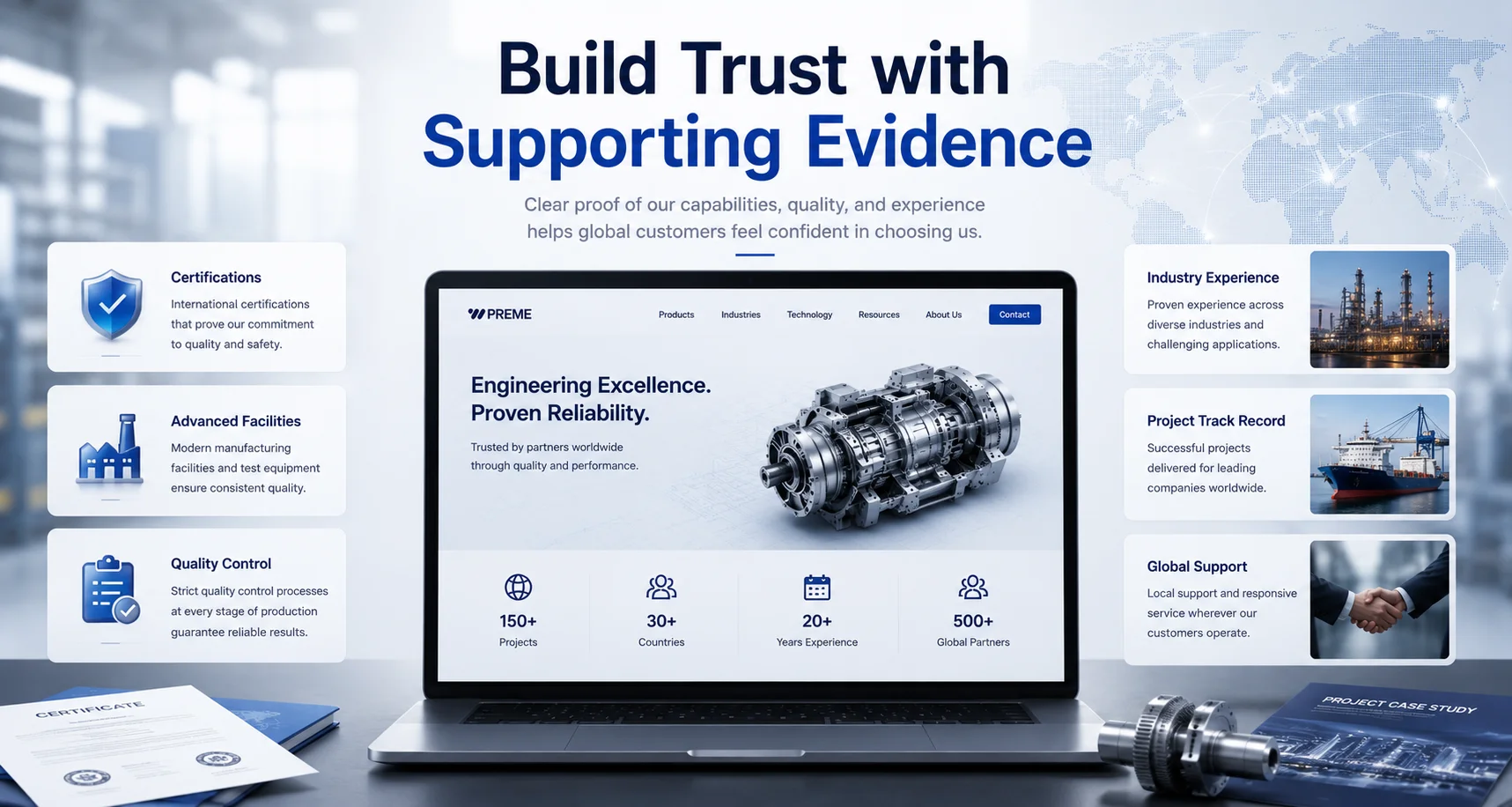
Certifications, production facilities, testing equipment, quality control systems, project history, export experience, and international partnerships can all strengthen credibility. However, these elements should be organized carefully rather than scattered across unrelated pages.
Certifications can be grouped by category. Project experience can be divided by industry. Manufacturing capabilities can be supported with clear descriptions, process images, and measurable information.
Consistency is especially important. If product information, company details, and downloadable documents use different terminology or outdated specifications, confidence can quickly decrease.
A well-structured website helps buyers verify the company’s capabilities without repeatedly searching for supporting evidence.
Prepare the Website for Long-Term Global Growth
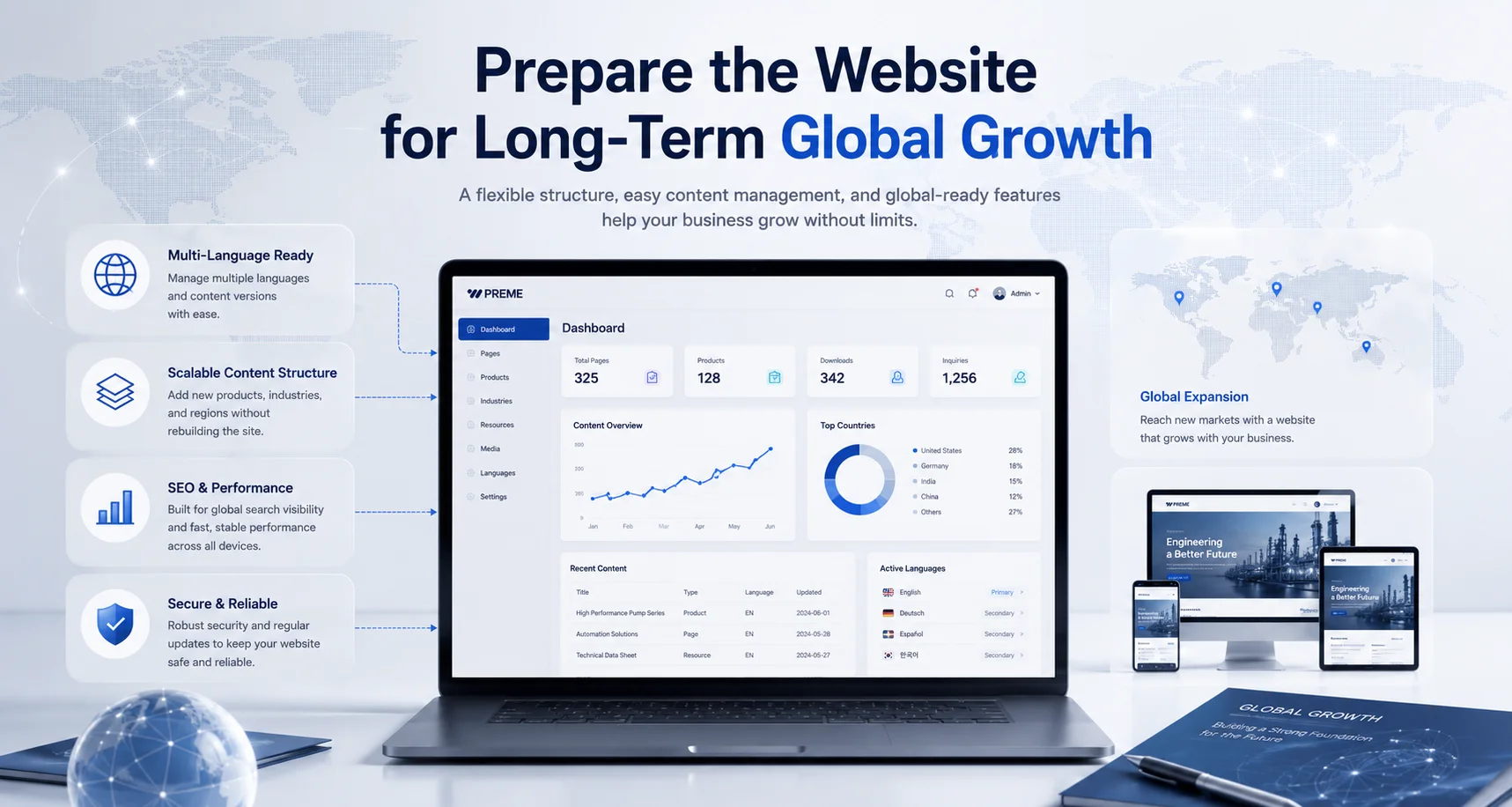
Technical websites usually continue to grow after launch.
New products are added, target markets expand, documents are updated, and additional languages may become necessary. Without a scalable structure, these updates can make the website increasingly difficult to manage.
A flexible content management system allows internal teams to update products, resources, certifications, and project information without rebuilding the entire website. Language versions should also be managed in a way that keeps content consistent across markets.
Search visibility is another important part of long-term growth. Clear page categories, descriptive headings, structured URLs, and accurate metadata help search engines understand the website more effectively.
The inquiry process should also support global business operations. Forms can include fields for company name, country, product interest, project type, and technical requirements. This gives the sales team better information before responding and helps route each inquiry to the appropriate department.
A global technical website should not remain static. It should support the company as products, markets, and customer needs continue to change.
Technical information becomes valuable only when customers can understand and use it.
For global companies, the website must connect technical depth with clear navigation, strong evidence, and a practical inquiry flow. When information is organized around real customer behavior, the website becomes more than a digital brochure. It becomes a business tool that supports trust, communication, and international growth.
WEBPREME designs global websites for technical and B2B companies by combining clear information architecture with scalable content management and international user experience.