Construction Company Website Design for Modern Client Trust
2026.05.18
Modern construction companies are no longer evaluated only by the number of completed projects they have.
Today, clients, developers, investors, and partners often review the company itself before they review the portfolio.
This is one of the biggest reasons construction company website design is changing rapidly.
In the past, many construction websites focused heavily on listing projects, certifications, and company history. While those elements are still important, modern users now expect something more structured and easier to understand.
They want to quickly determine:
Is this company professionally operated? Can this company manage large-scale projects? Is the business trustworthy enough for long-term collaboration? Does the company look stable and organized online?
This is why construction company websites are increasingly becoming “trust-building platforms” rather than simple company introduction pages.
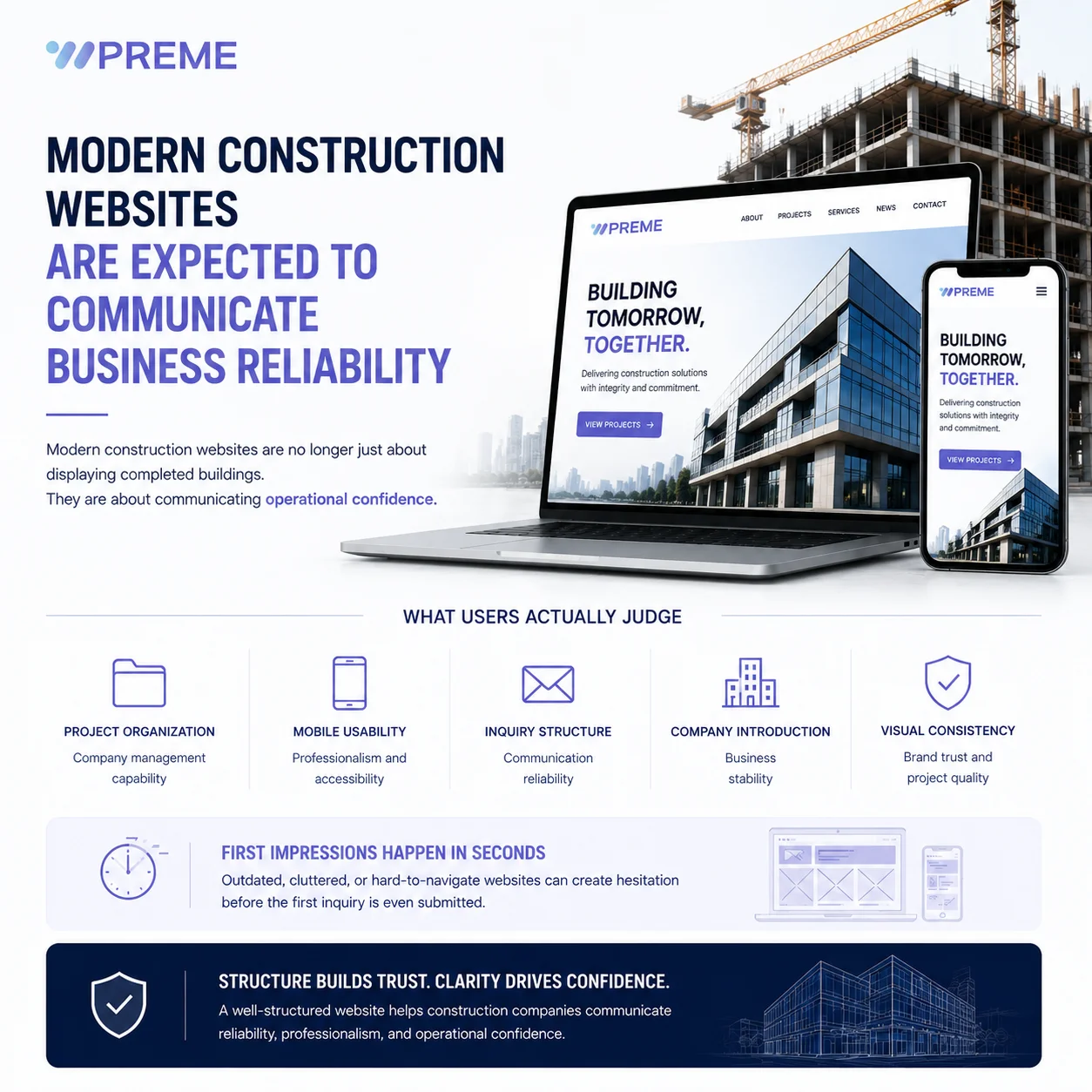
Modern construction websites are expected to communicate business reliability
Many construction companies still operate websites that mainly function as archives.
Large project lists. Multiple image galleries. Long company introductions.
However, when information is presented without structure, even experienced companies can appear smaller or less organized than they actually are.
This becomes even more important in construction because projects usually involve:
High budgets Long schedules Multiple stakeholders Legal and operational responsibilities
As a result, website visitors naturally evaluate operational credibility before making inquiries.
For example, users often pay attention to details such as:
Website Element What Users Actually Judge Project organization Company management capability Mobile usability Professionalism and accessibility Inquiry structure Communication reliability Company introduction Business stability Visual consistency Brand trust and project quality
A construction company may have strong technical capability, but if the website feels outdated, cluttered, or difficult to navigate, visitors can still hesitate.
That hesitation often happens before the first inquiry is even submitted.
In many cases, users form their first impression within only a few seconds.
If the homepage feels old, inconsistent, or difficult to understand, visitors may assume the company itself operates in a similar way.
This is why visual clarity and information structure now play a much larger role than before.
Modern construction websites are no longer just about displaying completed buildings.
They are about communicating operational confidence.
Construction websites are becoming part of the client decision process
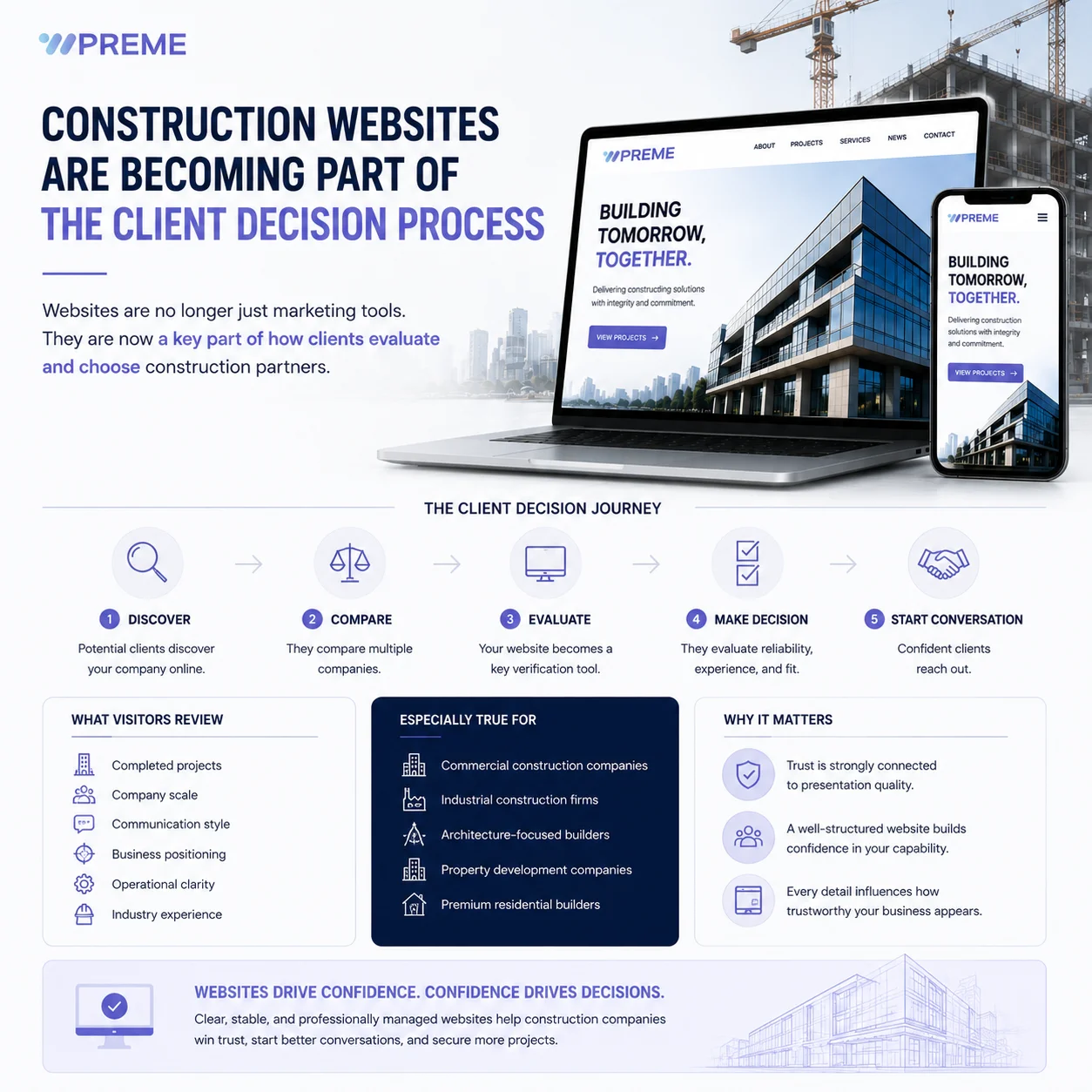
One important shift is that websites are now directly involved in the decision-making stage.
Potential clients rarely contact a construction company immediately after discovering the business.
Instead, they usually compare multiple companies first.
During this process, the website becomes a key verification tool.
Visitors often review:
Completed projects Company scale Communication style Business positioning Operational clarity Industry experience
This means the website is no longer functioning only as marketing material.
It becomes part of the actual business evaluation process.
This is especially true for:
Commercial construction companies Industrial construction firms Architecture-focused builders Property development companies Premium residential builders
In these industries, trust is strongly connected to presentation quality.
A well-structured website helps users feel that the company is organized, stable, and capable of managing complex projects professionally.
Construction projects often involve long-term communication and ongoing coordination.
Because of this, users naturally look for signs of reliability before starting conversations.
Even details such as inquiry accessibility, project categorization, image quality, and page consistency can influence how trustworthy the business appears.
This is why construction companies increasingly need websites that feel clear, stable, and professionally managed.
Mobile experience is now equally important in construction website design
Many construction companies still underestimate mobile website experience.
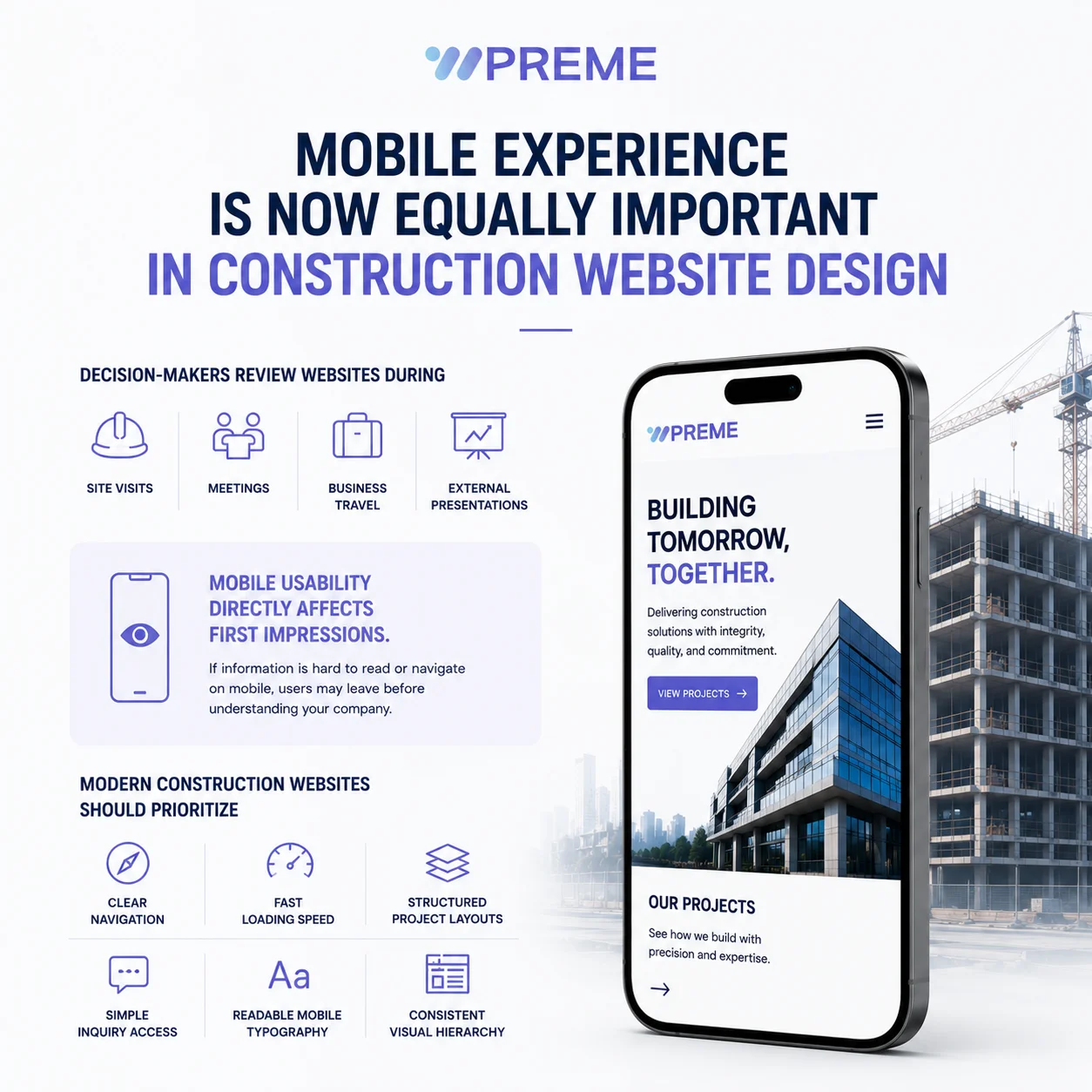
However, decision-makers increasingly review websites during:
Site visits Meetings Business travel External presentations
This means mobile usability directly affects first impressions.
If project information becomes difficult to read on mobile devices, users may leave before understanding the company properly.
Modern construction websites therefore need to prioritize:
Clear navigation Fast loading speed Structured project layouts Simple inquiry access Readable mobile typography Consistent visual hierarchy
The goal is not simply making the website “look modern.”
The goal is making information easier to evaluate.
This is a major difference.
Modern construction website design is less about visual decoration and more about reducing uncertainty during the review process.
Responsive layouts also play an important role in maintaining brand consistency.
If desktop and mobile experiences feel disconnected, users can quickly lose confidence in the overall professionalism of the company.
Today, users expect smooth browsing experiences regardless of device type.
Construction websites that fail to adapt properly to mobile environments often appear outdated even if the company itself has strong experience and capability.
Strong construction websites create confidence before communication begins
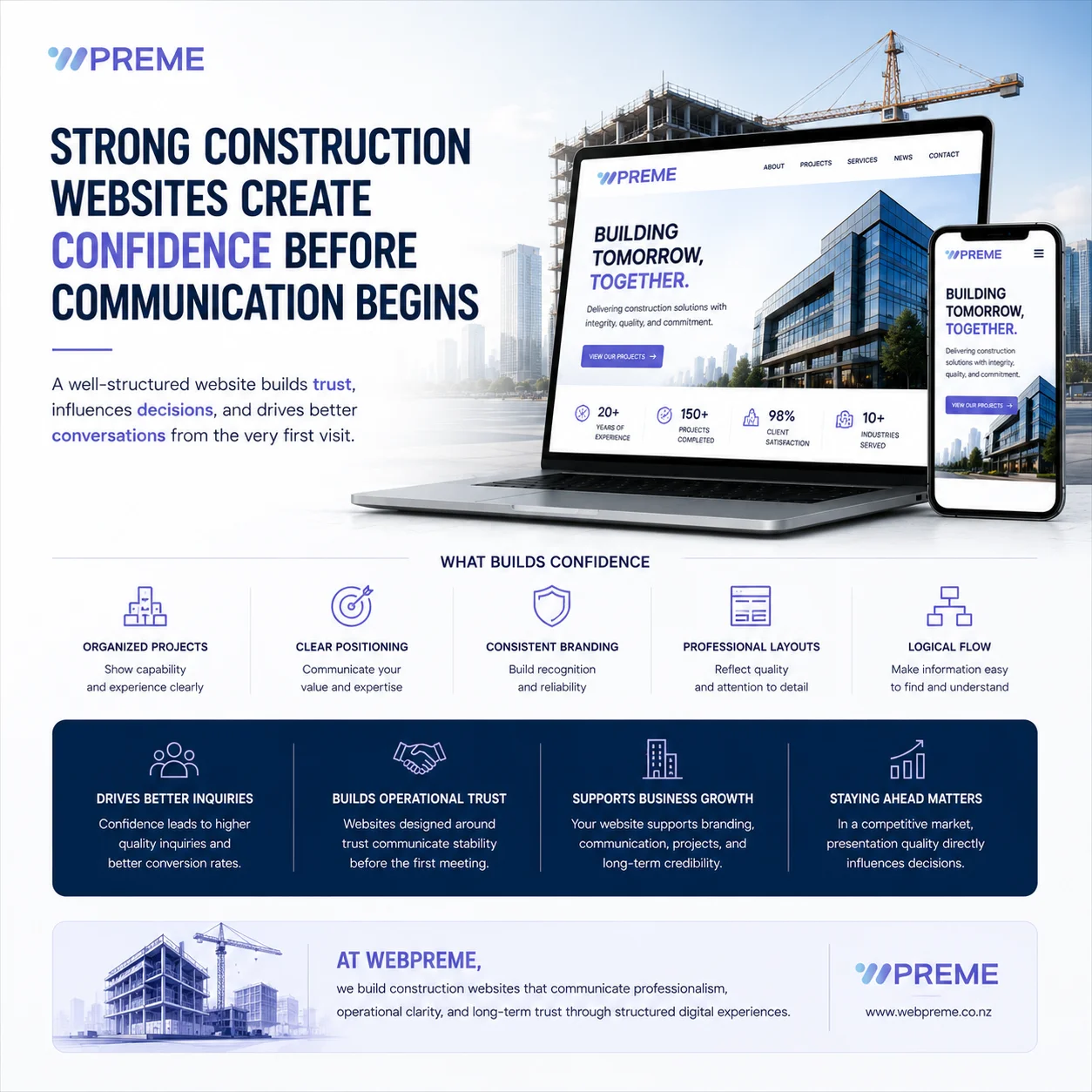
One of the most important roles of a construction company website is helping users feel comfortable before direct communication starts.
When visitors see:
Organized project structures Clear company positioning Consistent branding Professional layouts Logical information flow
they often feel more confident contacting the business.
That confidence can significantly influence inquiry quality and conversion rates.
This is why modern construction company websites are increasingly designed around operational trust rather than simple portfolio quantity.
The companies that communicate stability clearly online often create stronger first impressions long before meetings or proposals begin.
Construction company websites are now expected to support branding, communication, project presentation, and long-term business credibility at the same time.
As competition continues to increase, simply having a website is no longer enough.
The overall presentation quality and operational clarity of the website itself can directly affect how users evaluate the business.
At WEBPREME, we focus on building construction company websites that help businesses communicate professionalism, operational clarity, and long-term trust through structured digital experiences.