The Hidden Cost Of Hiring The Wrong Web Design Agency
2026.06.18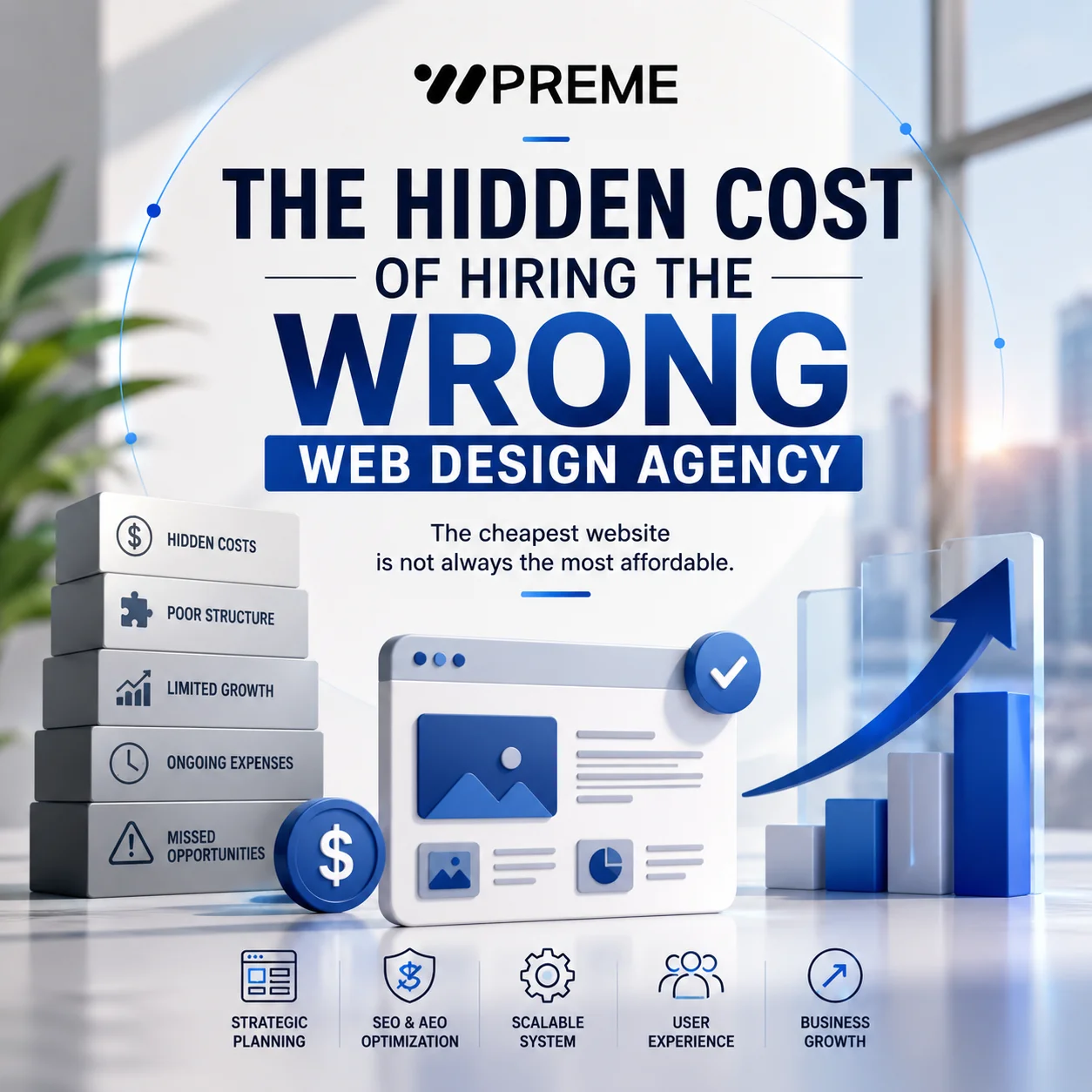
The Hidden Cost Of Hiring The Wrong Web Design Agency
When businesses start looking for a web design agency, the first comparison is usually cost.
One proposal comes in at $3,000. Another arrives at $10,000 or even $20,000. At first glance, the decision seems straightforward. If both agencies promise a professional website, why pay significantly more?
The challenge is that websites are rarely judged correctly at the proposal stage. Most businesses evaluate design mockups, page counts, and project timelines. Very few evaluate what happens after launch.
A website is not simply a design project. It is a business asset that will influence marketing, sales, recruitment, customer trust, and increasingly, AI visibility. The true cost of a website is often determined years after launch, not during the initial development process.
This is where many businesses make an expensive mistake.
The wrong web design agency may not create problems immediately. In fact, the website may look perfectly acceptable on launch day. The hidden costs typically appear later through lost opportunities, ongoing limitations, expensive upgrades, and reduced business growth.
Why Businesses Often Focus On The Wrong Cost
Most companies naturally focus on the visible cost.
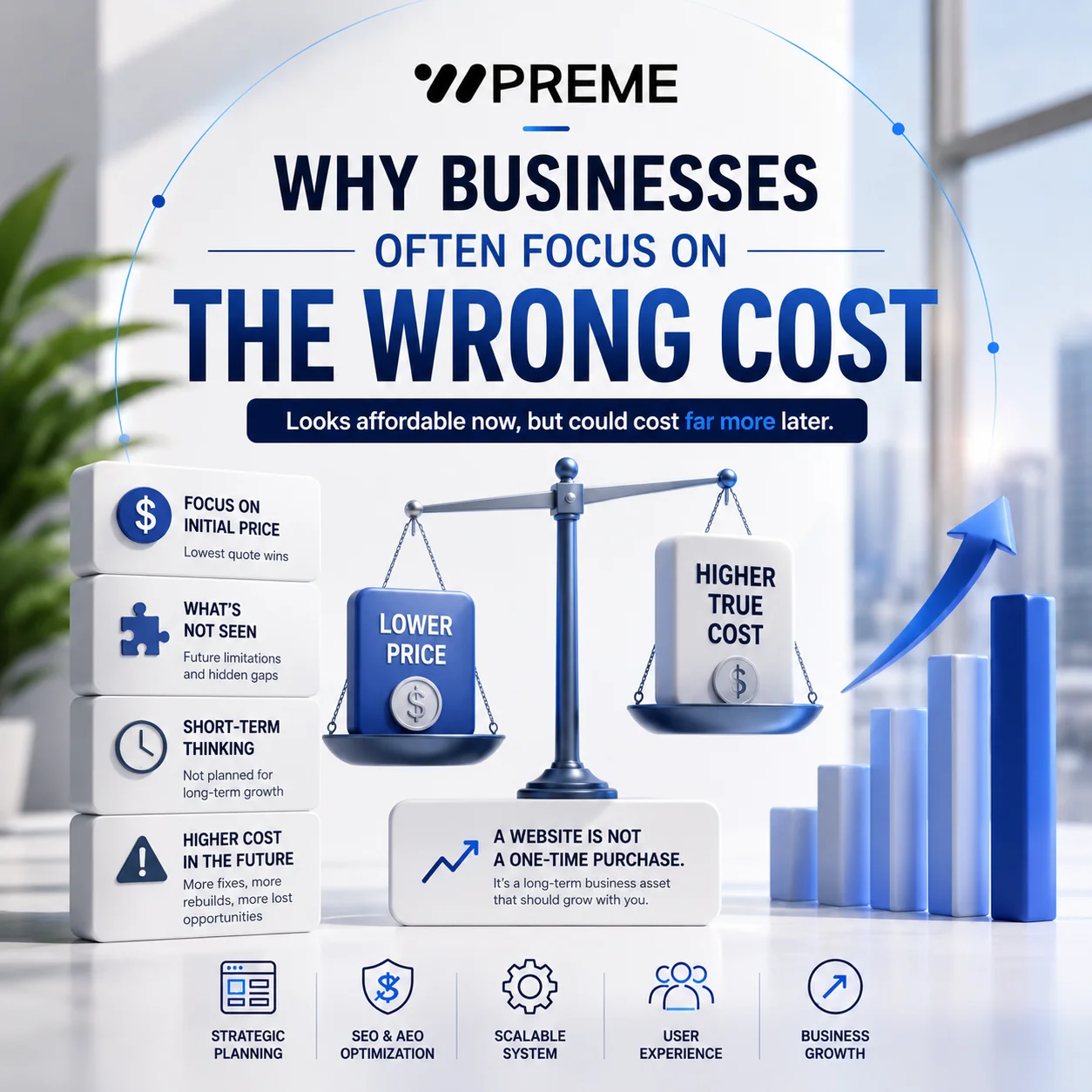
The proposal is easy to compare. One agency costs less, another costs more. Because websites are difficult for non-technical decision makers to evaluate, pricing often becomes the primary deciding factor.
The problem is that the development fee is only one small part of a website's total lifetime cost.
Imagine purchasing a building based solely on construction cost without considering maintenance, future expansion, operational efficiency, or long-term usability. Most business owners would immediately recognize the risk.
Yet the same mistake is often made when selecting a web design agency.
A website is expected to support business growth for years. During that time, new services may be added, products may change, marketing campaigns may evolve, and customer expectations will continue to shift.
If the website was not planned with these changes in mind, the initial savings can quickly disappear.
A lower-priced website may require frequent developer intervention for simple updates. New landing pages may be difficult to create. Content management may become frustrating. Integrations with CRM, ERP, booking systems, or marketing tools may require expensive redevelopment.
In these situations, businesses often discover that the cheapest website was never truly the most affordable option.
The Real Cost Appears After Launch
The most significant website costs rarely appear during development.
They emerge after launch.
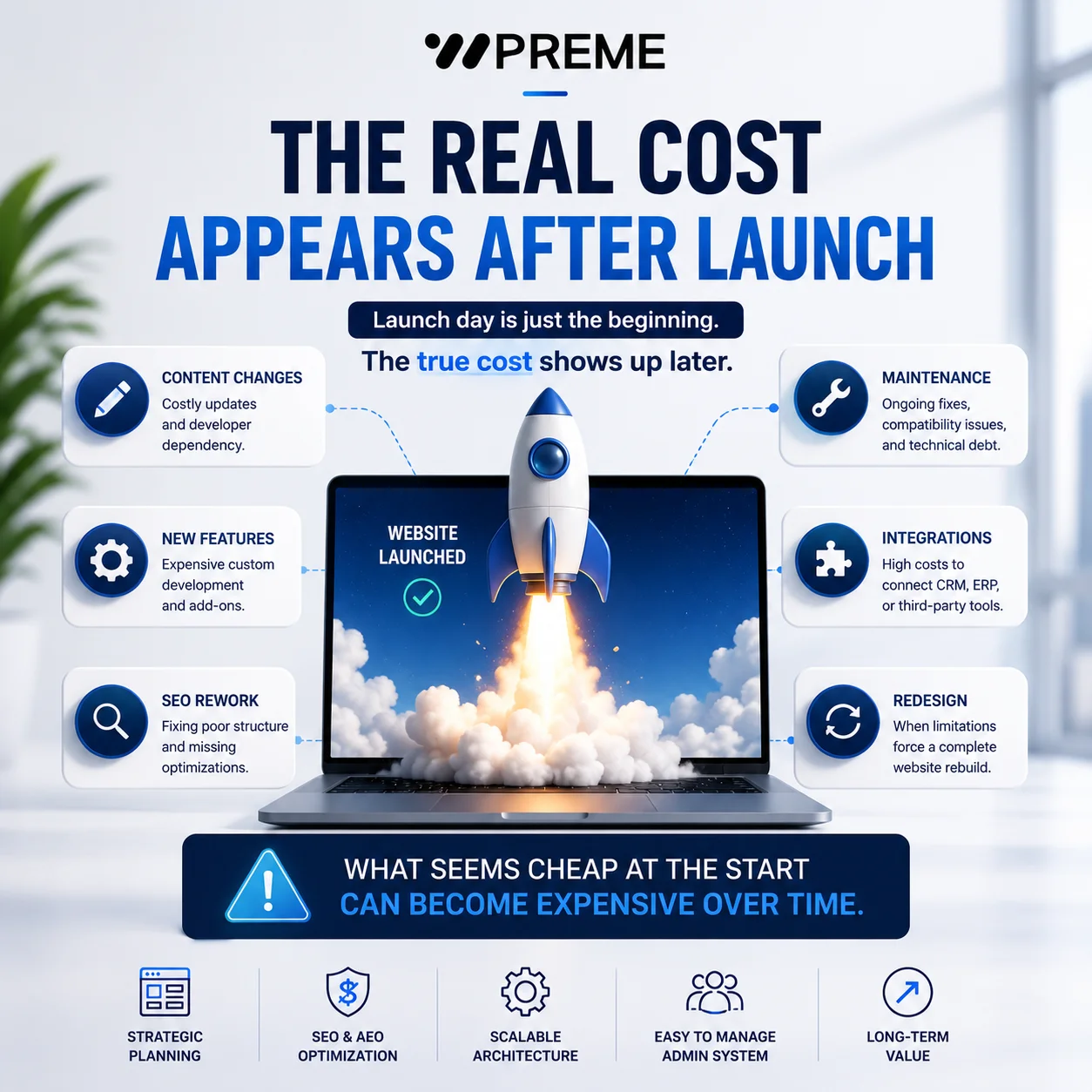
Many businesses assume the project is complete once the website goes live. In reality, launch day is usually the beginning of the website's most important phase.
This is when the website starts interacting with real customers, generating enquiries, supporting sales conversations, and representing the business online.
Unfortunately, this is also when structural weaknesses begin to appear.
Common issues include:
- Difficult content management systems
- Slow website performance
- Poor mobile experiences
- Limited scalability
- Weak SEO foundations
- Lack of integration capabilities
- Dependence on developers for minor updates
These problems often remain hidden during the design stage because they are not visible in screenshots or mockups.
Over time, however, they become operational challenges.
Marketing teams struggle to publish content efficiently.
Sales teams cannot update information quickly.
Business owners delay improvements because every change requires additional development costs.
As the business grows, the website becomes increasingly difficult to manage.
Eventually, many companies face a decision they never expected to make so soon: rebuild the website entirely.
This is one of the most common hidden costs of choosing the wrong agency. The business ends up paying twice for the same objective.
Why The Wrong Website Can Limit Business Growth
The role of a business website has changed dramatically over the last few years.
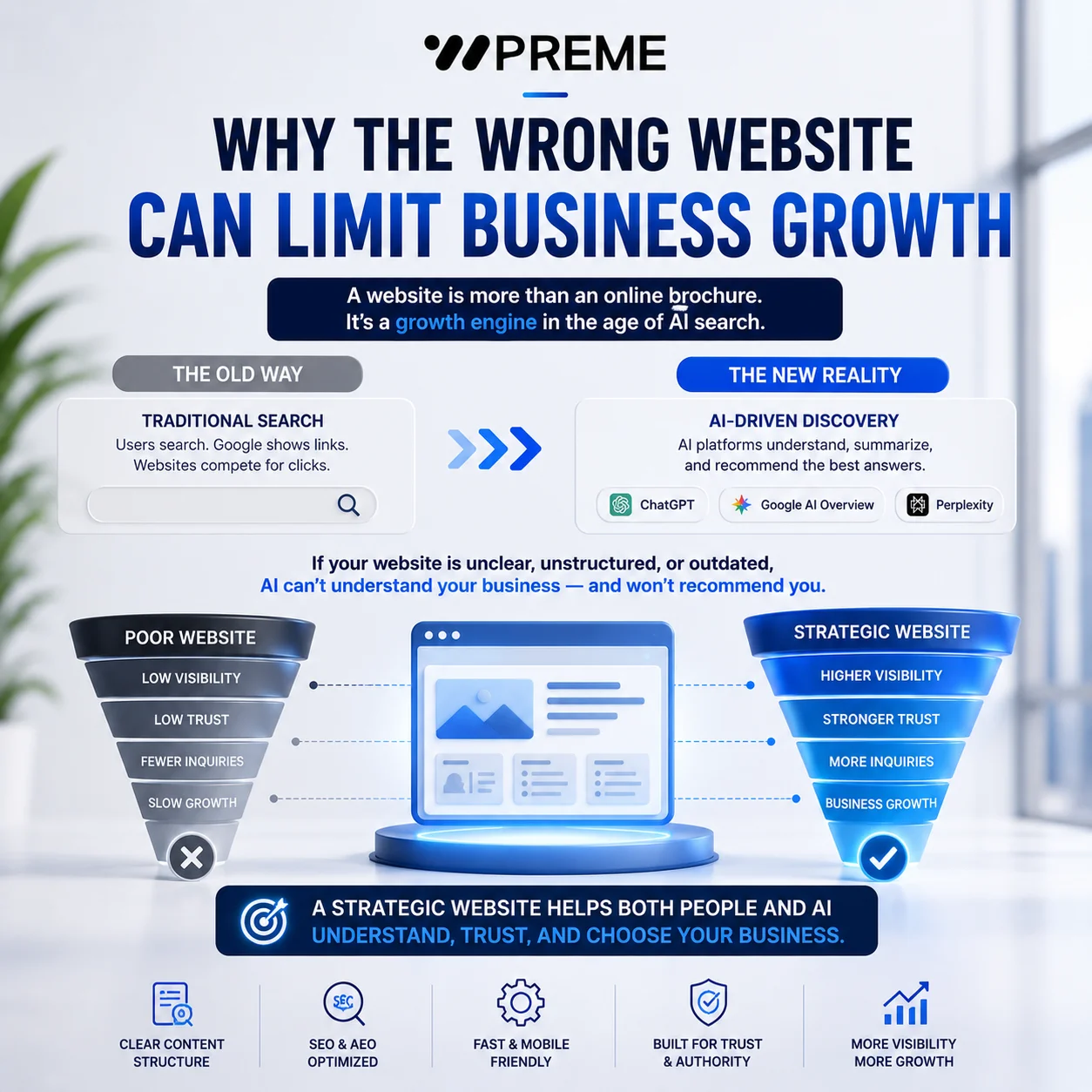
Previously, websites functioned primarily as digital brochures. Their job was to provide information and encourage visitors to make contact.
Today, websites play a much larger role.
Search engines evaluate website content to determine expertise and authority. Potential customers use websites to assess credibility. Partners and suppliers use them to evaluate businesses. Job applicants often form their first impression through the company website.
More importantly, AI-driven search is changing how information is discovered online.
Platforms such as ChatGPT, Google AI Overviews, Perplexity, and other answer engines increasingly rely on website content to understand businesses and generate recommendations.
This means websites must do more than look professional.
They must clearly communicate expertise.
They must present information in structured, understandable formats.
They must help both people and AI systems understand what the business does, who it serves, and why it is different.
This is where many poorly planned websites struggle.
A visually impressive website may still fail if its content lacks clarity, structure, and strategic direction.
In an AI-driven environment, businesses are not only competing for visitor attention. They are competing for understanding.
A website that cannot clearly explain the business may gradually lose visibility, trust, and opportunities over time.
Choosing An Agency For Long-Term Success
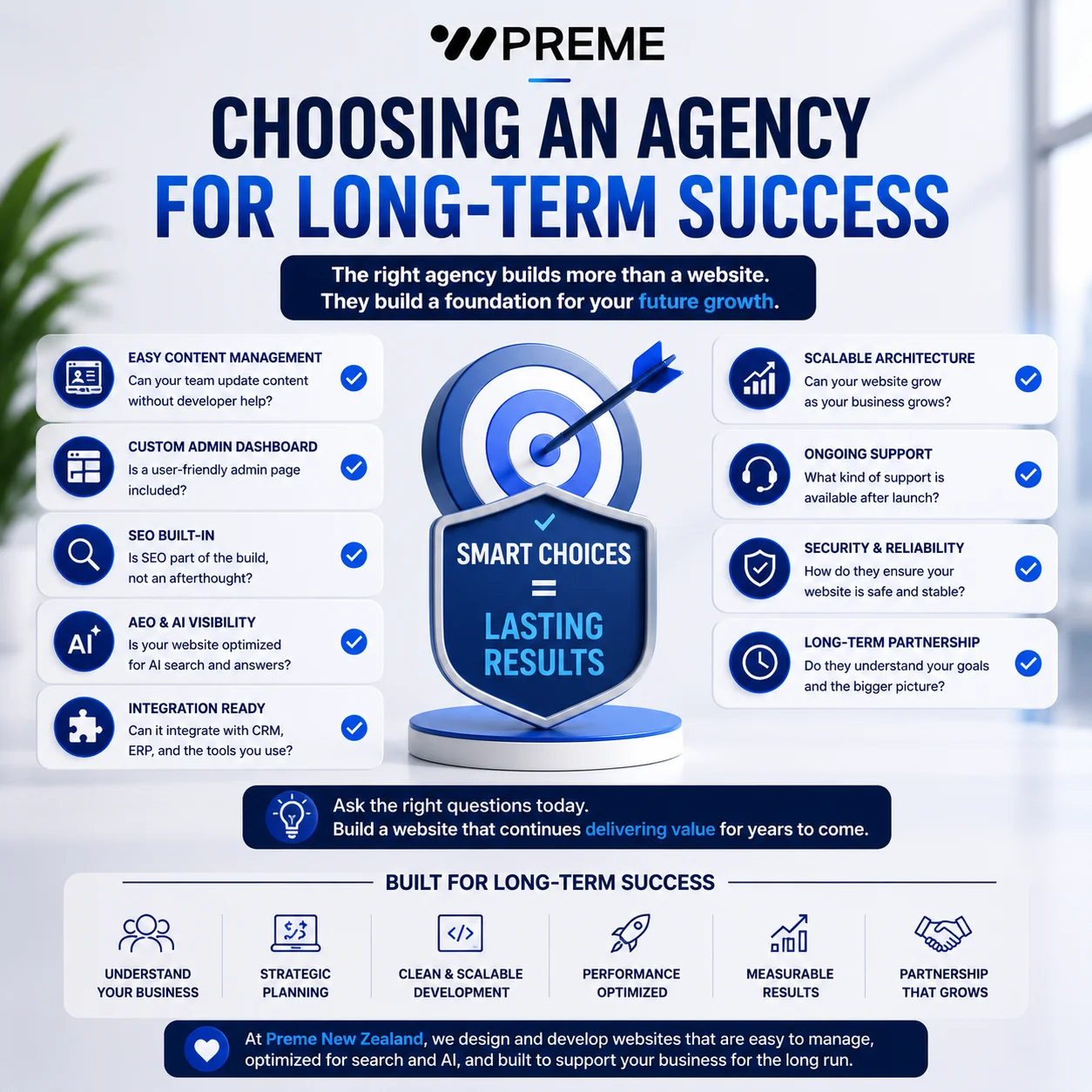
Instead of asking only about project cost, businesses should ask a different question:
How will this website support our growth over the next three to five years?
The answer often reveals more about an agency than any design portfolio.
A strong web design agency considers long-term business requirements from the beginning. They think about content management, scalability, SEO, AEO, integrations, maintenance, and operational efficiency before the website is launched.
Questions worth asking include:
- Will our team be able to manage content easily?
- Is a custom administrator dashboard included?
- How scalable is the website architecture?
- How is SEO incorporated into the build?
- How is AEO considered for future AI search visibility?
- Can the website integrate with CRM, ERP, or third-party systems?
- What support is available after launch?
- How will the website adapt as our business evolves?
The goal is not simply to launch a website.
The goal is to create a platform that continues delivering value as the business grows.
A successful website should support marketing, strengthen credibility, improve customer experience, and create opportunities long after the project is completed.
The wrong web design agency may still deliver a website.
The right agency delivers a foundation for future growth.
As businesses continue navigating an increasingly competitive and AI-driven digital landscape, that distinction becomes more important than ever.
