Why Global Websites Need More Than Multiple Languages
2026.06.02
Why Global Websites Need More Than Multiple Languages
Many businesses assume that creating a global website is simply a matter of translating their existing content into different languages.
At first glance, that idea seems reasonable.
If international visitors can read the content, the website should work globally.
However, businesses that actively work with overseas customers often discover that translation alone does not solve the real challenge.
A website that performs well in one country does not automatically perform well in another.
International users evaluate information differently, expect different levels of detail, and often make decisions much faster than domestic visitors.
Because of this, successful global websites require much more than multiple language options.
They require a different approach to communication, information structure, and user experience.
Different Markets Often Have Different Expectations

One of the biggest mistakes businesses make is assuming that all users behave in the same way.
In reality, user expectations vary significantly across regions.
A website that works effectively for local customers may not provide enough information for international buyers.
For example, many overseas visitors want to understand several things almost immediately:
- What does the company actually do?
- Where is the business located?
- What industries does it serve?
- Does it have international experience?
- How can someone make contact?
If these answers are difficult to find, users often leave before exploring deeper pages.
This is particularly important in B2B industries.
International buyers are usually comparing multiple suppliers at the same time.
They often spend only a short period evaluating each website before deciding whether a company deserves further consideration.
Because of this behavior, global websites should focus on clarity before complexity.
The goal is not simply to provide more information.
The goal is to provide the right information quickly.
Translation Does Not Solve Information Problems
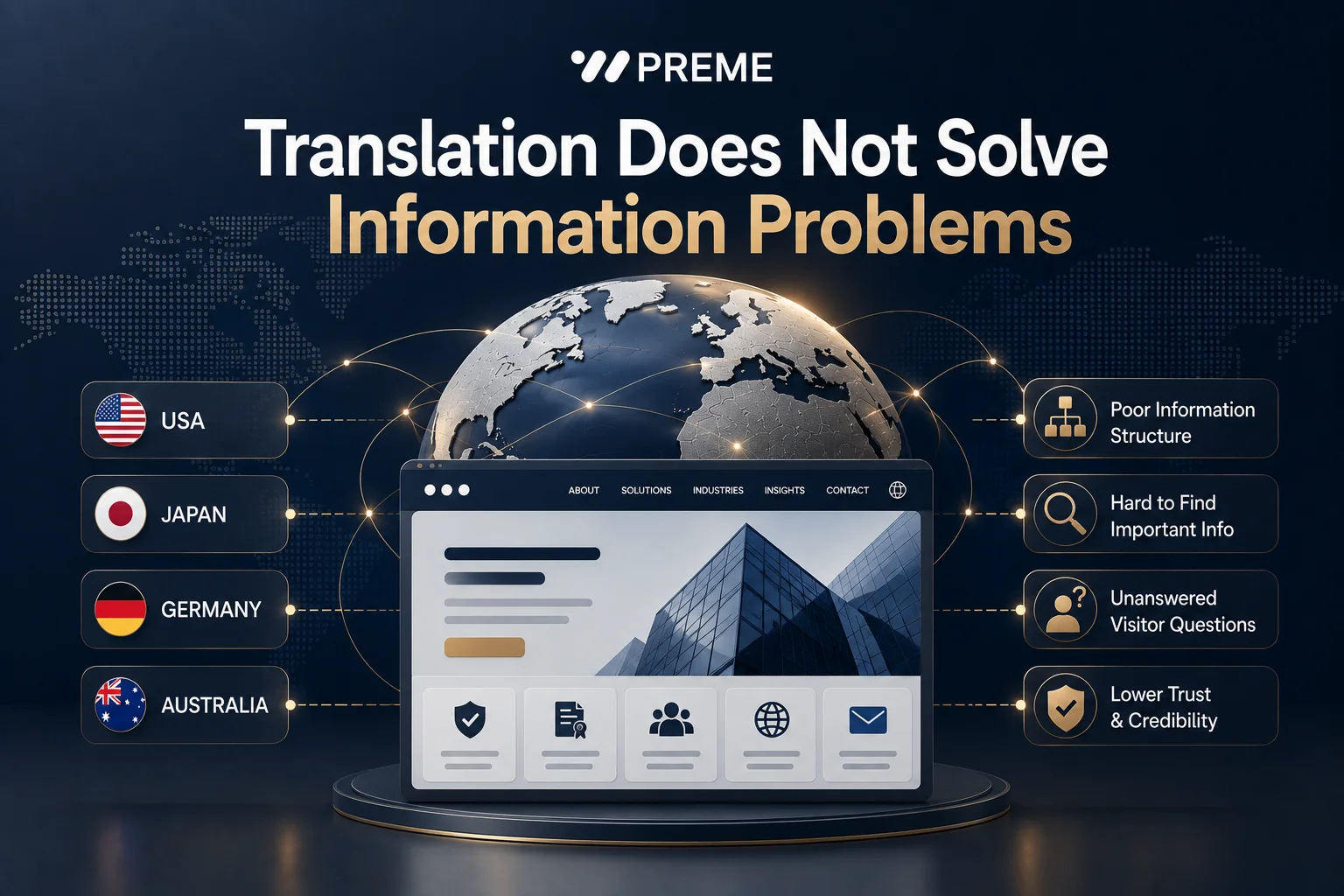
Many companies invest heavily in translation while overlooking the actual structure of their website.
As a result, they end up with a multilingual website that still performs poorly.
The reason is simple.
Translation changes the language.
It does not change the user experience.
If visitors struggle to understand the company in the original language, translating that same structure into five additional languages will not solve the problem.
For example, some websites place important information deep within multiple navigation levels.
Others focus heavily on company history while providing very little information about products, services, or capabilities.
International users rarely spend time searching for essential information.
If they cannot find answers quickly, they often move to another supplier.
A successful global website should therefore review not only language but also content priorities.
Businesses should ask:
- What information matters most to overseas visitors?
- What questions are asked most frequently during sales discussions?
- What concerns do international buyers usually have?
The answers to these questions should influence website structure before translation even begins.
Trust also becomes significantly more important when visitors are evaluating a company from another country.
Local customers may already recognize a business name or understand its reputation.
International visitors often rely entirely on what they see on the website.
Case studies, certifications, export experience, client references, and clear contact information all help reduce uncertainty and improve credibility.
A global website is not simply a digital brochure.
It is often the first place where international buyers decide whether a company is trustworthy enough to contact.
Localization Is More Important Than Translation
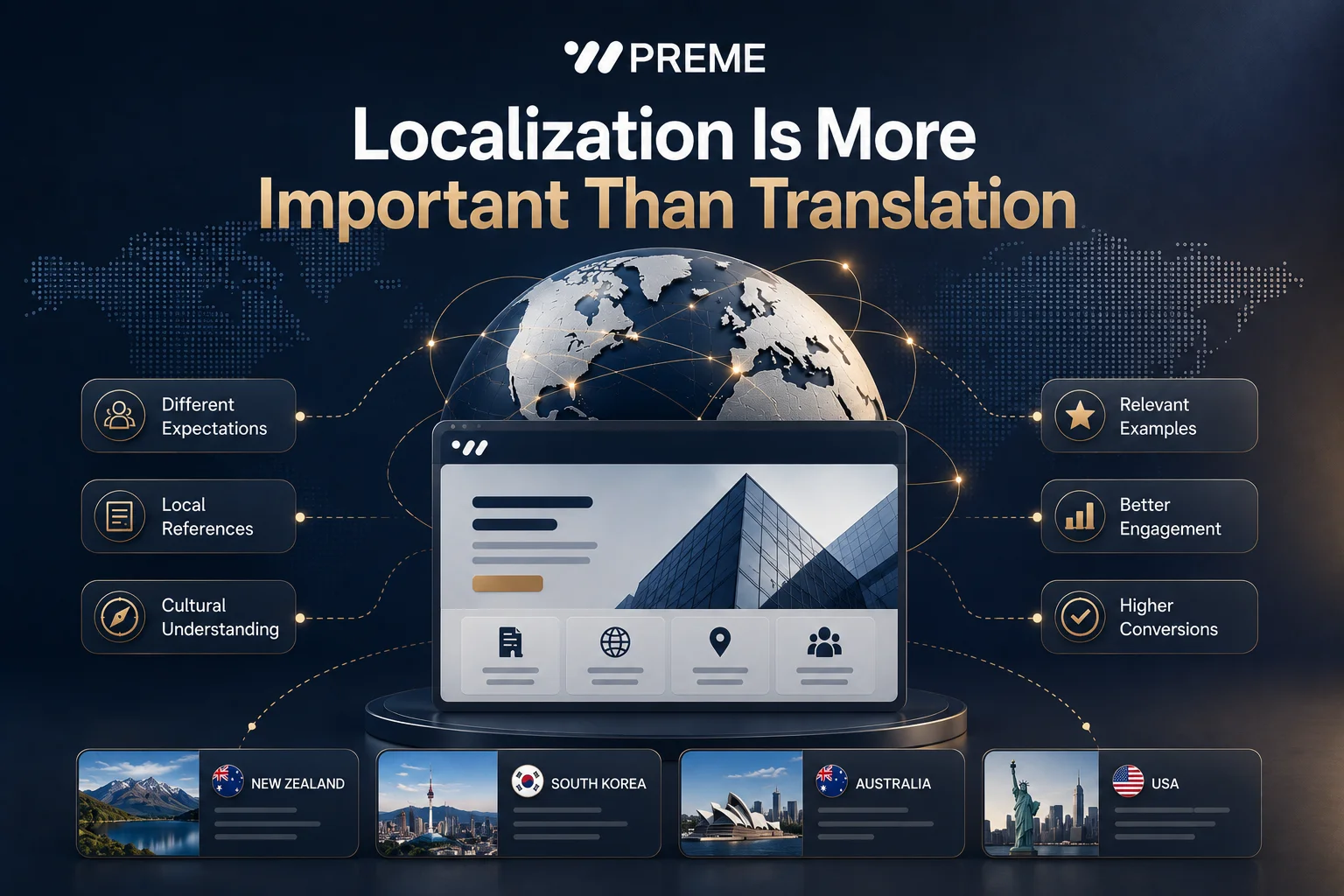
Another important distinction is the difference between translation and localization.
Translation converts words from one language into another.
Localization adapts content for a specific audience.
These are not the same thing.
For example, a New Zealand visitor may expect different examples, references, or terminology than a visitor from South Korea.
An Australian business owner may prioritize practical information differently than a domestic audience.
Even navigation patterns and content hierarchy can vary depending on market expectations.
Localization helps businesses present information in a way that feels natural to the target audience.
This often improves engagement, trust, and conversion rates.
Without localization, websites may technically support multiple languages while still feeling unfamiliar or difficult to navigate.
As businesses expand internationally, this becomes increasingly important.
A website must support future growth, additional markets, new language versions, and country-specific content requirements.
Planning for these possibilities early often reduces redevelopment costs and creates a stronger foundation for long-term international expansion.
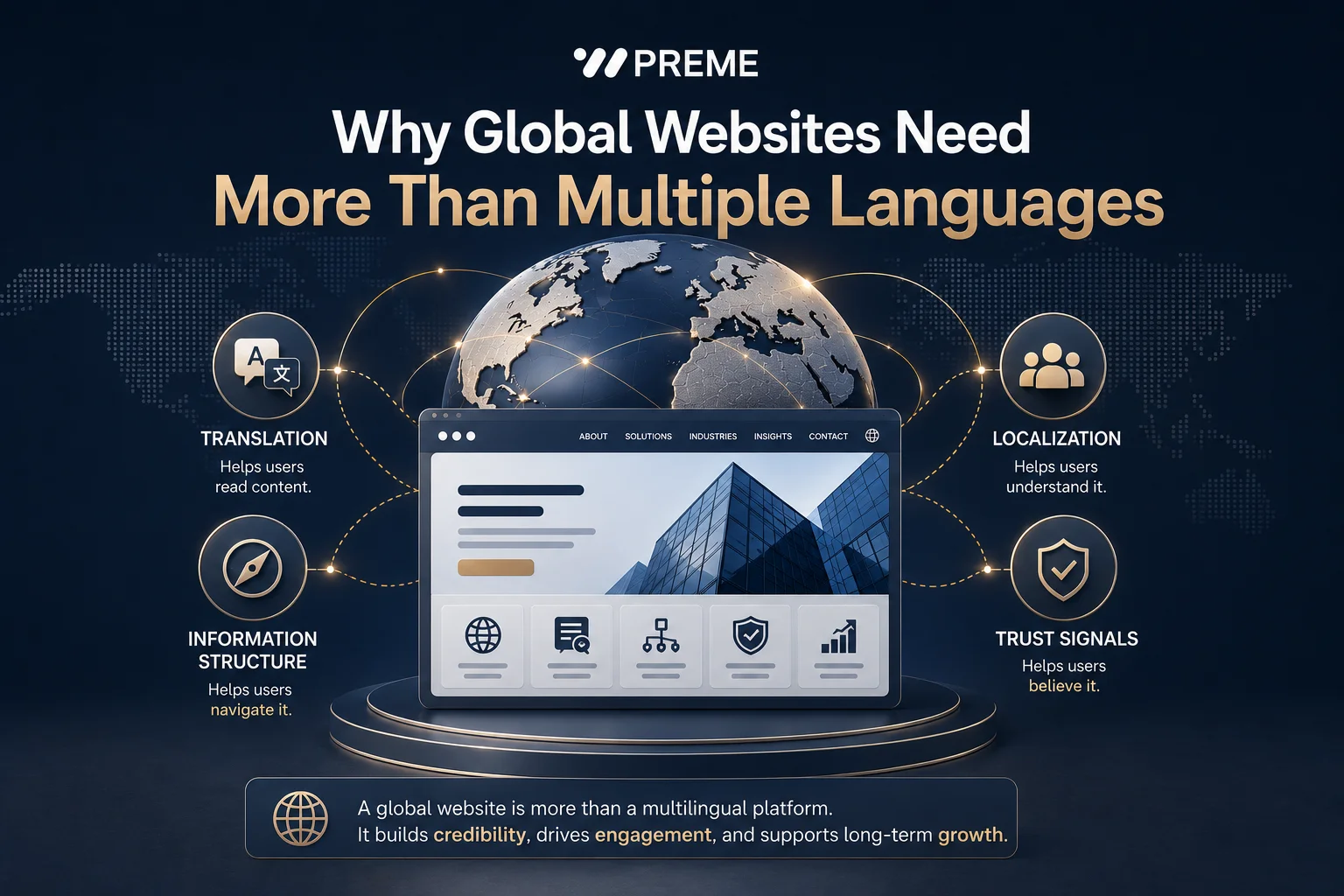
Why Global Websites Need More Than Multiple Languages
Many companies begin their global website journey by focusing on translation.
While language support is important, it is only one part of a much larger picture.
Successful international websites are built around how global users evaluate businesses, search for information, and make decisions.
Translation helps users read content.
Localization helps users understand it.
Information structure helps users navigate it.
Trust signals help users believe it.
When these elements work together, a website becomes more than a multilingual platform.
It becomes a tool that supports international credibility, stronger engagement, and long-term business growth.
For businesses targeting overseas markets, the real goal is not simply to make content available in multiple languages.
The goal is to create a website that feels relevant, trustworthy, and easy to understand for every audience that visits it.
