How to decide whether a website builder is right for your business
2026.06.01
The Hidden Cost of Cheap Website Builders
For many businesses, a website builder seems like the perfect solution.
The promise is simple.
Lower costs, faster launch times, and no need for complex development.
For startups, small businesses, and companies launching a new service, that offer can be difficult to ignore.
After all, if a website looks professional and functions properly, why spend more?
The problem is that most businesses evaluate website platforms based on their current situation.
Very few evaluate them based on where the business may be in three or five years.
That is often where the hidden cost begins.
Why website builders have become so popular
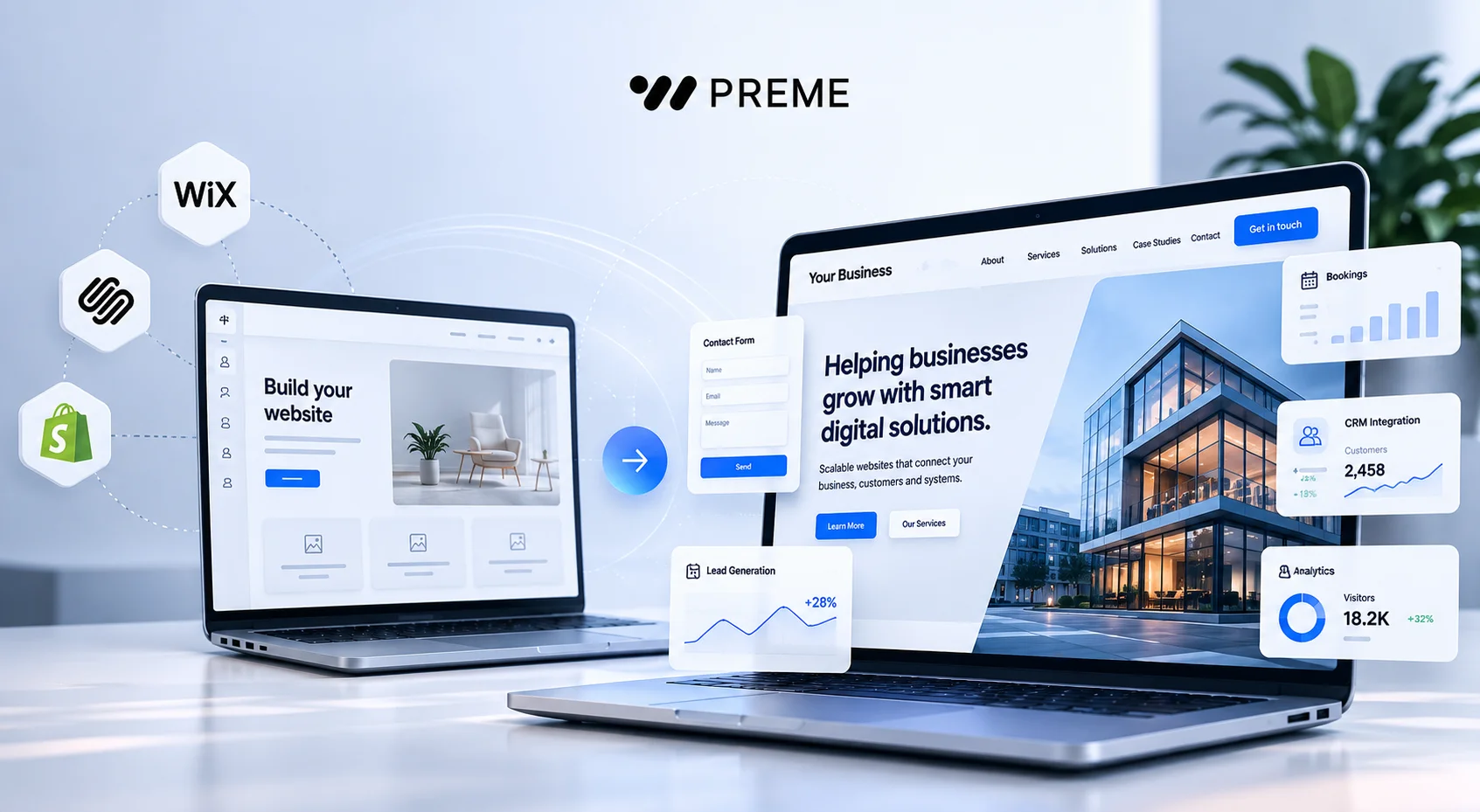
There is a reason platforms like Wix, Squarespace, Shopify, and similar website builders have grown rapidly.
They solve a real business problem.
Many companies simply need a professional online presence without investing heavily in development.
For businesses that primarily need company information, service descriptions, contact forms, and basic lead generation, website builders can be an excellent option.
They reduce development time.
They reduce technical complexity.
They allow businesses to manage content without relying on developers for every update.
For many local businesses, consultants, agencies, and service providers, these advantages are more than enough.
The issue is not that website builders are bad.
The issue is that businesses often assume the platform that works today will continue supporting the company as it grows.
A website that feels perfect during the first year may not feel nearly as flexible once the business begins expanding.
The real cost appears when the business evolves
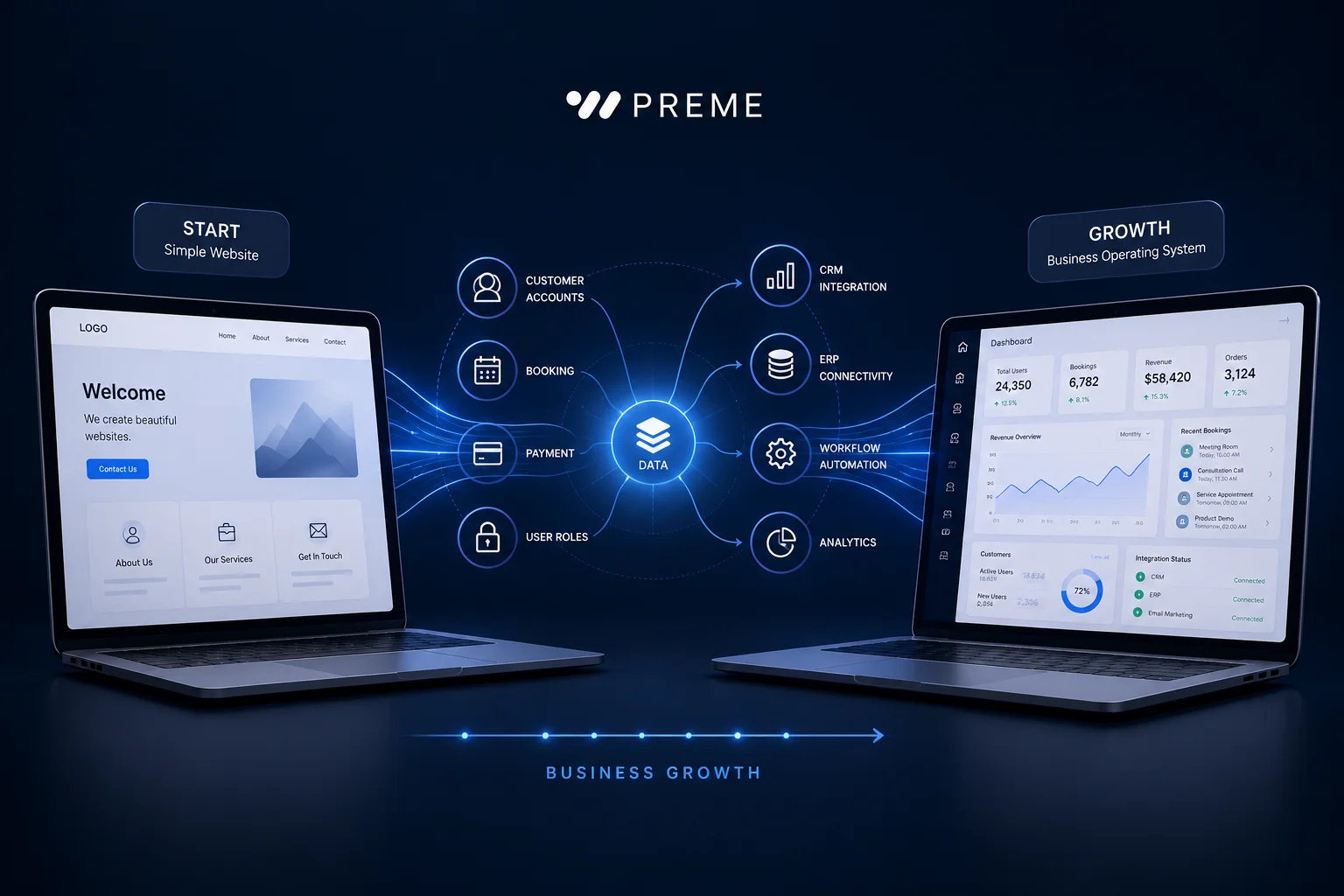
The first version of a website rarely remains the final version.
As businesses grow, websites often need to perform entirely different functions than originally planned.
A simple contact form may no longer be enough.
The business may need customer accounts, booking functionality, CRM integration, ERP connectivity, workflow automation, or multiple user roles and permissions.
These requirements rarely exist when the website is first launched.
They appear gradually as operations become more sophisticated.
This is often the moment when businesses discover that their website is no longer just a marketing tool.
It has become part of daily business operations.
The challenge is that many website builders were originally designed to simplify website creation, not necessarily to support complex operational growth.
As a result, businesses sometimes find themselves adding more plugins, more subscriptions, and more workarounds simply to achieve functionality that was never considered during the original project.
What initially felt simple can slowly become more difficult to manage.
What businesses usually discover after launching a cheap website
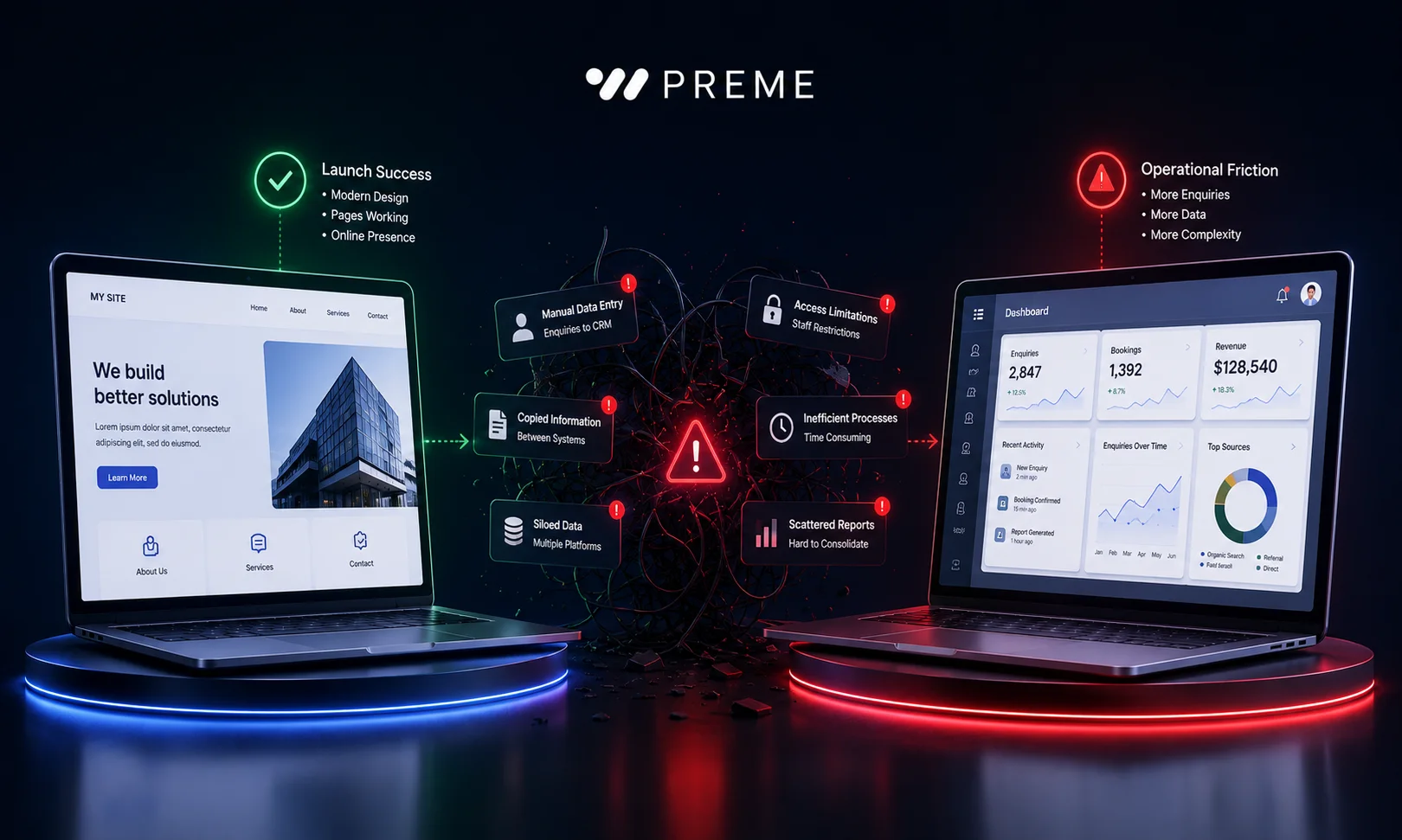
Most companies are happy with their website immediately after launch.
The design looks modern.
The pages work correctly.
The business finally has an online presence.
For the first few months, everything feels successful.
The challenges typically appear later.
A company launches additional services.
Marketing campaigns generate more enquiries.
New staff members require access.
Customer information becomes more valuable.
Internal processes become more complex.
Suddenly, the website needs to interact with other parts of the business.
Many companies discover that tasks which appear simple can become surprisingly inefficient.
Customer enquiries may need to be manually transferred into a CRM.
Booking information may need to be copied between systems.
Marketing reports may require information from multiple platforms.
Staff members may struggle with access limitations.
Individually, these issues may not seem significant.
Collectively, however, they create operational friction.
The business may have saved money on development but lost efficiency elsewhere.
That hidden operational cost is rarely visible during the initial website purchase.
Cheap does not always mean low cost
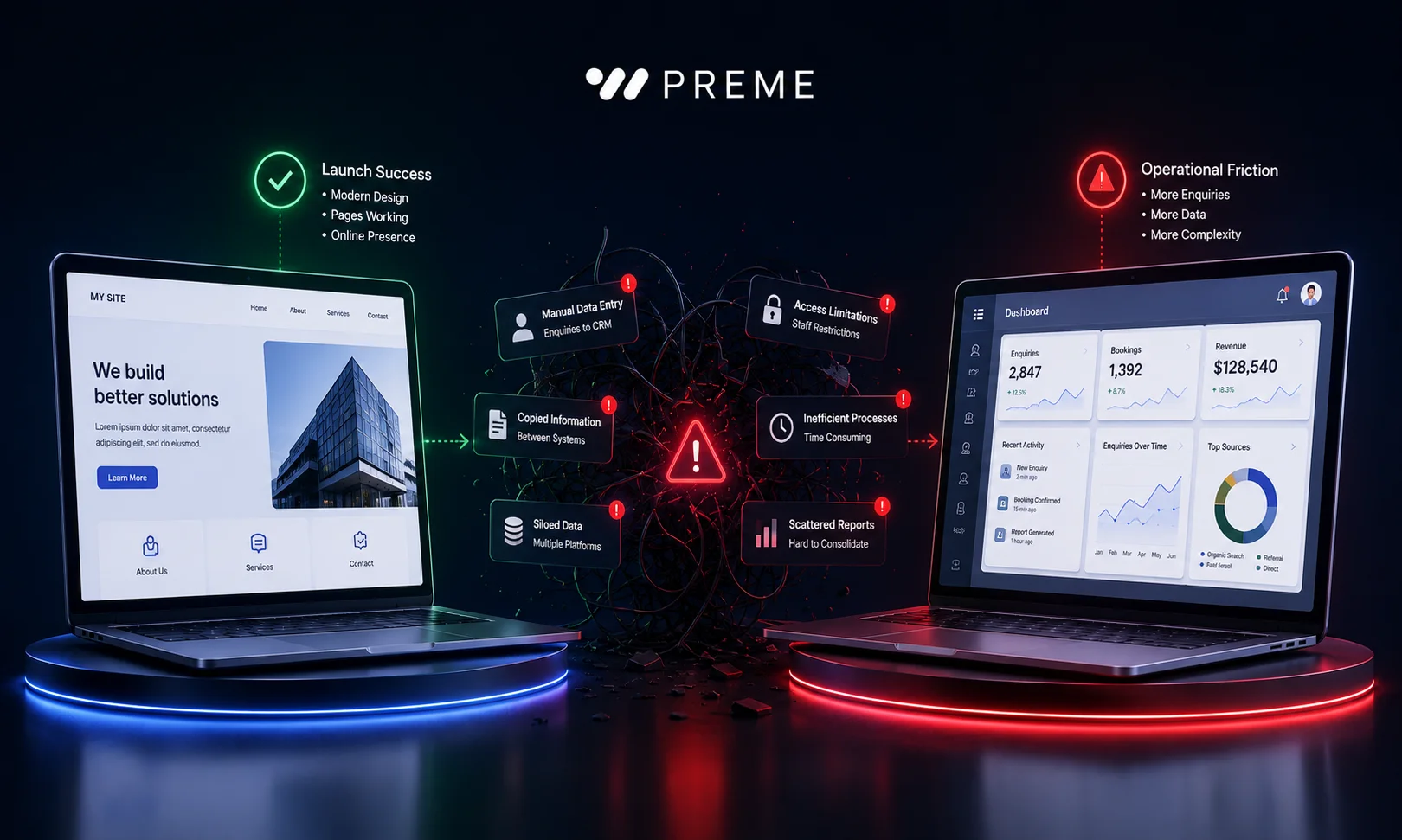
One of the biggest misconceptions in website planning is assuming that the lowest upfront investment automatically results in the lowest overall cost.
In reality, the opposite can happen.
A company may choose a low-cost website builder to reduce initial expenses.
For the first year, that decision may seem entirely justified.
However, as the business grows, new challenges often begin to appear.
Some companies discover that the functionality they need simply cannot be implemented without expensive workarounds.
Others find themselves paying for multiple third-party tools just to achieve basic operational requirements.
Content migration can also become a challenge.
What looked like a simple website project at the beginning may eventually require a complete rebuild when the business outgrows the platform.
The result is that the original saving achieved during launch can gradually disappear through subscriptions, redevelopment costs, operational inefficiencies, and platform limitations.
This is why website decisions should be evaluated based on long-term business requirements rather than short-term pricing alone.
Website builders are not the problem
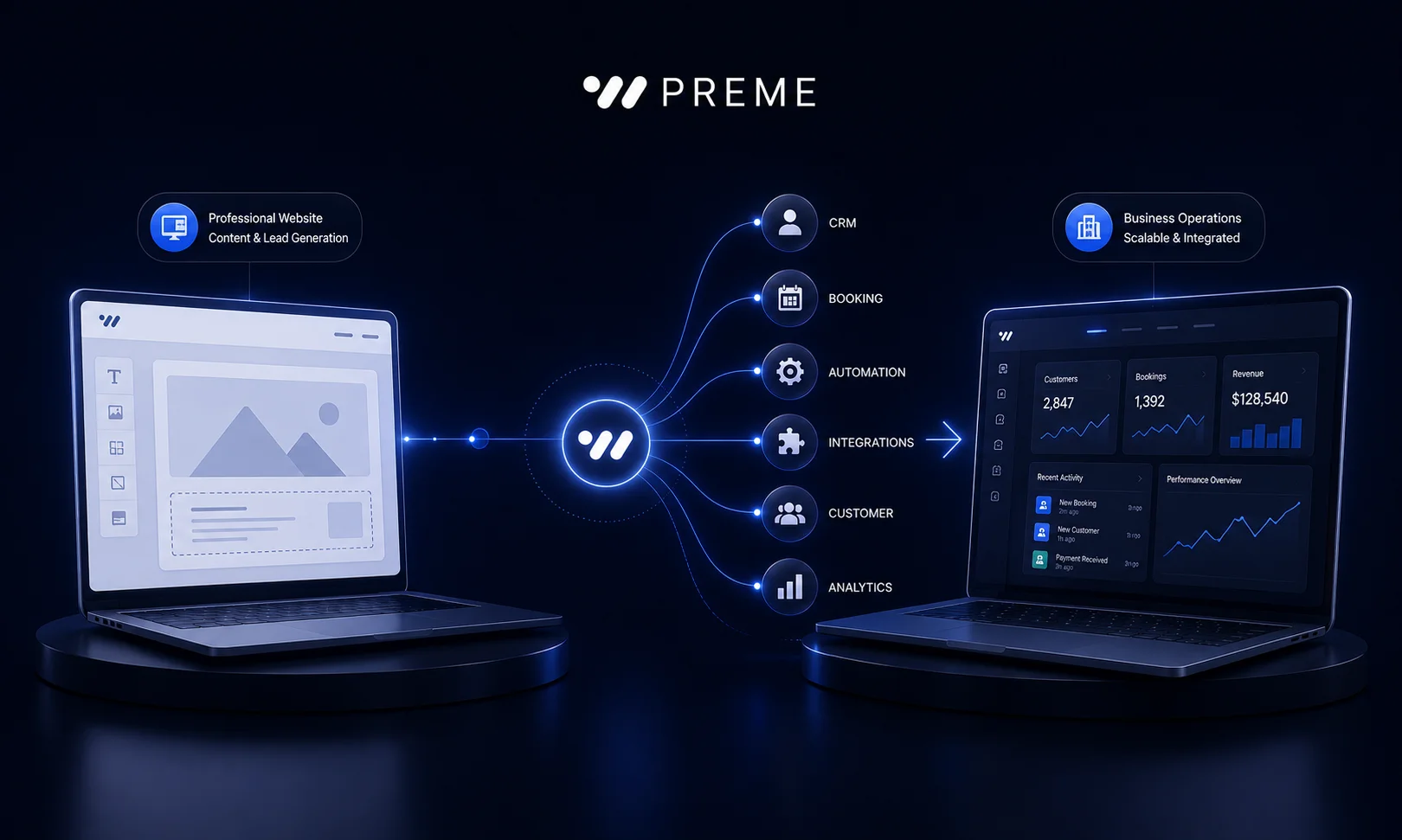
It is important to understand that website builders are not the problem.
In many situations, they are the correct choice.
A business that primarily needs a professional website, basic content management, and lead generation may never encounter serious limitations.
For those businesses, investing in a complex custom solution may be unnecessary.
The problem occurs when businesses underestimate future requirements.
A website that works perfectly for a small company may not support a larger organisation.
A website designed for information delivery may not support a business that eventually depends on automation, integrations, customer management, and operational workflows.
The goal should never be to choose the most expensive option.
The goal should be to choose the option that matches the future direction of the business.
How to decide whether a website builder is right for your business
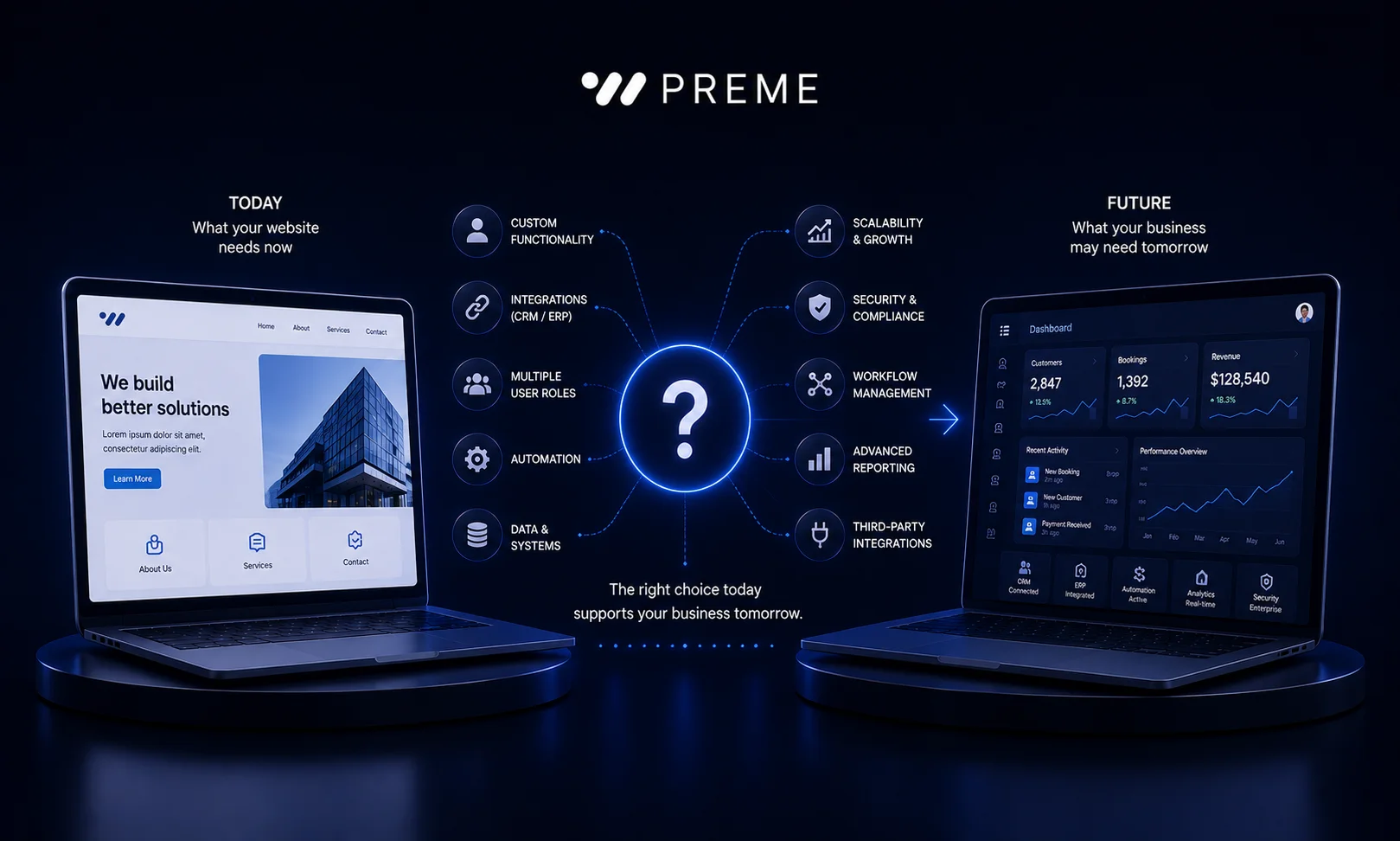
The best decision often comes from asking the right questions.
Instead of focusing only on what the website needs today, businesses should consider what it may need in the future.
Business owners should think about whether they may eventually require custom functionality, CRM or ERP integration, more complex customer management processes, automation, multiple staff members managing content, or systems that need to communicate with one another.
These questions often provide a clearer picture of future website requirements than a simple comparison of upfront pricing.
If future growth is likely to increase operational complexity, scalability should become part of the decision-making process from the beginning.
Many companies redesign their websites not because the design becomes outdated, but because the website can no longer support how the business operates.
The website becomes the bottleneck.
Content becomes difficult to manage.
Integrations become difficult to maintain.
New functionality becomes increasingly expensive to implement.
Eventually, the business ends up rebuilding the website entirely.
A website should support growth rather than limit it.
That is why the most important question is not:
“How much does the website cost today?”
The more important question is:
“Will this website still support our business three years from now?”
The businesses that make the best website decisions are rarely the ones that spend the least.
They are usually the ones that understand where the business is heading before choosing how the website should be built.
