What Should Businesses Measure After Launching a New Website?
2026.10.29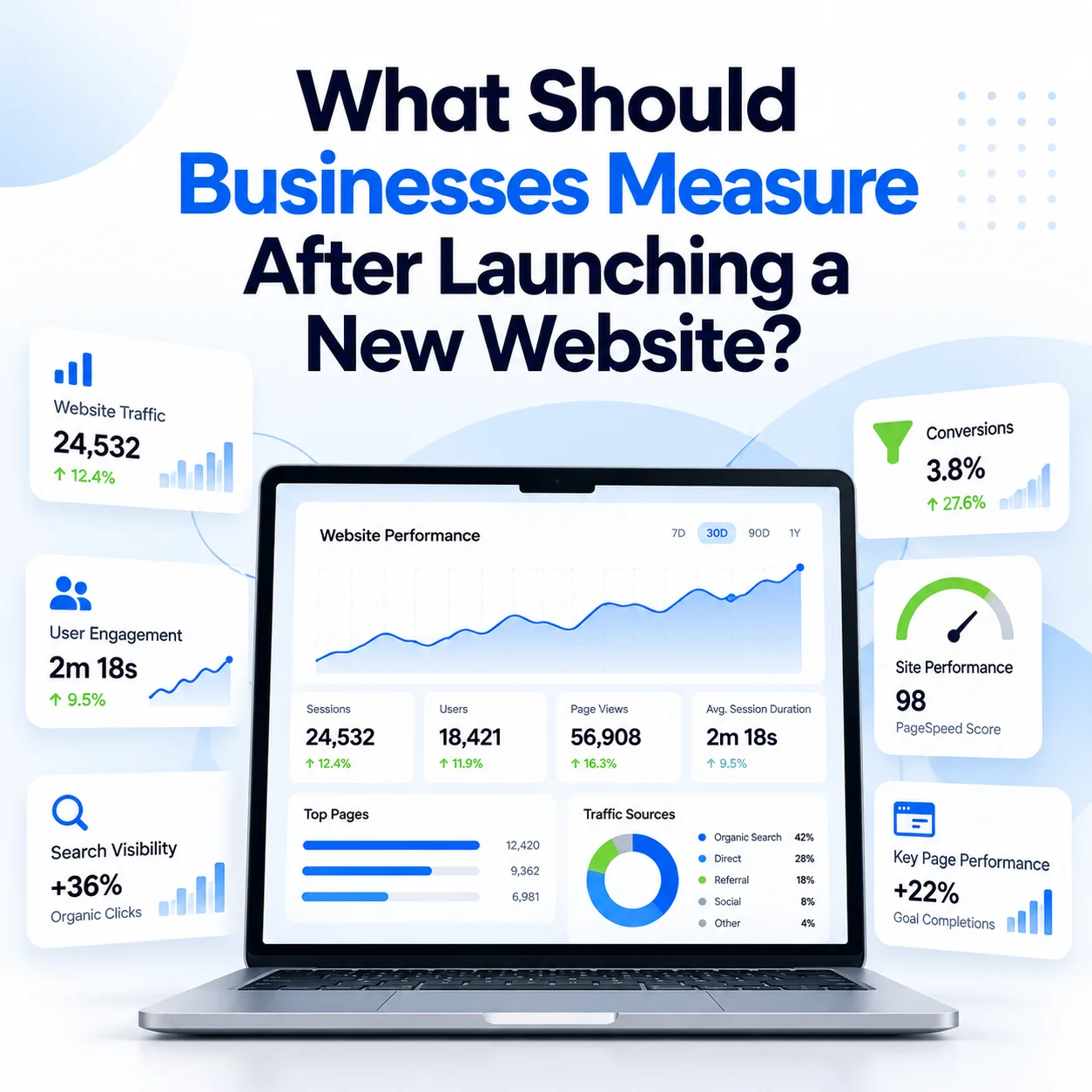
What Should Businesses Measure After Launching a New Website?
Launching a new website is an important milestone, but the real evaluation begins after it goes live.
A professional design and well-organized content are valuable, yet they do not automatically guarantee business results. Companies need to understand whether their website attracts relevant visitors, provides useful information, and encourages meaningful actions.
For B2B businesses, manufacturers, and service providers, website performance is not simply about generating traffic. It is about supporting customer research, building credibility, and creating opportunities for business inquiries.
The most useful website metrics are those connected to actual business objectives.
1. Website Traffic: Are You Reaching the Right Audience?
Website traffic helps businesses understand how visitors discover their website and which pages attract attention.
However, a higher visitor count does not necessarily indicate better performance.
For example, a manufacturing company may attract visitors researching general industry information without reaching potential distributors or purchasing managers.
Businesses should examine several indicators:
- Users and sessions: How many visitors access the website.
- Traffic sources: Whether visitors arrive through search engines, advertising, referrals, or direct visits.
- Landing pages: Which pages attract visitors first.
- Geographic distribution: Whether visitors come from relevant target markets.
Google Analytics 4 and Google Search Console can help businesses review these patterns.
For companies targeting international customers, geographic traffic and organic search queries can be particularly useful.
The goal is not simply to attract more visitors, but to reach the right audience.
2. User Engagement: Are Visitors Finding Useful Information?
After identifying where visitors come from, businesses should examine how they interact with website content.
B2B customers often research products, compare services, and review company capabilities before making an inquiry.
A website should help visitors complete these activities without unnecessary difficulty.
Important engagement indicators include:
- Engagement rate: Whether sessions meet defined engagement criteria.
- Page interactions: Which products, services, or resources visitors explore.
- CTA clicks: Whether visitors interact with buttons such as "Contact Us" or "Request a Quote."
- Document downloads: Whether visitors access catalogs or technical specifications.
These measurements help identify which information attracts attention and where visitors may encounter difficulties.
However, businesses should distinguish between interest and completed actions.
For example, clicking a contact button does not necessarily mean an inquiry was submitted.
Engagement data becomes more valuable when it is interpreted alongside the purpose of each page.
3. Conversion Metrics: Is the Website Generating Opportunities?
Conversions measure whether visitors complete actions that support business objectives.
For corporate and B2B websites, these actions may include quotation requests, consultation bookings, product inquiries, or contact form submissions.
Businesses should monitor:
- Completed inquiries: Successfully submitted contact or quotation forms.
- Conversion rate: The proportion of visits or users completing a defined action.
- Inquiry quality: Whether submissions come from relevant potential customers.
- Lead progression: Whether inquiries develop into qualified discussions or sales opportunities.
For example, a company receiving 20 relevant inquiries may achieve greater business value than another receiving 100 unrelated submissions.
Where CRM data is available, businesses can connect website inquiries with later sales activities.
This is especially useful for B2B companies with longer purchasing cycles.
Website conversions should be evaluated by their relevance and business value, not just their volume.
4. Technical Performance: Is the Website Working Reliably?
Technical performance is another important consideration after launch.
Even a well-designed website can lose effectiveness when pages load slowly, forms stop working, or visitors encounter navigation problems.
Businesses should periodically review:
- Core Web Vitals: Loading performance, responsiveness, and visual stability.
- Mobile usability: Whether important pages and functions work across devices.
- Website availability: Whether the website remains accessible.
- Form functionality: Whether inquiries are successfully delivered.
- Search indexing: Whether important pages can be discovered by search engines.
Technical monitoring should continue after launch because errors may appear following content updates, system changes, or third-party integrations.
A reliable website helps visitors access information and complete important actions without unnecessary interruptions.
5. How Often Should Businesses Review Website Performance?
Website performance should be reviewed regularly, but businesses do not need to analyze every metric daily.
A practical monitoring schedule may include:
First Week: Verify tracking tools, contact forms, search accessibility, and essential functionality.
First Month: Review traffic sources, landing pages, visitor engagement, and initial inquiries.
Monthly: Examine performance trends, conversion activity, and technical issues.
Quarterly: Evaluate business outcomes and identify opportunities for improvement.
The appropriate review period depends on traffic volume and business objectives.
Websites with limited visitor activity may require more time before meaningful patterns become visible.
Conclusion: Measure What Matters to Your Business
Launching a website is only the beginning of its operational life.
Businesses should evaluate whether their website attracts relevant visitors, supports information discovery, generates meaningful inquiries, and remains technically reliable.
Traffic, engagement, conversions, and technical performance provide a practical foundation for post-launch evaluation.
At WEBPREME, website development considers not only the initial launch but also ongoing management and opportunities for improvement.
By focusing on measurements connected to business objectives, companies can make more informed decisions about how their websites should evolve.
SEO Metadata
Meta Title: What Should Businesses Measure After Launching a New Website?
Meta Description: Learn which website metrics to monitor after launch, including traffic, user engagement, conversions, technical performance, and business inquiries.
Keywords: website performance metrics, website KPIs, B2B website analytics, website conversion tracking, website launch checklist, post-launch monitoring, Google Analytics 4, Core Web Vitals
URL Slug: what-to-measure-after-website-launch