One Global Website, Different Buyer Journeys
2026.08.27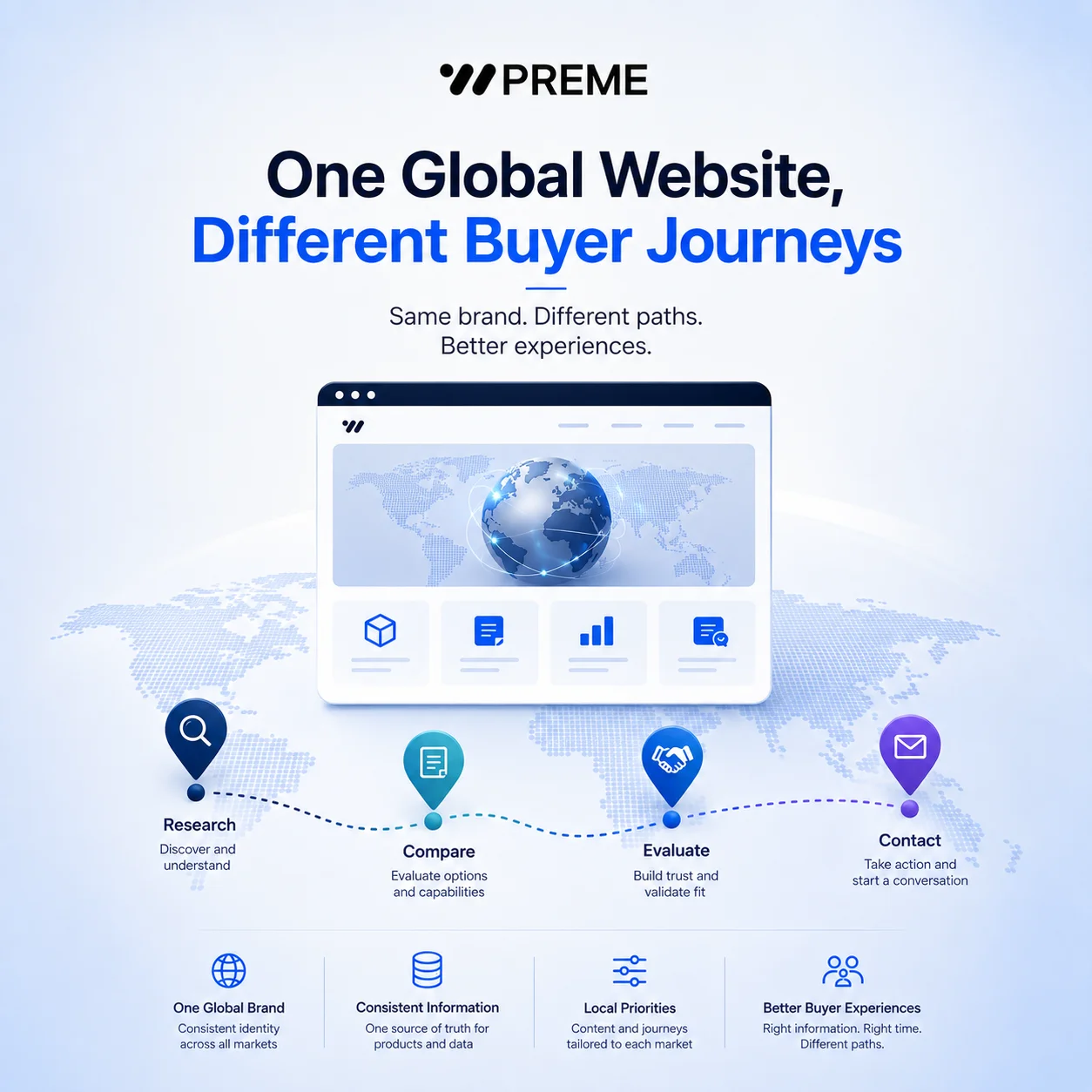
One Global Website, Different Buyer Journeys
A global website creates a single digital presence for a company, but that does not mean every visitor follows the same path.
A buyer discovering your company for the first time may need to understand who you are and whether your business can be trusted. Another buyer may already know your products and visit the website only to compare specifications, certifications, delivery capabilities, or contact options.
These differences become even more important when a company operates across multiple markets. The brand may remain the same, but customer expectations, purchasing priorities, and decision-making processes can change from one market to another.
A successful global website therefore needs more than consistent branding. It needs a structure that allows different buyers to reach the information they need without creating a completely separate website for every market.
Global Buyers Do Not Enter From the Same Starting Point
Not every international visitor arrives with the same level of knowledge about your company.
In an established market, buyers may already recognize the brand. They may enter through a product page, technical document, case study, or search result because they already know what they are looking for.
In a newer market, the journey can begin much earlier. Visitors may first need to understand what the company does, where it operates, what industries it serves, and whether it has the experience required to become a reliable supplier or partner.
This means the homepage cannot be expected to carry the entire global customer journey.
Product pages, industry pages, case studies, technical resources, regional landing pages, and search-optimized content can all become different entry points into the same website.
The goal is to make sure that wherever buyers enter, they can quickly understand where they are and what their next useful step should be.
The Information Buyers Need Can Change by Market
The same product can be evaluated differently depending on the market.
One buyer may prioritize technical specifications and compatibility. Another may look first for certifications, regulatory information, delivery capabilities, local support, customization options, or previous projects.
This is where simple translation begins to show its limitations.
Translating the same page into several languages makes information accessible, but it does not automatically make the information relevant to each market.
A better approach is to maintain the same core product and brand information while adjusting how supporting information is presented.
For example, one market may benefit from stronger access to certification documents and technical resources. Another may require clearer logistics information, local case studies, distributor information, or a more visible inquiry route.
Localization therefore affects more than words.
It can influence content priority, navigation, supporting evidence, calls to action, and even the order in which information appears.
One Brand Does Not Require One Identical Journey
Global consistency is still important.
Company information, product specifications, brand positioning, technical data, and other core information should remain controlled from a reliable source. Otherwise, different regional versions of the website can gradually begin presenting conflicting information.
But consistency does not mean 5 page must be identical.
A global website can maintain one brand system while providing different paths through its information.
A visitor arriving from a product search might move from product specifications to technical documentation and then to an inquiry. A buyer researching potential suppliers may move from company capabilities to certifications, case studies, production information, and finally contact.
Both journeys can exist within the same website.
The important distinction is between changing the information itself and changing the way users reach it.
Core information should remain consistent. The route to that information can be designed around the needs of different markets.
Design the Website Around the Next Decision
One useful way to plan a global website is to stop thinking only about pages and start thinking about decisions.
After reading the homepage, what does the visitor need to determine next?
After reviewing a product, do they need technical specifications, certification documents, pricing information, a distributor, or a quotation?
After reading a case study, should they explore a related solution or speak with the company?
These questions create a more practical website structure because they connect individual pages into a journey.
Navigation, internal links, related content, downloadable resources, and CTAs can then support the next logical decision instead of simply sending every visitor toward the same contact form.
This is especially valuable for international websites, where a visitor may not be ready to contact a company immediately.
The website can answer more questions before the first conversation takes place and allow buyers to progress at their own pace.
A Global Website Should Support Different Paths to the Same Brand
International website strategy is not about creating a completely different digital identity for every country.
It is about identifying what must remain consistent and what should adapt.
Brand identity, core product information, technical data, and company positioning can remain centralized. Market-specific content, proof points, navigation priorities, landing pages, and conversion paths can then be adjusted around local buyer expectations.
This creates a website that is easier to manage without forcing every international customer through exactly the same experience.
For companies expanding into multiple markets, the better question is therefore not simply, “How should we translate our website?”
The more useful question is:
How should each buyer move through the same global website?
A well-structured global website maintains one brand while giving different buyers a clear path toward the information, evidence, and action they need.
WEBPREME INSIGHT
A global website does not need multiple disconnected structures to support different markets.
The stronger approach is to establish a consistent foundation and design flexible buyer journeys on top of it.
WEBPREME approaches global website development by considering multilingual architecture, information structure, market-specific content, SEO, UX, and conversion paths together.
The result is not simply one website displayed in several languages.
It is one global website designed to work for different buyers, different markets, and different stages of the purchasing journey.