The Role of Trust Signals in Modern Websites
2026.07.15
The Role of Trust Signals in Modern Websites
When people visit a business website for the first time, they make decisions surprisingly quickly. Before reading every service page or contacting the company, they subconsciously ask one important question: "Can I trust this business?"
The answer is rarely determined by a single headline or one impressive image. Instead, visitors build confidence through dozens of small signals spread across the website. From the homepage and navigation to project examples and contact information, every detail contributes to how trustworthy a company appears. Businesses that consistently generate inquiries usually share one characteristic—they make trust visible throughout the entire user experience.
First Impressions Shape Trust

A visitor's first impression often determines whether they continue exploring your website or leave within seconds. This is why the homepage plays such a critical role in building credibility.
Modern business websites immediately explain what the company does, who it serves, and why visitors should care. A clear value proposition, professional branding, consistent design, and intuitive navigation help users understand the business without unnecessary effort.
Visual quality also matters. Outdated layouts, inconsistent typography, or cluttered interfaces can reduce confidence even when the company itself is highly experienced. Visitors naturally associate a polished website with a professional organization.
Trust also grows when important actions are easy to find. Clear navigation, visible contact options, and logical page structures reduce uncertainty, allowing visitors to focus on learning about the business rather than figuring out how to use the website.
Social Proof Makes Businesses More Credible

People naturally feel more confident when they see evidence that others have already trusted a company. This psychological principle makes social proof one of the strongest trust signals available.
Instead of simply stating that your business delivers excellent results, demonstrate it through real examples. Portfolio projects, client testimonials, certifications, industry awards, customer logos, and measurable case studies provide objective reasons for visitors to believe your claims.
Quality is more important than quantity. A few detailed project stories explaining the challenge, solution, and outcome often create far greater confidence than dozens of generic testimonials. Authenticity always has more influence than marketing language.
Displaying experience across different industries or showcasing long-term client relationships further reinforces credibility. Visitors are more likely to trust companies that can demonstrate consistent, real-world success.
Transparency Builds Long-Term Confidence
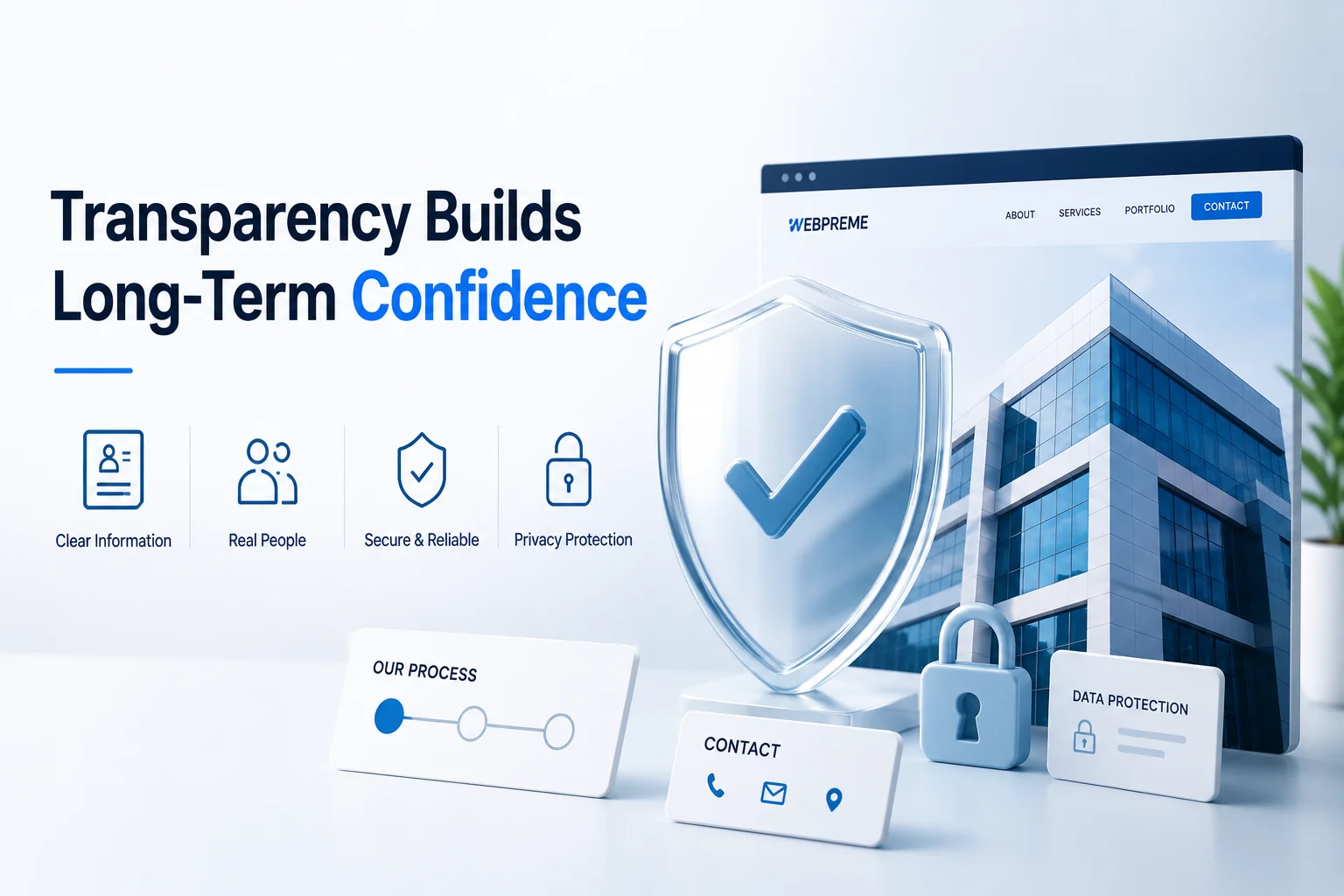
Trust increases when businesses openly explain who they are and how they work.
Clear company information, real contact details, an introduction to the team, and a straightforward explanation of the project process all reduce uncertainty before a conversation even begins. Visitors appreciate knowing what to expect, especially when investing in professional services.
Transparency also extends to practical information. Explaining your workflow, estimated timelines, support process, or maintenance approach helps potential clients feel informed rather than uncertain. Businesses that communicate clearly appear more reliable because they answer questions before they are asked.
Even technical details contribute to transparency. Secure HTTPS connections, updated privacy policies, accessible contact forms, and accurate business information demonstrate that the company takes professionalism seriously.
Trust Should Be Present Throughout the Website
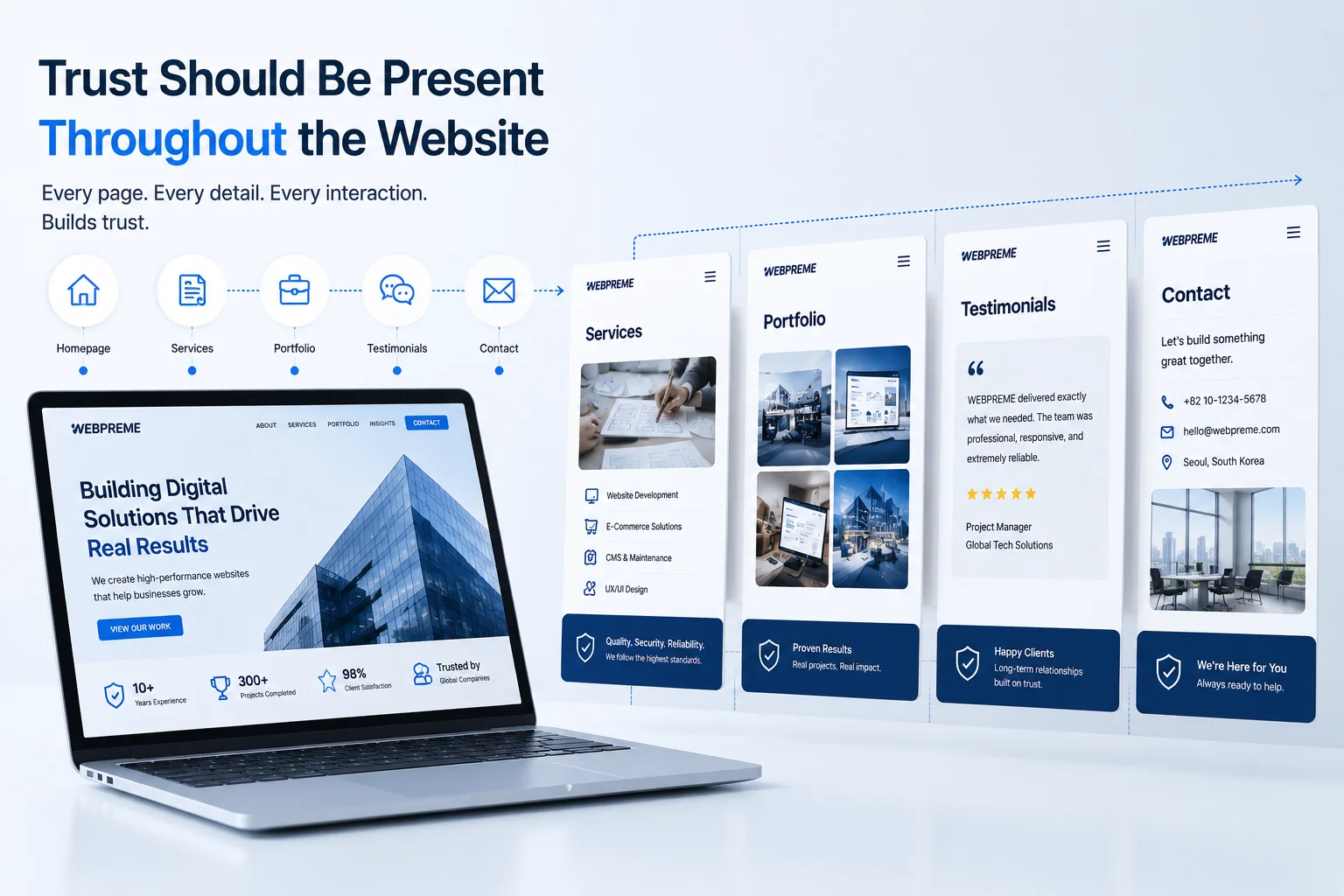
Many companies place testimonials or certifications only on the homepage and assume the work is done. In reality, trust should continue throughout the entire website.
Service pages can include relevant project examples that support specific solutions. Portfolio pages should explain measurable business outcomes instead of displaying images alone. Contact pages should feel complete and reassuring, while FAQs can address common concerns before visitors reach out.
Consistency is equally important. Every page should reflect the same level of quality, messaging, and professionalism. When visitors experience a consistent journey from the homepage to the contact form, confidence naturally increases.
Ultimately, trust is not created by one section or one design element. It is built through every interaction visitors have with your website.
Conclusion
Modern websites compete for attention, but attention alone does not create customers. Trust does.
Businesses that communicate clearly, demonstrate real experience, maintain transparency, and present consistent information across every page create a stronger foundation for long-term customer relationships.
A successful business website is more than visually attractive. It gives visitors confidence that they are dealing with a professional company before the first conversation even begins.
When trust becomes part of the entire website experience, inquiries become a natural result rather than a matter of chance.