How to Present OEM and ODM Capabilities on a Global Website
2026.10.02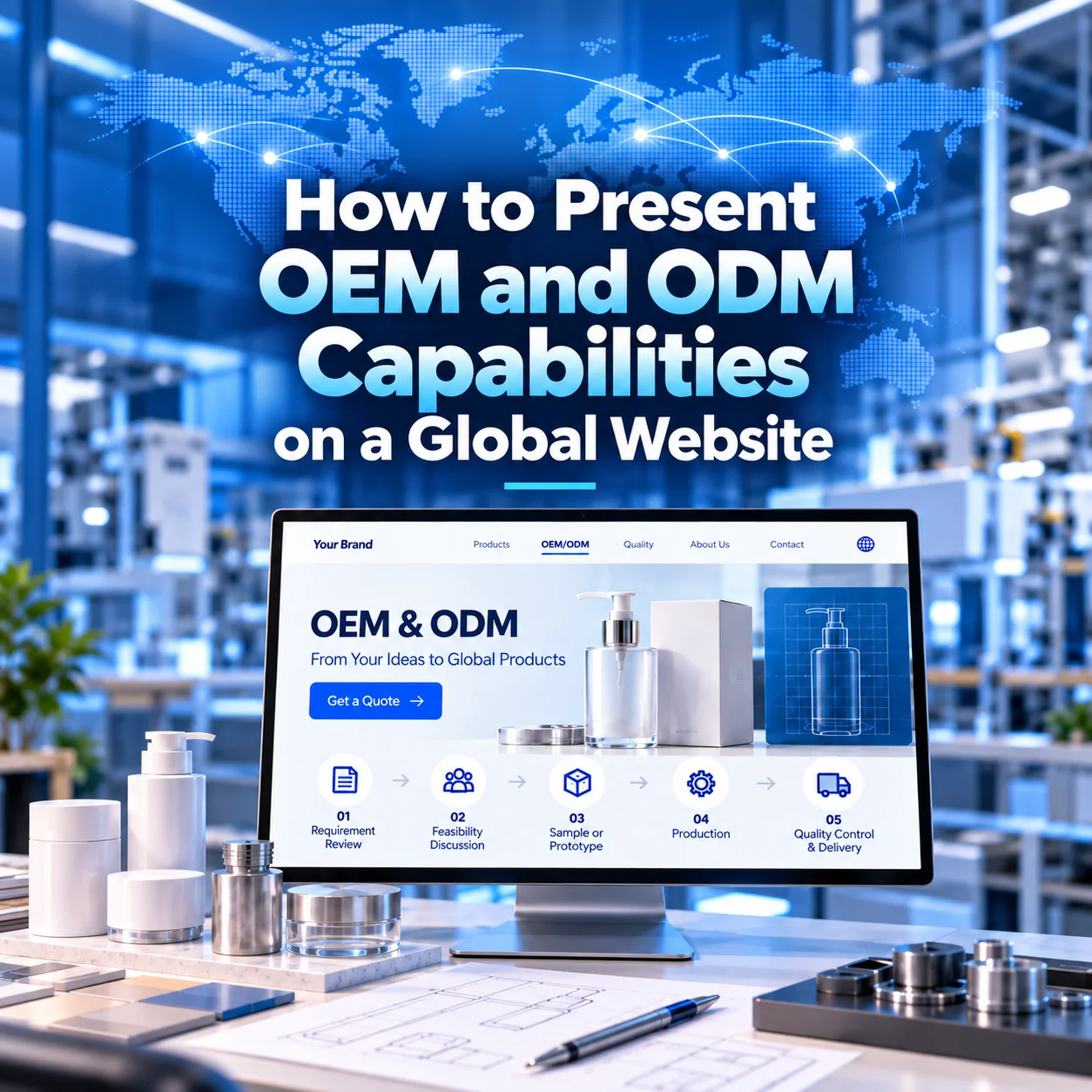
How to Present OEM and ODM Capabilities on a Global Website
For manufacturers that work with overseas buyers, simply writing “OEM/ODM available” is rarely enough.
International buyers usually want to understand what can actually be customized, how the development process works, what information they need to provide, and whether the supplier can handle production consistently.
A global website should therefore present OEM and ODM capabilities as a clear business process rather than a short marketing statement.
1. Explain the Difference Between OEM and ODM Clearly
The first step is to make it easy for buyers to understand what type of cooperation your company supports.
OEM generally means producing a product based on specifications, designs, or requirements provided by the buyer. ODM usually involves a broader development process in which the manufacturer may participate in product design, specification development, packaging, or other areas.
However, the exact scope can vary by company.
Instead of using only the terms “OEM” and “ODM,” explain what they mean in your actual operation.
For example, your website can clarify whether you support:
- Existing product customization
- Private labeling
- Packaging customization
- Material or specification changes
- New product development
- Prototype development
- Design support
This helps buyers quickly determine whether your capabilities match their project.
2. Show What Buyers Can Customize
Overseas buyers often visit a manufacturer’s website with a specific requirement already in mind.
They may want to know whether they can change the material, dimensions, color, formulation, packaging, branding, or technical specifications.
A strong OEM/ODM page should therefore show the customization scope as clearly as possible.
Instead of saying:
> Customized products are available.
Provide more practical information such as:
Product Specification Dimensions, materials, functions, components, or performance requirements can be adjusted depending on the project.
Branding Logo application, private labels, printed materials, and branded packaging may be available.
Packaging Packaging size, structure, design, labeling, and export packaging requirements can be discussed.
Product Development For ODM projects, explain whether your team can support concept development, prototyping, engineering, formulation, or design.
The more clearly these options are organized, the easier it becomes for buyers to evaluate your company.
3. Present the OEM/ODM Process Step by Step
One of the most useful sections on a global manufacturing website is a simple explanation of the project process.
International buyers may be working with your company for the first time. A clear process reduces uncertainty and tells them what will happen after they submit an inquiry.
A typical flow could be:
01. Requirement Review The buyer shares product specifications, target market, quantity, branding requirements, or reference materials.
02. Feasibility Discussion The manufacturer reviews production feasibility, materials, specifications, schedule, and other conditions.
03. Sample or Prototype Development A sample or prototype may be produced for evaluation before mass production.
04. Confirmation and Production After specifications and commercial conditions are confirmed, production begins.
05. Quality Control and Delivery Products are inspected, packaged, and prepared for shipment according to the agreed requirements.
The exact process should reflect your real operation. The goal is not to make the process look complicated, but to make it predictable.
4. Include Practical Information Buyers Need Before Contacting You
An OEM/ODM page becomes much more useful when buyers know what information they should prepare before sending an inquiry.
Depending on the industry, this may include:
- Product type
- Required specifications
- Estimated order quantity
- Target market
- Reference product or drawings
- Packaging requirements
- Certification requirements
- Desired delivery schedule
You do not necessarily need to publish every commercial condition on the website.
MOQ, pricing, lead time, and tooling costs may vary significantly depending on the project. In that case, explain that these conditions are determined after reviewing the requirements.
This is more useful than displaying vague phrases such as “competitive price” or “fast delivery.”
5. Support Your Capabilities With Evidence
OEM and ODM capabilities become more credible when they are supported by information elsewhere on the website.
Relevant content may include manufacturing facilities, production equipment, quality control procedures, certifications, testing capabilities, development teams, product categories, and previous project experience.
These elements help buyers understand that OEM/ODM is not simply a sales claim but part of the company’s actual manufacturing capability.
Internal links are useful here.
For example, an OEM/ODM page can connect buyers to:
Manufacturing Facilities → Quality Control → Certifications → Product Categories → Inquiry
This creates a natural evaluation path and allows buyers to investigate the company in greater detail before making contact.
Final Thoughts
A global OEM/ODM page should answer more than one question.
It should help an overseas buyer understand what your company can customize, how the project will proceed, what information they need to provide, and what manufacturing capabilities support the service.
The phrase “OEM/ODM available” may attract attention, but detailed information helps buyers decide whether to start a conversation.
For manufacturers targeting international markets, presenting these capabilities clearly can turn a simple service page into an important part of the B2B inquiry process.