Why Growing Businesses Outgrow Their Website Builder
2026.06.08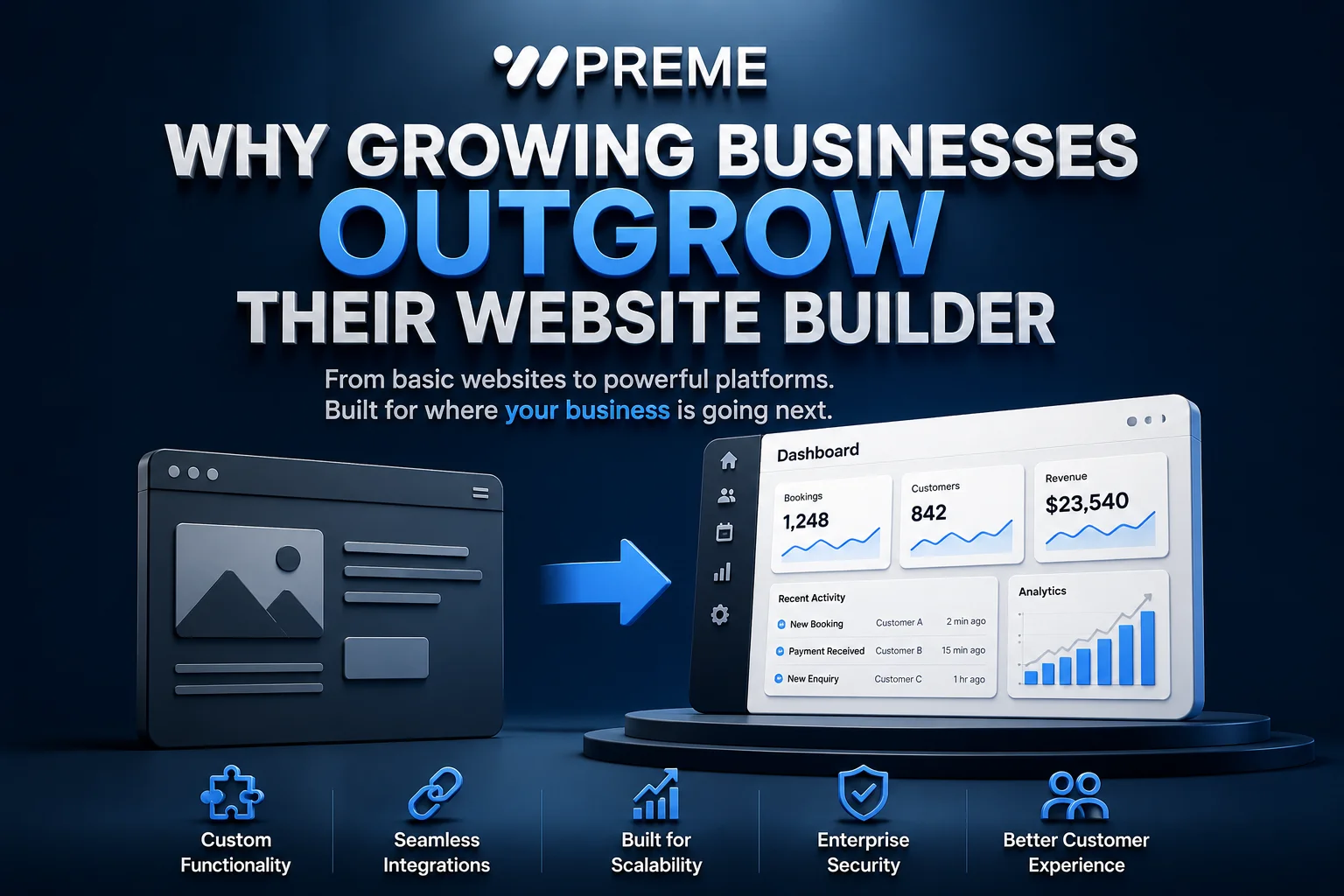
Why Growing Businesses Outgrow Their Website Builder
Many businesses begin their online journey with a website builder.
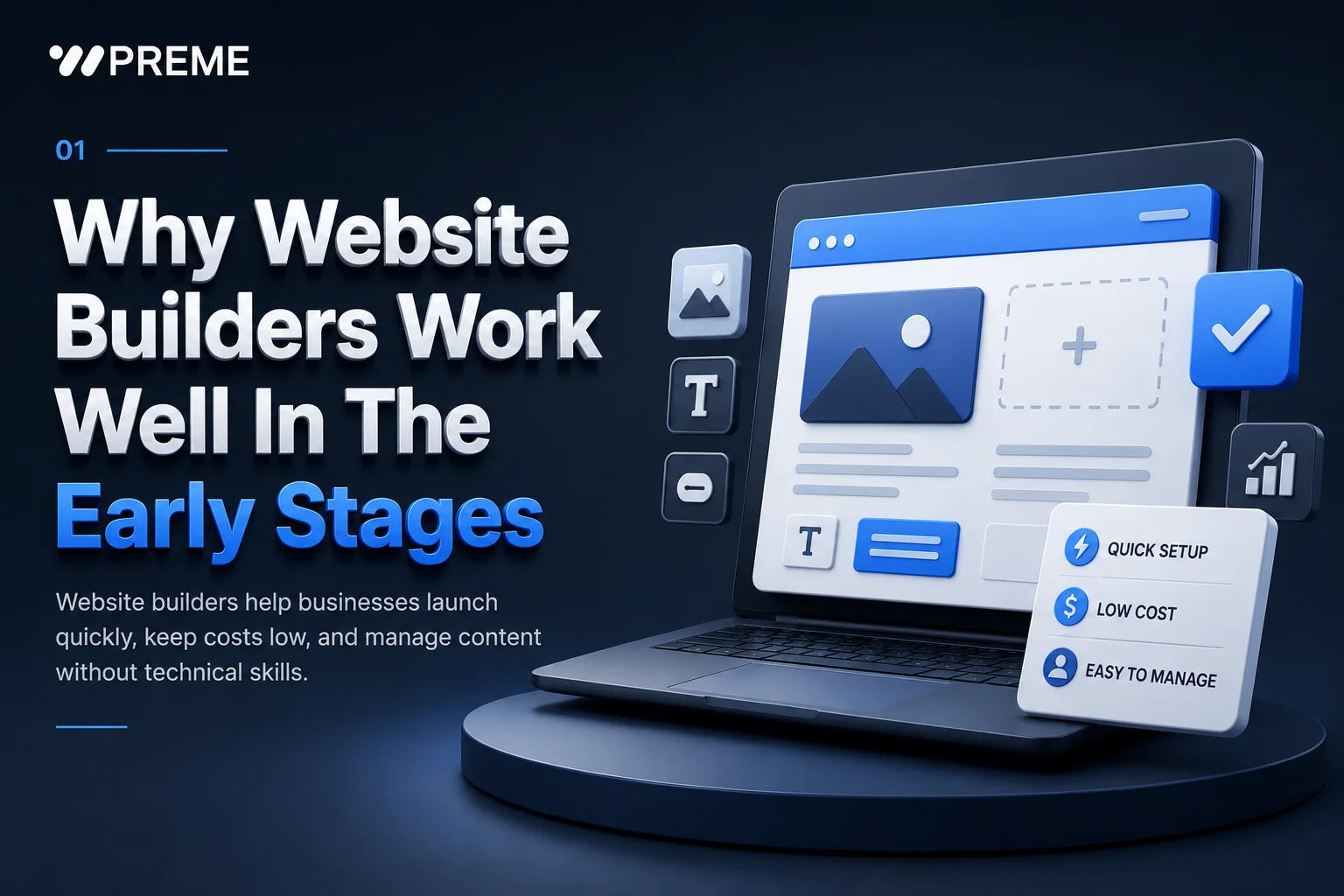
The appeal is obvious. Website builders allow businesses to launch quickly, keep initial costs under control, and manage content without needing technical expertise. For startups, local businesses, and companies validating a new idea, this approach often makes perfect sense.
The challenge is that businesses rarely stay the same.
A website that worked perfectly when a company had a small team, a limited service offering, and a straightforward sales process may become increasingly difficult to manage as operations expand. What started as a simple website gradually becomes connected to marketing, customer service, bookings, reporting, sales, and internal workflows.
At that point, the discussion is no longer about website design.
It becomes a discussion about business operations.
Why Website Builders Work Well In The Early Stages
Most businesses do not need a complex platform on day one.
Their primary objective is usually to establish credibility, explain their services, and provide a way for customers to get in touch.
Website builders are effective because they remove barriers to launching a website. Businesses can choose a template, upload content, publish pages, and start attracting customers without a lengthy development process.
For many companies, that is exactly what they need.
The website functions as a digital brochure. It introduces the business, explains services, and provides contact details.
At this stage, flexibility is often less important than speed.
This is why website builders continue to be popular among small businesses throughout New Zealand, Australia, and many other markets. They provide a practical starting point without requiring a significant investment.
The problem is not that website builders are ineffective.
The problem is that business growth often creates requirements they were never designed to handle.
What Starts Breaking As The Business Grows?
Growth changes the role of a website.
As customer numbers increase and internal processes become more complex, businesses often begin asking for functionality that extends beyond content management.
For example, a company may initially need only a contact form. A year later, they may want booking management, customer portals, member accounts, automated notifications, payment integration, or custom reporting.
The website is no longer just presenting information.
It is becoming part of the operational process.
This is where many businesses begin to experience friction.
The website may still look modern and professional. Visitors may not notice any obvious problems. However, the team managing the business starts noticing limitations behind the scenes.
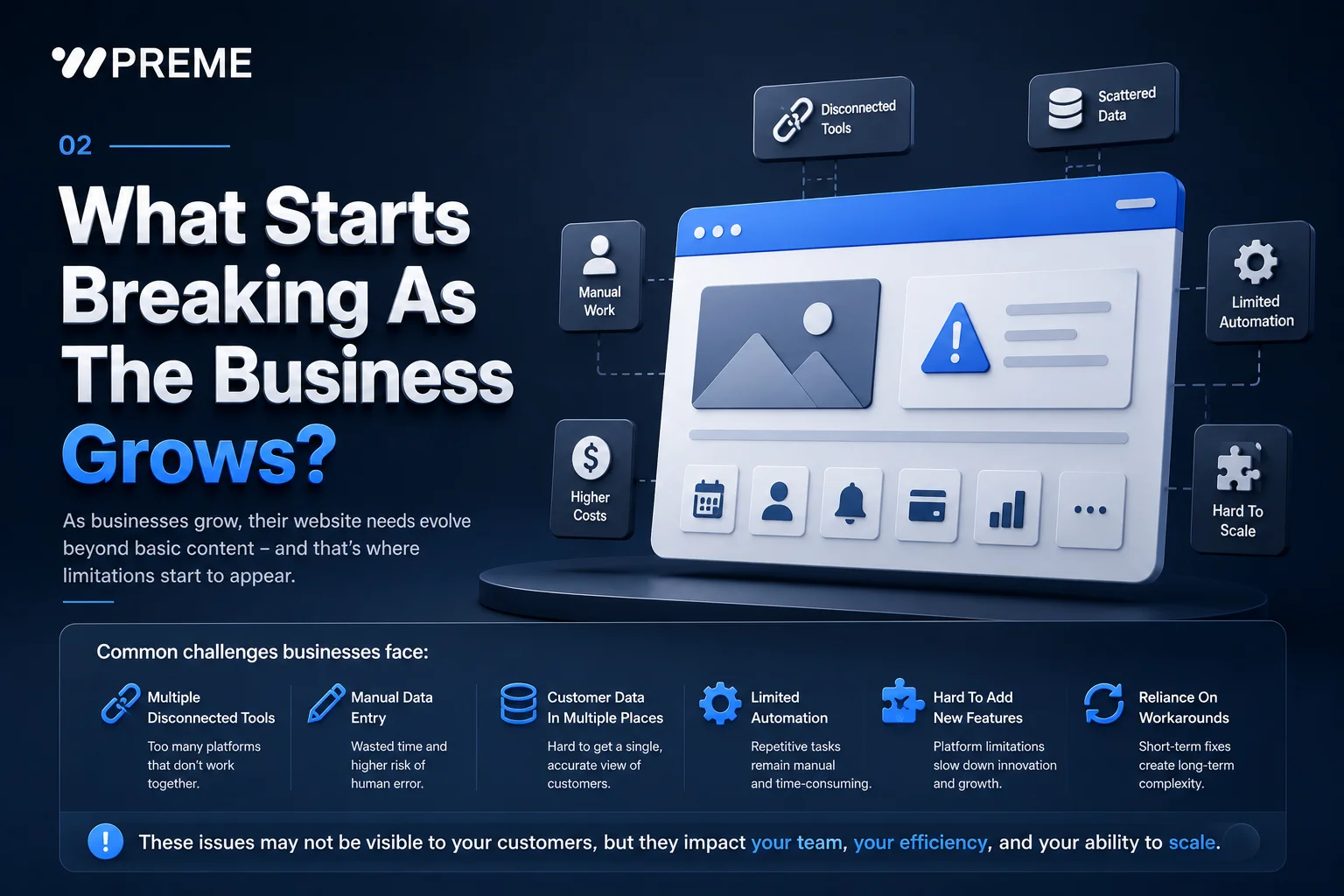
Common challenges include:
- Multiple disconnected software tools
- Manual data entry between systems
- Customer information stored in different locations
- Limited automation options
- Difficulty introducing new features
- Increasing reliance on workarounds
None of these issues are usually visible on the homepage.
However, they directly affect efficiency, scalability, and long-term operating costs.
Many businesses assume they need a redesign when these problems appear.
In reality, the issue is often much deeper than design.
The website structure itself may no longer align with the way the business operates.
Why Growing Businesses Eventually Move To Custom Websites
Businesses typically do not move away from a website builder because they dislike the platform.
They move because their operational requirements evolve.
As a company grows, different systems often need to communicate with each other. Customer information may need to connect with a CRM. Booking systems may need to connect with staff schedules. Payments may need to connect with reporting tools. Internal workflows may need to become automated.
These requirements are difficult to solve with templates alone.
Custom website development becomes relevant because it allows businesses to build systems around their processes rather than forcing their processes to fit within the limitations of a platform.
This distinction becomes increasingly important as growth continues.
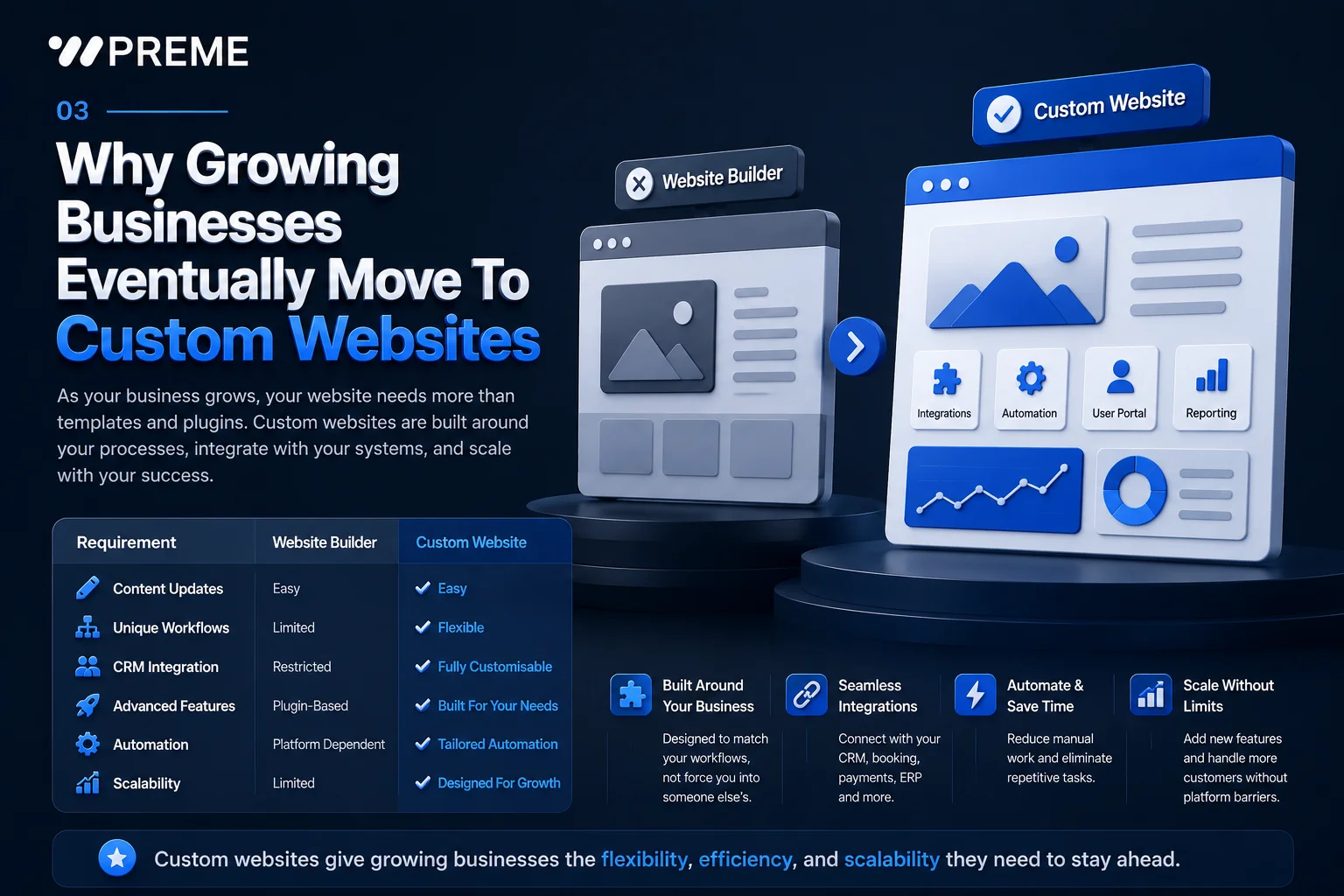
Consider the difference:
| Requirement | Website Builder | Custom Website | | ------------------------ | -------------------- | --------------------------- | | Content updates | Easy | Easy | | Unique workflows | Limited | Flexible | | CRM integration | Restricted | Fully customisable | | Advanced booking systems | Often plugin-based | Built around business needs | | Operational automation | Platform dependent | Tailored automation | | Long-term scalability | Platform limitations | Designed for growth |
The larger the organisation becomes, the more valuable flexibility tends to become.
This does not mean every business requires custom development.
It simply means that growth changes priorities.
Speed and convenience are important in the beginning.
Scalability and operational efficiency become increasingly important later.
What Changes When The Website Grows With The Business?
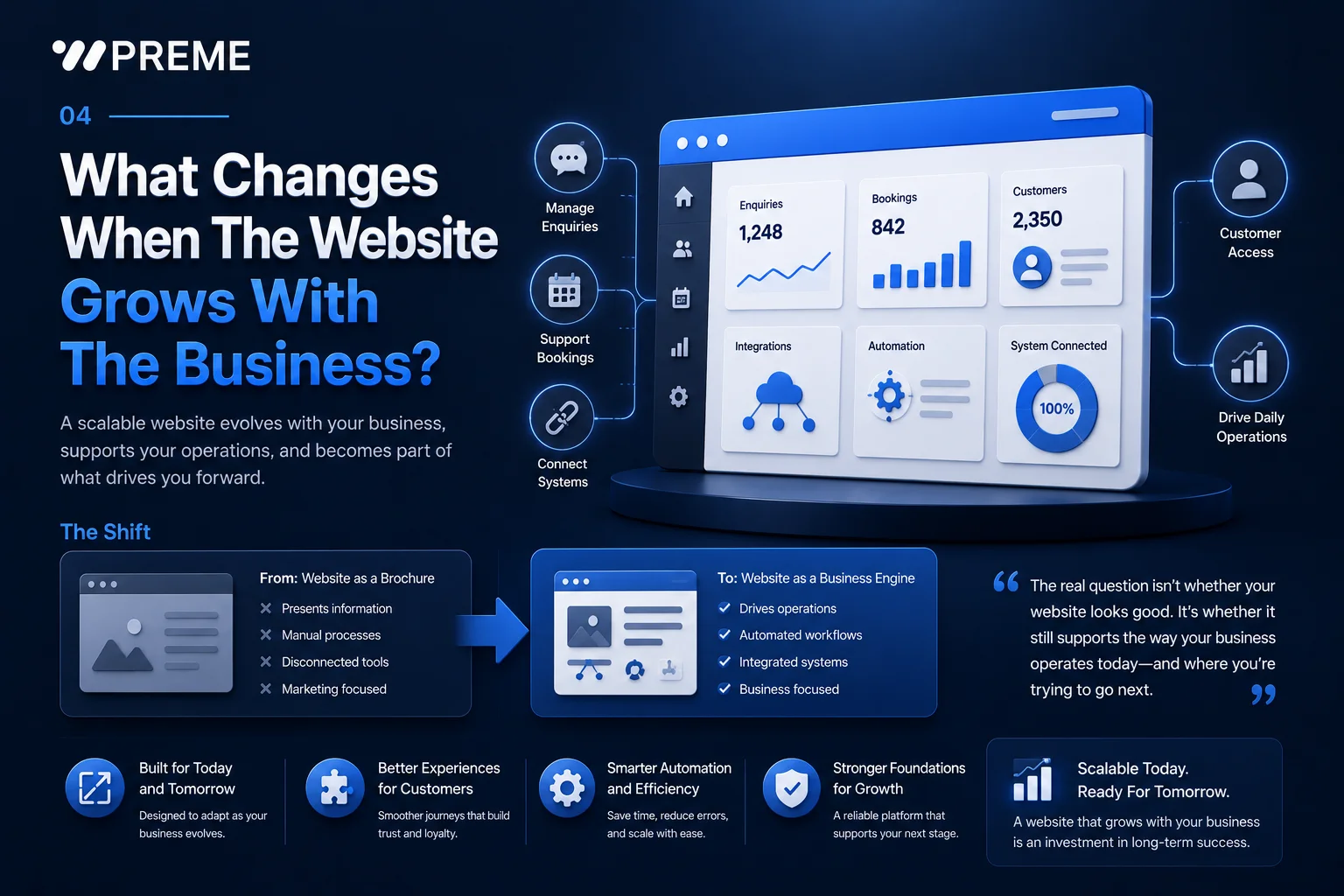
One of the biggest differences between a basic website and a scalable website is the ability to adapt as the business evolves.
A scalable website is not built solely for current requirements.
It is built with future requirements in mind.
This allows businesses to introduce new services, improve customer experiences, automate repetitive tasks, and integrate new systems without rebuilding everything from scratch.
Many growing businesses eventually reach a point where the website becomes part of their infrastructure rather than simply a marketing tool.
The website helps manage enquiries.
It supports bookings.
It connects systems.
It provides customer access.
It contributes directly to daily operations.
That shift is often the moment when businesses realise they have outgrown their website builder.
The website itself is no longer the product.
The website has become part of the business engine.
As businesses grow, customer expectations increase, operational complexity expands, and efficiency becomes more valuable. A platform that worked perfectly during the early stages may no longer support the direction the company is heading.
That is why the question is rarely whether a website builder is good or bad.
The more important question is whether it still supports the way the business operates today.
For many growing businesses, that answer eventually changes.
