Why AI Search Is Changing Website Design
2026.06.12
Why AI Search Is Changing Website Design
For years, website design was largely driven by two priorities: visual appearance and search engine rankings.
Businesses wanted a website that looked professional, loaded quickly, and ranked well on Google. As long as those goals were achieved, most companies considered their website strategy successful.
However, the way people search for information is beginning to change.
More users are now asking questions directly to AI tools such as ChatGPT, Claude, Gemini, and other AI-powered search platforms instead of browsing through pages of search results. Rather than clicking ten different websites, users increasingly expect a direct answer.
This shift is creating a new challenge for businesses.
If AI becomes the first place people look for information, how does a website get discovered?
The answer is simple.
Websites must become easier not only for people to understand, but also for AI systems to interpret.
This is one of the biggest reasons website design is changing.
AI Search Works Differently from Traditional Search
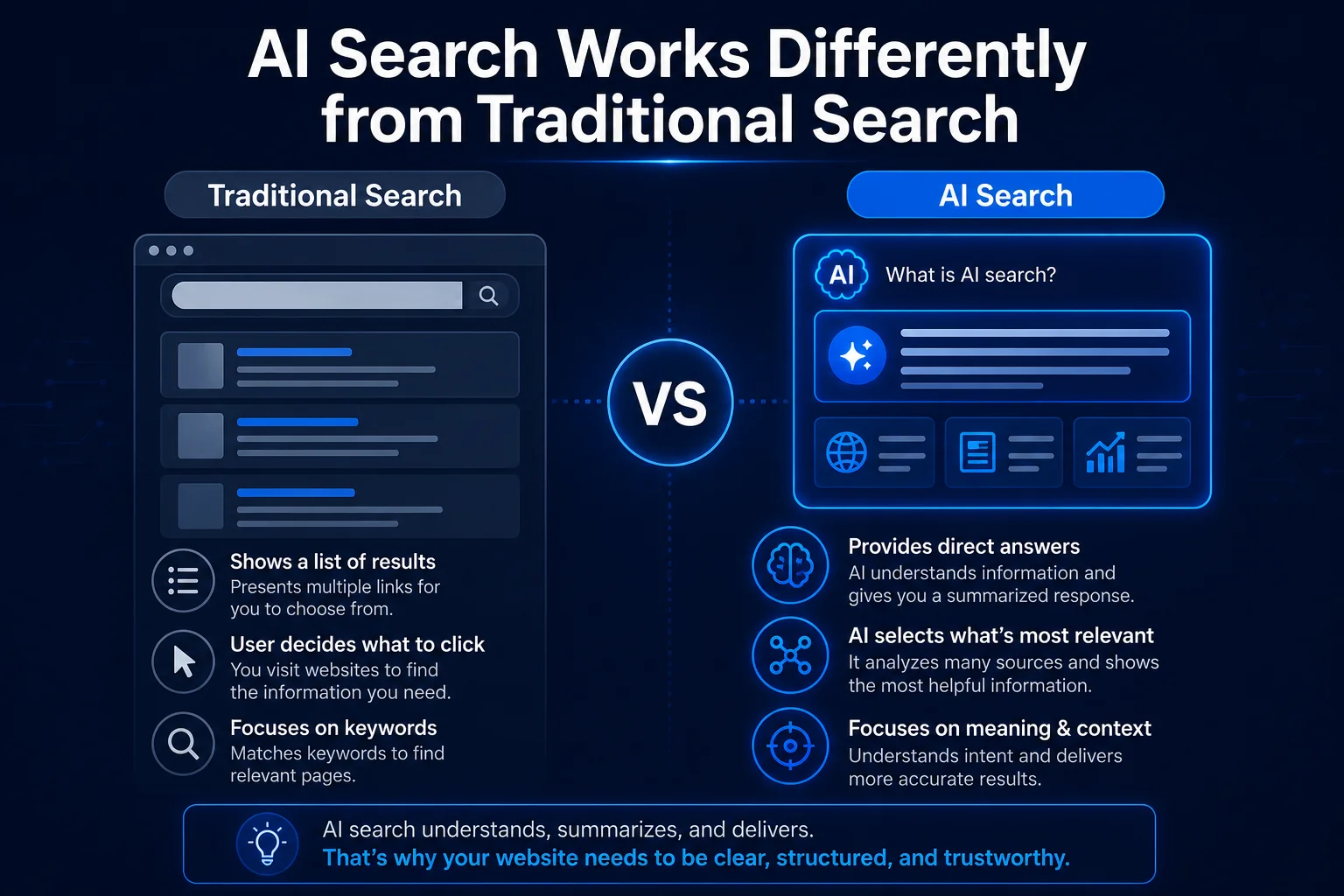
Traditional search engines display a list of results and allow users to choose which website to visit.
AI search works differently.
Instead of presenting ten blue links, AI attempts to understand information, summarize it, and provide a direct response.
This means AI systems need to identify:
- What a company does
- Who the company serves
- What products or services are offered
- Why the company is different
- Whether the information is trustworthy
When this information is difficult to find, incomplete, or poorly organized, AI has a harder time understanding the business.
A visually impressive website is no longer enough if the information structure is unclear.
As AI search becomes more common, website design must focus on communication and clarity rather than appearance alone.
Website Structure Matters More Than Ever
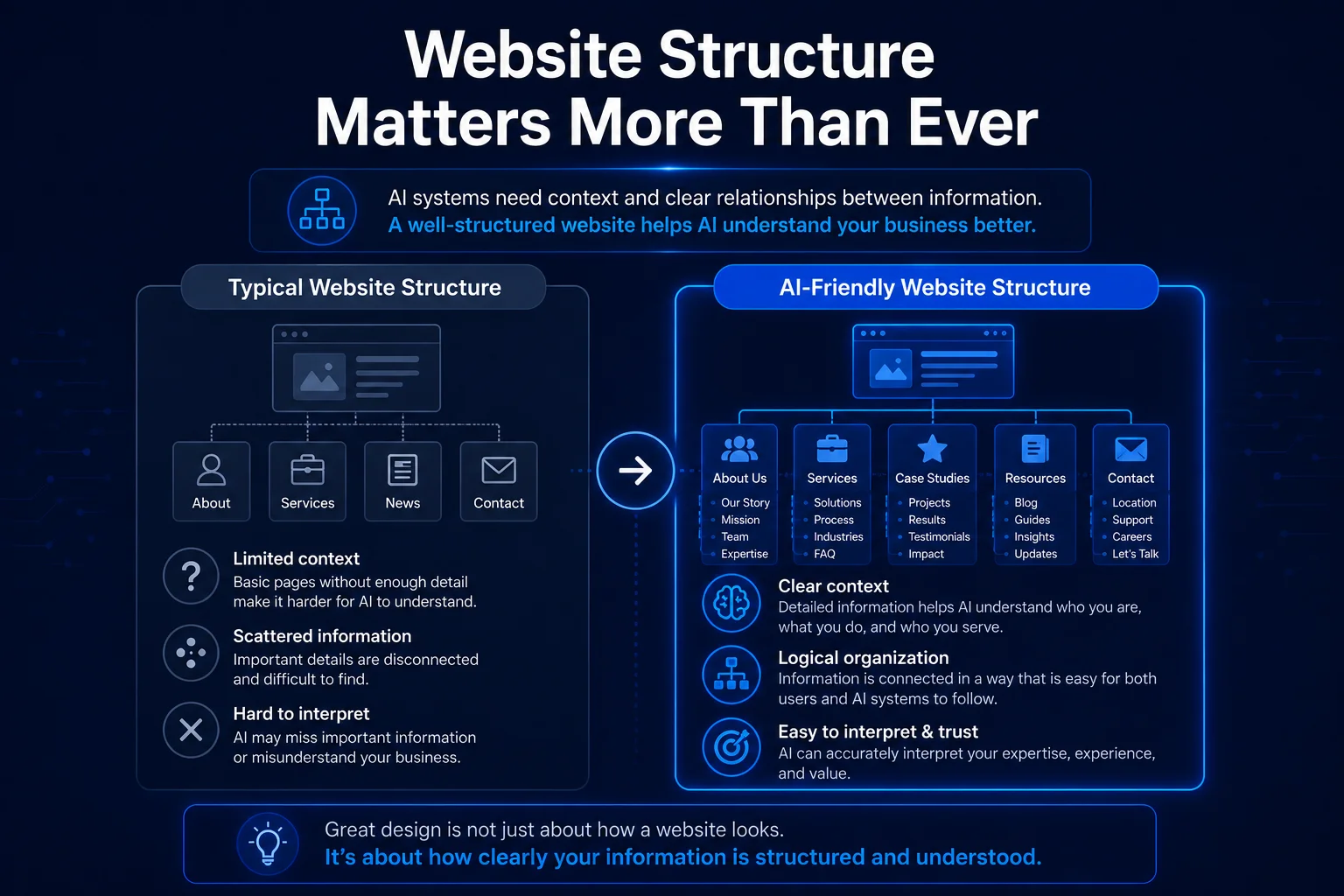
Many businesses still treat their website as a digital brochure.
A homepage, an About page, a Services page, and a Contact page are often considered enough.
The problem is that AI systems need more context than that.
They do not simply look at a page title or a short company description. They try to understand how information is connected and whether the business can be clearly identified.
For example, a website that only contains a brief company introduction and a few service pages may be difficult for AI to fully understand. Important details such as industry expertise, project experience, service processes, client results, and company strengths are often missing or difficult to find.
On the other hand, websites with clear information architecture make it easier for AI systems to interpret what the business does and who it serves. When services, expertise, customer solutions, and supporting information are organized in a logical structure, AI can build a more complete understanding of the company.
The more clearly information is organized, the easier it becomes for AI systems to understand and reference the business.
Website design is no longer only about visual layout.
It is increasingly about information architecture.
Trust Signals Are Becoming a Design Requirement
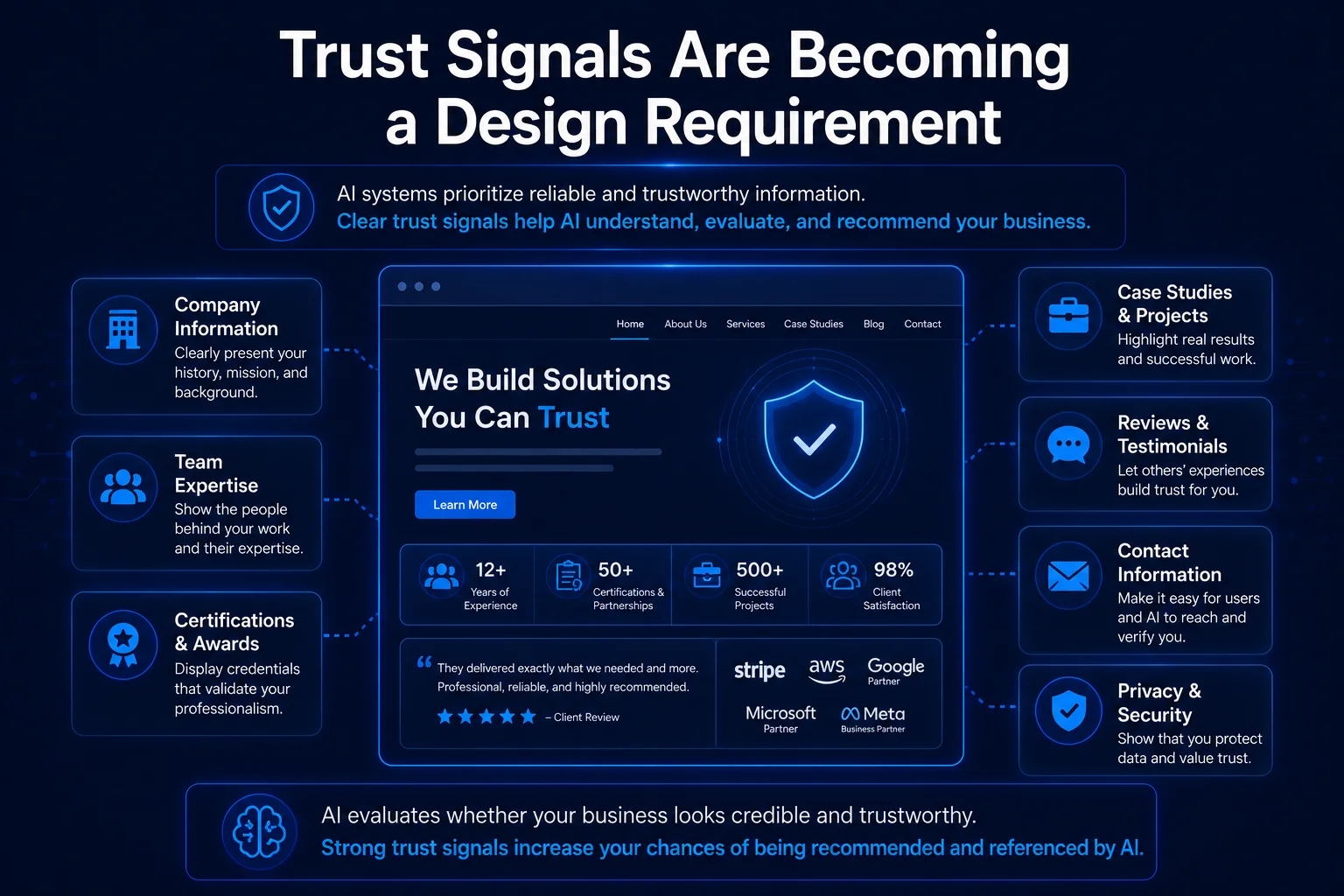
AI systems are designed to prioritize reliable information.
As a result, trust signals are becoming more important within website design.
Businesses that clearly present information such as:
- Company history
- Team expertise
- Industry experience
- Certifications
- Client projects
- Reviews and testimonials
- Contact information
often create stronger credibility signals.
This is important because AI does not simply read content.
It evaluates whether the information appears trustworthy and useful.
A website with vague messaging and limited company information may struggle to earn visibility in future AI-driven search environments.
Designers and developers are therefore placing greater emphasis on transparency and credibility throughout the website experience.
Content Is Becoming Part of Website Design
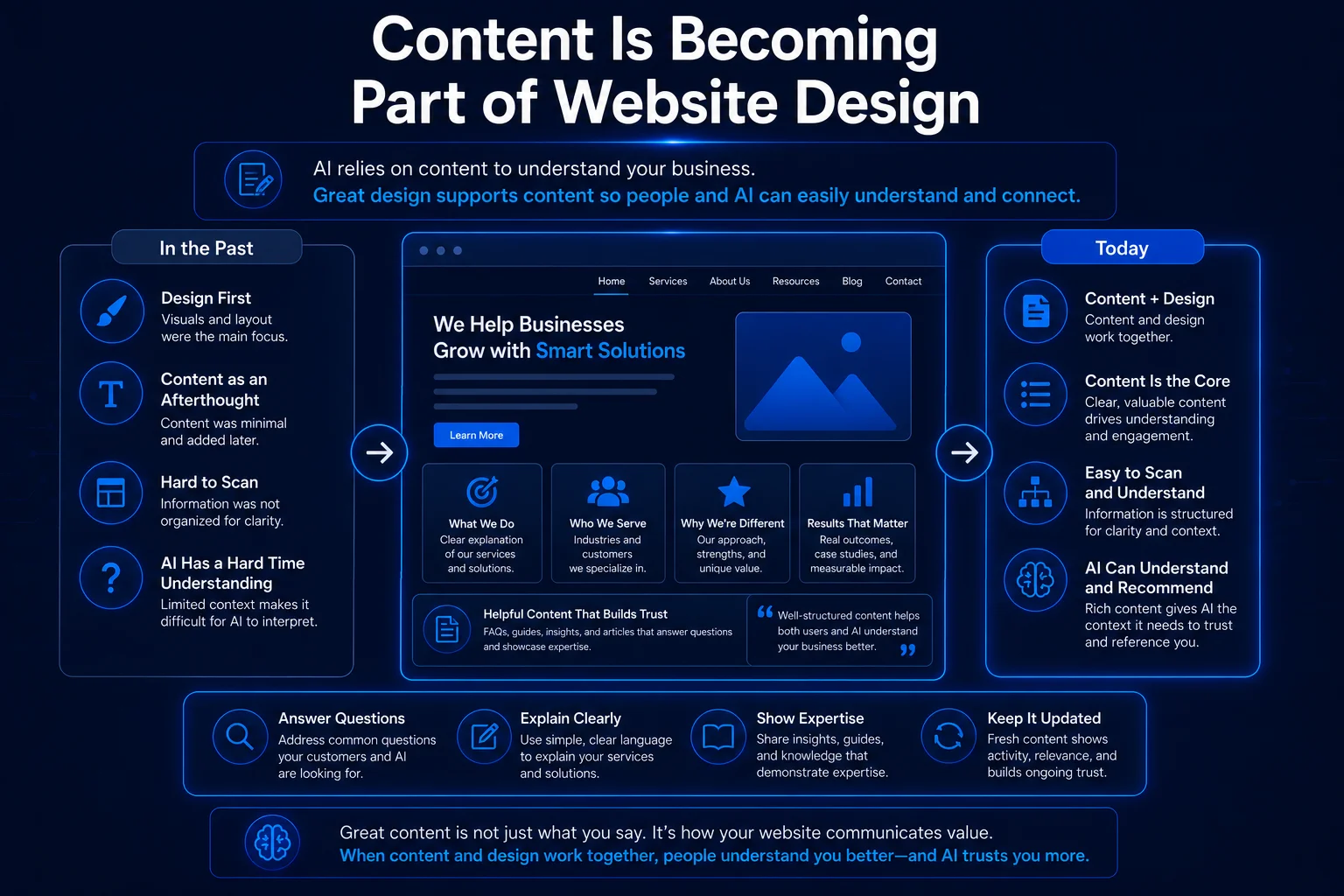
In the past, design and content were often treated as separate disciplines.
Today, they are becoming closely connected.
AI systems rely heavily on content to understand a business.
The quality of information presented on a website can directly influence how effectively AI interprets the company.
This means website design must support content rather than compete with it.
Pages should be structured to make information easy to scan, understand, and connect.
Businesses should focus on answering common customer questions, explaining services clearly, and providing meaningful insights that demonstrate expertise.
The goal is not simply to publish more content.
The goal is to publish content that helps both people and AI understand the business more accurately.
The Future Website Is an Information Platform
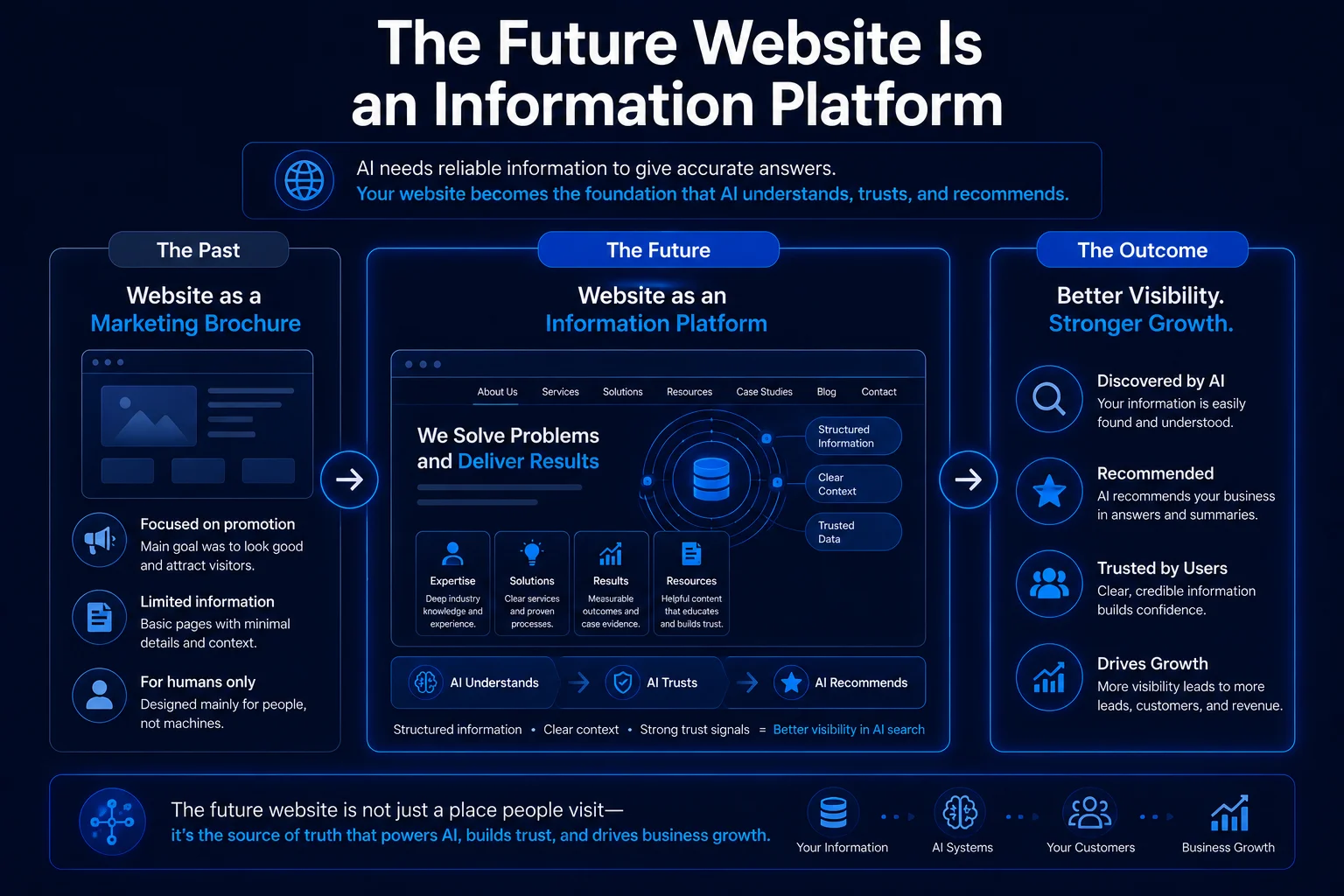
Many business owners ask whether AI will eventually replace websites.
The more likely outcome is the opposite.
AI still needs reliable information sources.
Without those sources, AI cannot provide accurate answers.
This means websites are evolving from marketing assets into information platforms.
They are becoming the central location where businesses communicate expertise, establish trust, and provide structured information that AI systems can understand.
As AI search continues to grow, businesses that invest in clear website structure, strong content, and trustworthy information will be better positioned for future visibility.
Website design is no longer only about how a website looks.
It is increasingly about how effectively a website communicates information to both people and AI systems.
In the AI search era, the businesses that organize information best may ultimately become the businesses that are discovered most often.
Businesses that wait until AI search becomes the dominant way people discover information may find themselves trying to catch up later. The companies that start improving their website structure today will likely have an advantage as AI platforms continue to evolve.
Building a website that is easy for both users and AI systems to understand is no longer a future consideration. It is becoming part of a long-term digital strategy that can influence visibility, trust, and business growth in the years ahead.