What New Zealand Customers Expect From a Business Website
2026.04.21
Running a business in New Zealand means trust is often built before a conversation even begins. Many customers search online first, compare several providers, and make early judgments within seconds of landing on a website. For many companies, the website is no longer just an online presence. It is the first impression, the first sales tool, and often the first reason a customer decides to stay or leave.
Many business owners focus heavily on design trends, logos, or visual style. While presentation matters, New Zealand customers usually expect something more practical. They want clarity, confidence, convenience, and proof that the business is legitimate and organised.
A business website that looks modern but feels confusing can lose trust quickly. A website that feels simple, clear, and professional often performs much better.
What do customers notice first on a business website?
Visitors rarely read every line at the beginning. They scan quickly and look for signals that help them decide whether the business is worth their time.
Most customers notice:
What the business does Whether the site looks current or outdated Whether contact details are easy to find Whether the company feels trustworthy Whether the website works properly on mobile Whether the message is clear and relevant
If those basics are unclear, many visitors leave before exploring further.
This is especially common in competitive industries such as trades, consulting, legal services, health, finance, real estate, and B2B services. Customers often compare several businesses in one browsing session, so weak first impressions create immediate losses.
Why clear information matters more than flashy design
Many companies assume customers want dramatic visuals, animations, and impressive layouts. In reality, most users are trying to solve a problem quickly. They want answers, not distractions.
A New Zealand customer may land on a website and immediately ask:
Do you offer the service I need? Are you based locally? Can I trust this business? How do I contact you? How soon can I get help? Why should I choose you over others?
If the homepage does not answer these questions quickly, even strong design may fail.
Good structure usually outperforms excessive style. Clear headings, short sections, direct language, and obvious next steps often create stronger enquiry rates than visually overloaded pages.
Customers appreciate websites that respect their time. Simplicity is often seen as professionalism.
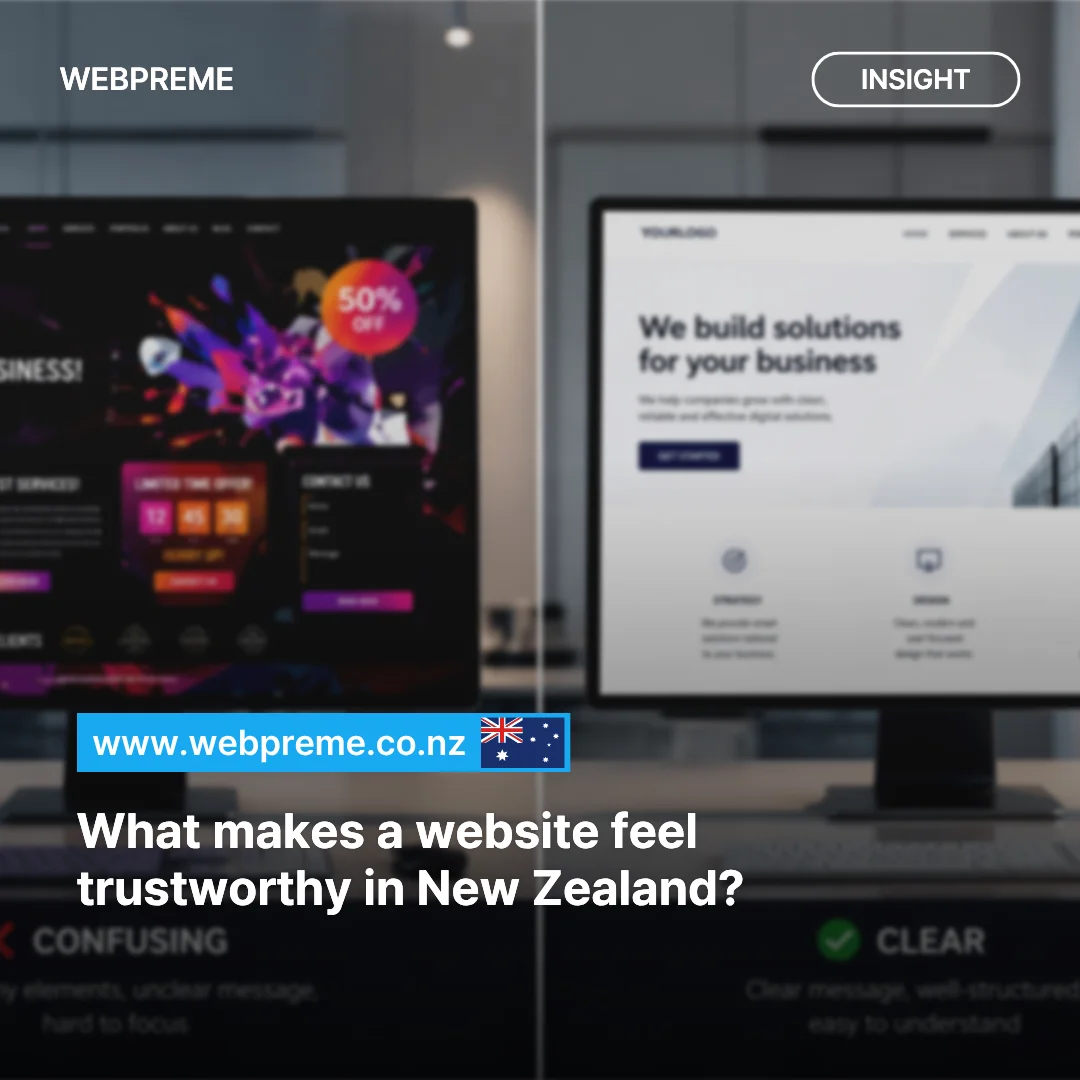
What makes a website feel trustworthy in New Zealand?
Trust is usually created through many small signals rather than one large feature. A website feels trustworthy when users sense consistency, clarity, and professionalism.
Trust Element Why It Matters Real company information Shows legitimacy and transparency Team or owner details Creates confidence and accountability Testimonials or reviews Reduces uncertainty Updated content Suggests active operations Fast loading pages Feels modern and reliable Clear branding Looks established Contact options Makes action easy
Tone also matters. Overly aggressive sales language can reduce confidence. Calm, clear, and direct wording usually performs better.
For New Zealand customers, authenticity often matters more than hype. Businesses that appear honest and organised tend to earn stronger trust.
Why mobile usability matters so much now
A large share of traffic now comes from mobile devices. Customers may search while travelling, at work, or comparing providers during the day.
If your mobile experience is poor, users often assume the business itself may be outdated or difficult to deal with.
Common mobile problems include:
Tiny text Hard-to-tap buttons Slow loading speed Broken layouts Long confusing forms Difficult navigation
A mobile-friendly website should feel effortless. Customers should be able to understand your offer, contact you, or request a quote within moments.
Many businesses lose leads not because of pricing or service quality, but because the mobile journey creates friction before trust is formed.
What local relevance do customers expect?
New Zealand customers often want confidence that a business understands their area, market, or service needs. This does not always mean using location keywords excessively. It means showing practical relevance.
Examples include:
Service areas clearly listed Local case studies or projects NZ phone numbers and contact details Clear response times Familiar language and tone Practical information instead of vague claims
Customers often prefer businesses that feel accessible and grounded rather than overly corporate or generic.
What should businesses review on their website now?
If your website has not been reviewed in recent years, it may no longer reflect the business accurately.
Use this checklist:
Does the homepage clearly explain what you do? Is the design current and professional? Is the mobile version smooth and easy? Are services up to date? Is trust visible within five seconds? Is contact simple? Does the site reflect the current scale of the company?
If several answers are no, the website may be costing opportunities silently.
Final thoughts: Is your website meeting customer expectations?
New Zealand customers are usually not searching for the flashiest website. They are looking for businesses that feel clear, reliable, easy to contact, and professional.
That difference matters.
A business website should reduce doubt and increase confidence. It should help people decide quickly that they are dealing with the right company.
If your current website creates hesitation instead of confidence, it may be time to rethink how it works.
At WebPreme, we build business websites designed for trust, clarity, and conversion in markets like New Zealand.