Good Businesses Can Still Look Small Online
2026.04.22
Many successful businesses build strong reputations offline over time. They deliver reliable service, maintain loyal customers, and continue growing through referrals, repeat work, and word of mouth. In the real world, they are trusted and respected.
But online, the same business can look very different.
A customer searches for the company, visits the website, and quickly forms an impression that feels smaller, less experienced, or less established than reality. That impression may be inaccurate, but it still affects decisions.
This is one of the most common digital problems for growing businesses in New Zealand and Australia. Owners focus on operations, service delivery, hiring, and growth, while the website remains untouched for years. The business evolves, but the online presence does not.
As a result, the website starts representing an older version of the company.
Modern customers often compare several providers before making contact. They may open multiple tabs, scan websites quickly, and shortlist businesses that feel professional, clear, and trustworthy. That means perception is often shaped before any conversation begins.
A good business can still look small online when the website no longer reflects its real scale, capability, or maturity.
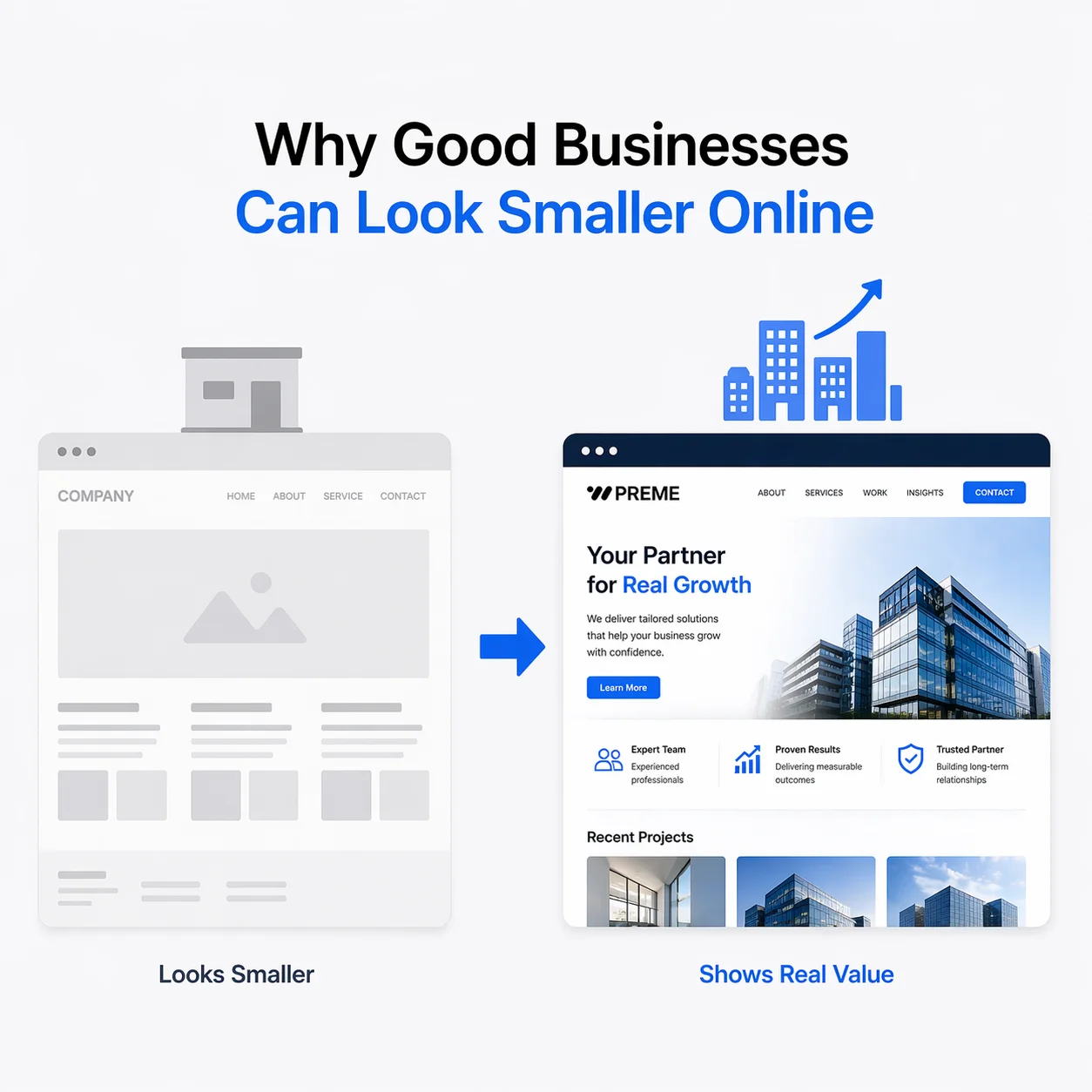
Why Good Businesses Can Look Smaller Online
Growth often happens faster than website updates.
A business may add new services, hire more staff, move into a larger facility, improve systems, complete better projects, or expand into new markets. Yet the website still shows the same homepage, the same limited information, and the same design from years ago.
This creates a clear gap between reality and presentation.
Common examples include:
Outdated branding or visuals Only one or two service pages despite broader capabilities No recent projects or case studies Generic wording with no clear strengths Old staff information or no team page Poor mobile usability Slow loading pages Confusing menus Hard-to-find contact options
None of these issues mean the business lacks quality. But visitors can only judge what they can see.
If the visible version of the company feels small, unclear, or neglected, many users assume the business itself may be the same.
That is how strong businesses quietly lose trust online.
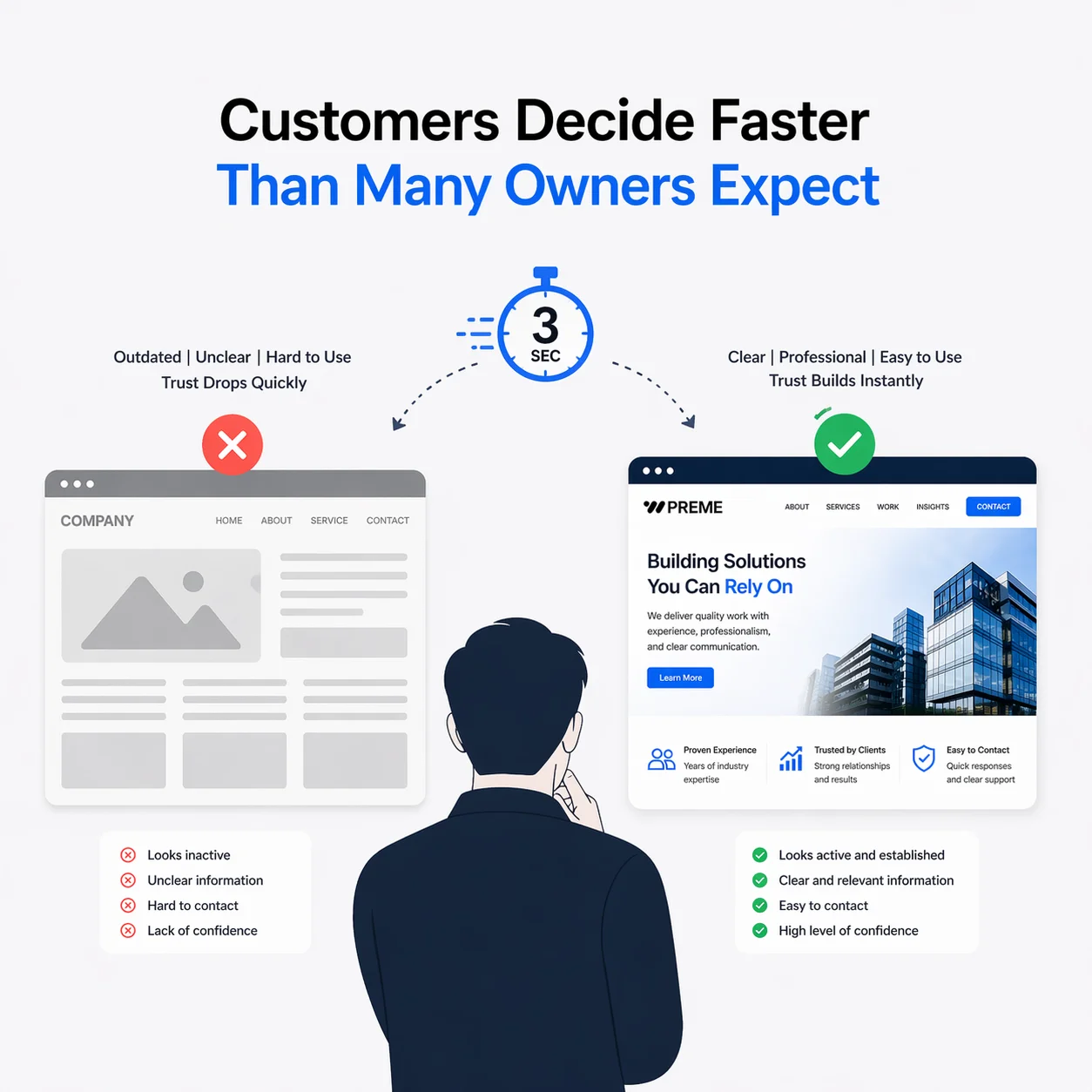
Customers Decide Faster Than Many Owners Expect
Offline, trust can be built through conversation, referrals, and personal interaction. Customers can ask questions, meet the team, and sense professionalism directly.
Online, they rely on signals.
Within the first few seconds of visiting a website, many people are already making judgments such as:
Does this business look active? Is it established? Can it handle a serious project? Does it feel trustworthy? Is the information clear? Is it easy to contact someone?
If the website feels outdated, cluttered, or difficult to use, confidence drops quickly.
This is especially important in industries where customers compare multiple providers side by side, such as construction, trades, consulting, healthcare, legal services, manufacturing, and B2B services.
Even if your company has better experience than competitors, the website may fail to communicate that advantage.
That means the decision can be influenced by presentation rather than capability.
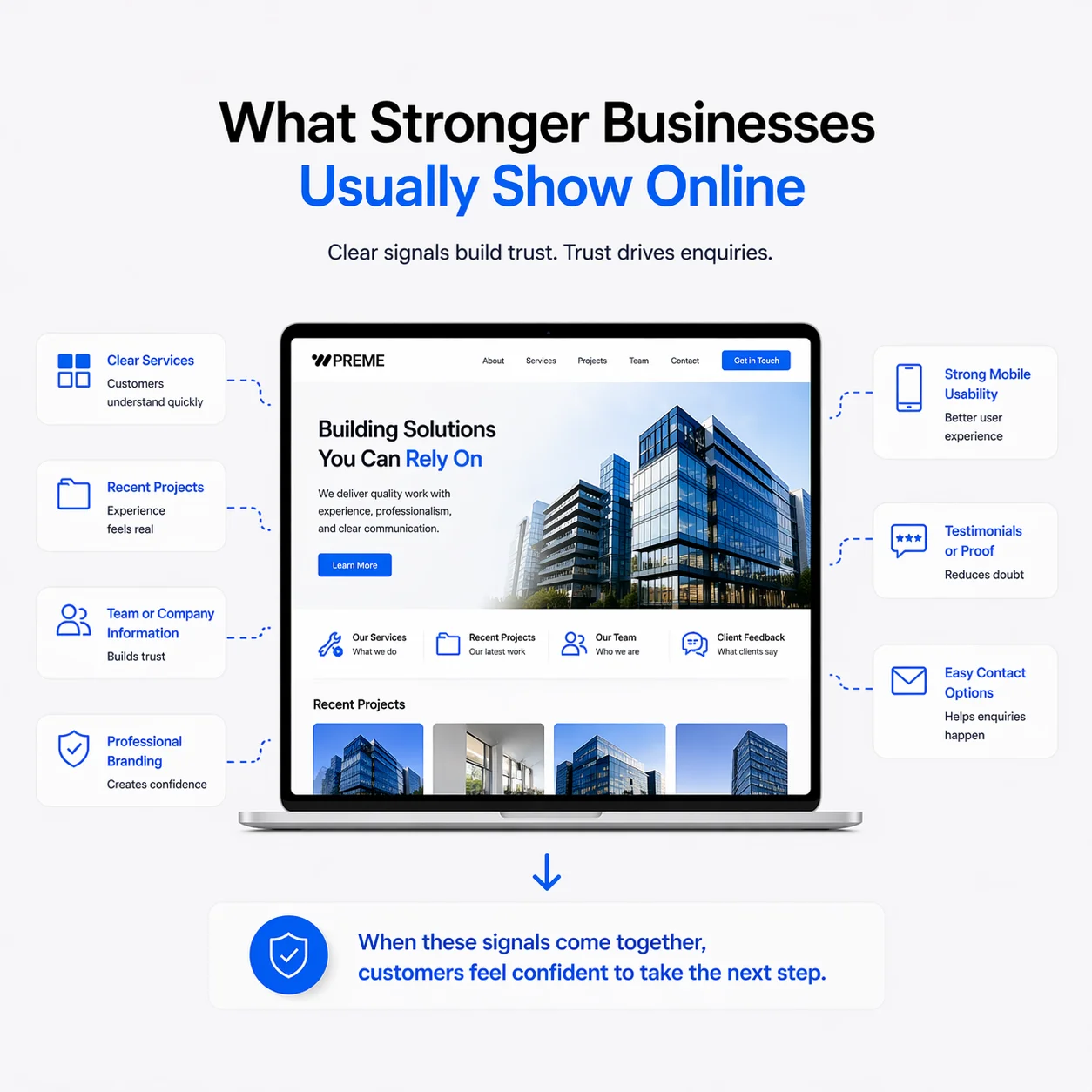
What Stronger Businesses Usually Show Online
Businesses that appear more credible online usually send the right signals clearly and consistently.
They often show:
What They Show Why It Matters Clear services Customers understand quickly Recent projects Experience feels real Team or company information Builds trust Professional branding Creates confidence Strong mobile usability Better user experience Testimonials or proof Reduces doubt Easy contact options Helps enquiries happen
Customers do not need to read every page in detail. Most simply want enough evidence to feel safe taking the next step.
That evidence can be created through clarity, relevance, and trust signals.
A modern website should answer practical questions quickly while also reinforcing that the business is established and capable.
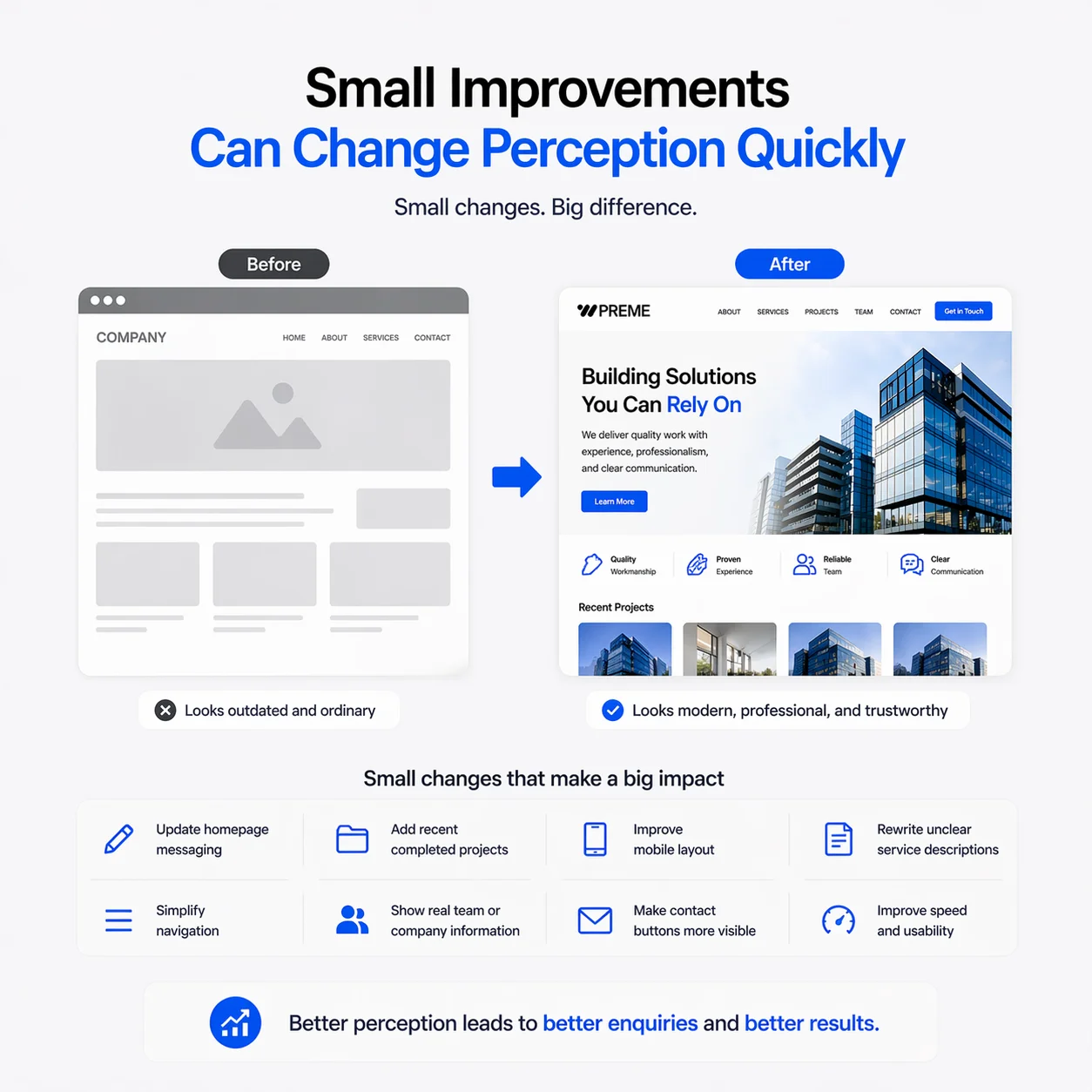
Small Improvements Can Change Perception Quickly
Many owners assume solving this problem requires a full redesign. Sometimes it does, but often the biggest gains come from smaller improvements.
Examples include:
Updating homepage messaging Adding recent completed projects Improving mobile layout Rewriting unclear service descriptions Simplifying navigation Showing real team or company information Making contact buttons more visible Improving speed and usability
These changes may seem simple, but they can significantly change how visitors perceive the business.
A company that looked small or outdated can suddenly feel current, professional, and trustworthy.
That shift can improve enquiry quality as much as enquiry volume.
Final Thoughts
A strong business can still look small online when the website no longer reflects reality.
That matters because modern customers often judge online first and contact later. If the website creates doubt, confusion, or hesitation, opportunities may be lost before your team ever gets the chance to speak with them.
If your business has grown, improved, or expanded in recent years, your website should show it.
Your digital presence should match the real value of the company.
At WebPreme, we help businesses build websites that communicate trust, reflect real capability, and create stronger first impressions in markets like New Zealand and Australia.