Choosing Between a Template Website and Custom Development
2026.07.13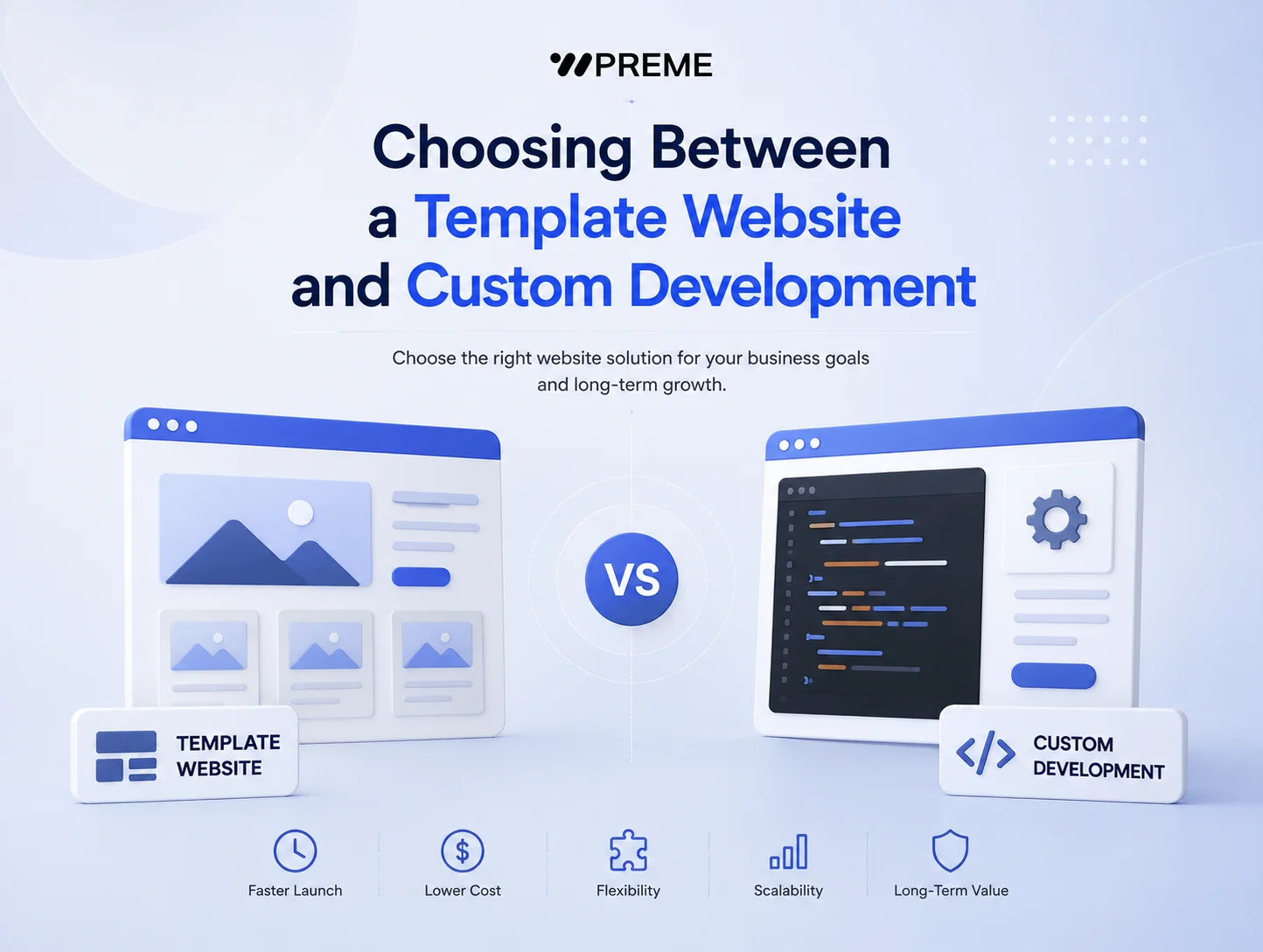
Choosing Between a Template Website and Custom Development
When planning a new business website, one of the first decisions you'll face is how the website should be built. Many companies begin by comparing cost, design, or development time, but those factors alone rarely determine long-term success.
The right approach depends on your business goals. A template-based website may be the perfect solution for one company, while another may require a fully custom-built platform from the very beginning. Understanding the strengths and limitations of each option can help you make a more informed investment.
Template Websites: Fast, Practical, and Cost-Effective
Template websites are built using pre-designed layouts that can be customized with your company's branding, content, and images. They are commonly used for corporate websites, portfolios, and small business websites because they significantly reduce both development time and initial costs.
For businesses that primarily need an online presence, contact information, service descriptions, and basic marketing content, a template can be an efficient solution. Companies that want to launch quickly while keeping development costs under control often choose this approach.
Some of the biggest advantages include:
- Faster project delivery
- Lower initial development costs
- Professional-looking layouts
- Easier content management
- Suitable for standard corporate websites
However, template websites also have limitations. As your business grows, you may discover that adding custom workflows, advanced user management, or complex integrations becomes increasingly difficult. Since the overall structure is already predefined, flexibility is naturally more limited than a custom-built solution.
Custom Development: Built Around Your Business
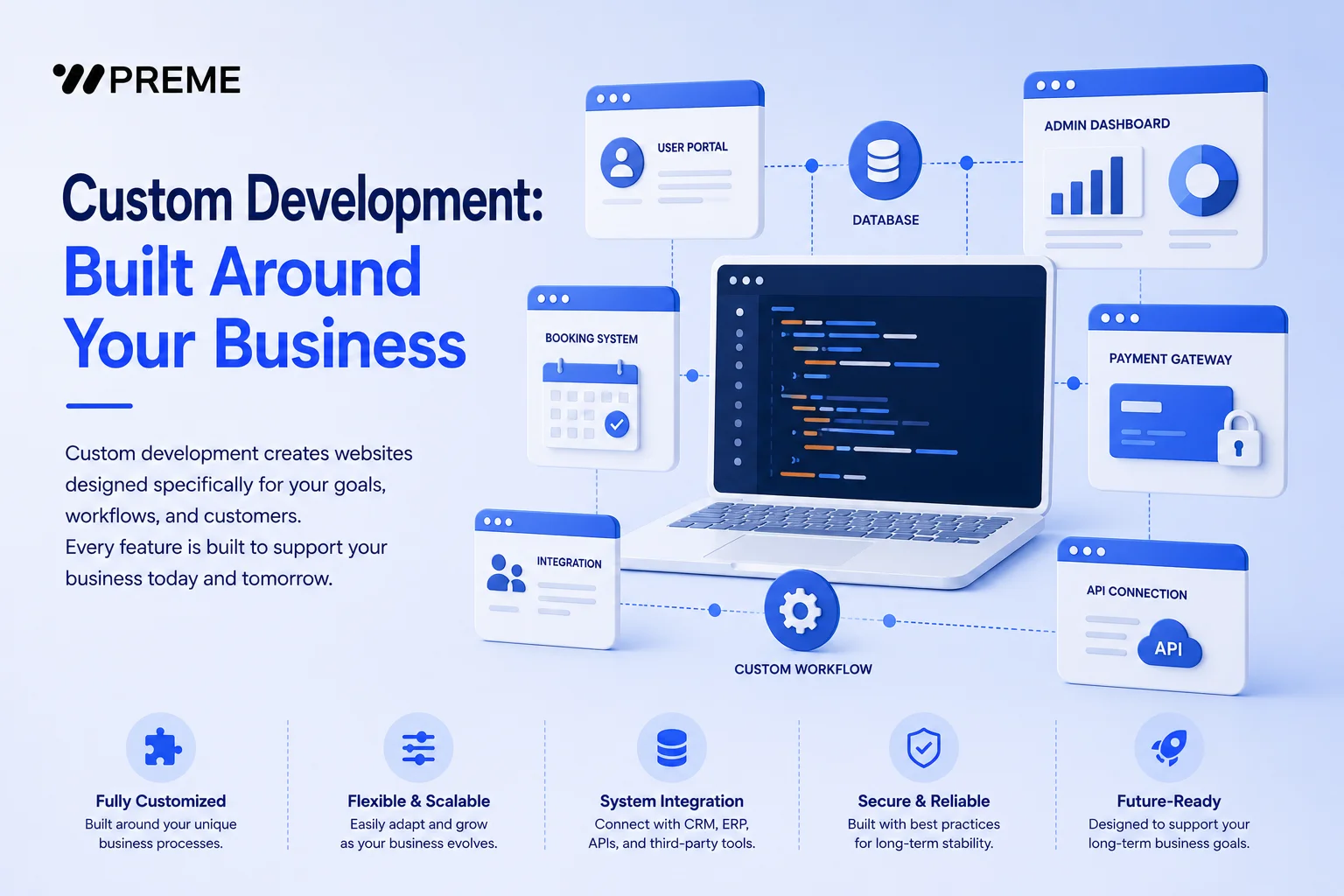
Custom development starts with your business rather than a predefined template.
Instead of adapting your workflow to fit an existing design, developers create a website based entirely on your company's requirements, operational processes, and long-term goals. Every page, function, and administrative feature is designed specifically for your organization.
Custom development becomes especially valuable when your website requires:
- Customer portals
- Membership systems
- Booking or reservation functions
- Payment gateways
- CRM or ERP integration
- API connectivity
- Multi-role administration
- Business-specific workflows
Rather than simply creating a website, custom development builds a digital platform that can continue supporting your business as it grows.
Think Beyond Today's Requirements
Many businesses make the mistake of choosing a website based only on their current needs. In reality, a website should support your company's future growth as well.
Before deciding between a template website and custom development, consider the following questions.
Will your business expand?
If you plan to launch new products or services, your website should be flexible enough to grow without requiring a complete rebuild.
Will customers need user accounts?
Membership systems, customer dashboards, and personalized services require a website architecture that supports future scalability.
Will your website connect with other business systems?
Companies planning to integrate CRM, ERP, accounting software, payment gateways, or third-party APIs should think about these requirements from the beginning.
Will multiple employees manage the website?
As organizations grow, different departments often need separate access levels. A structured administration system becomes increasingly important.
Are you planning to enter international markets?
Multi-language support, localization, and scalable architecture are much easier to implement when they are considered during the initial planning stage rather than added later.
Cost Is Only One Part of the Decision
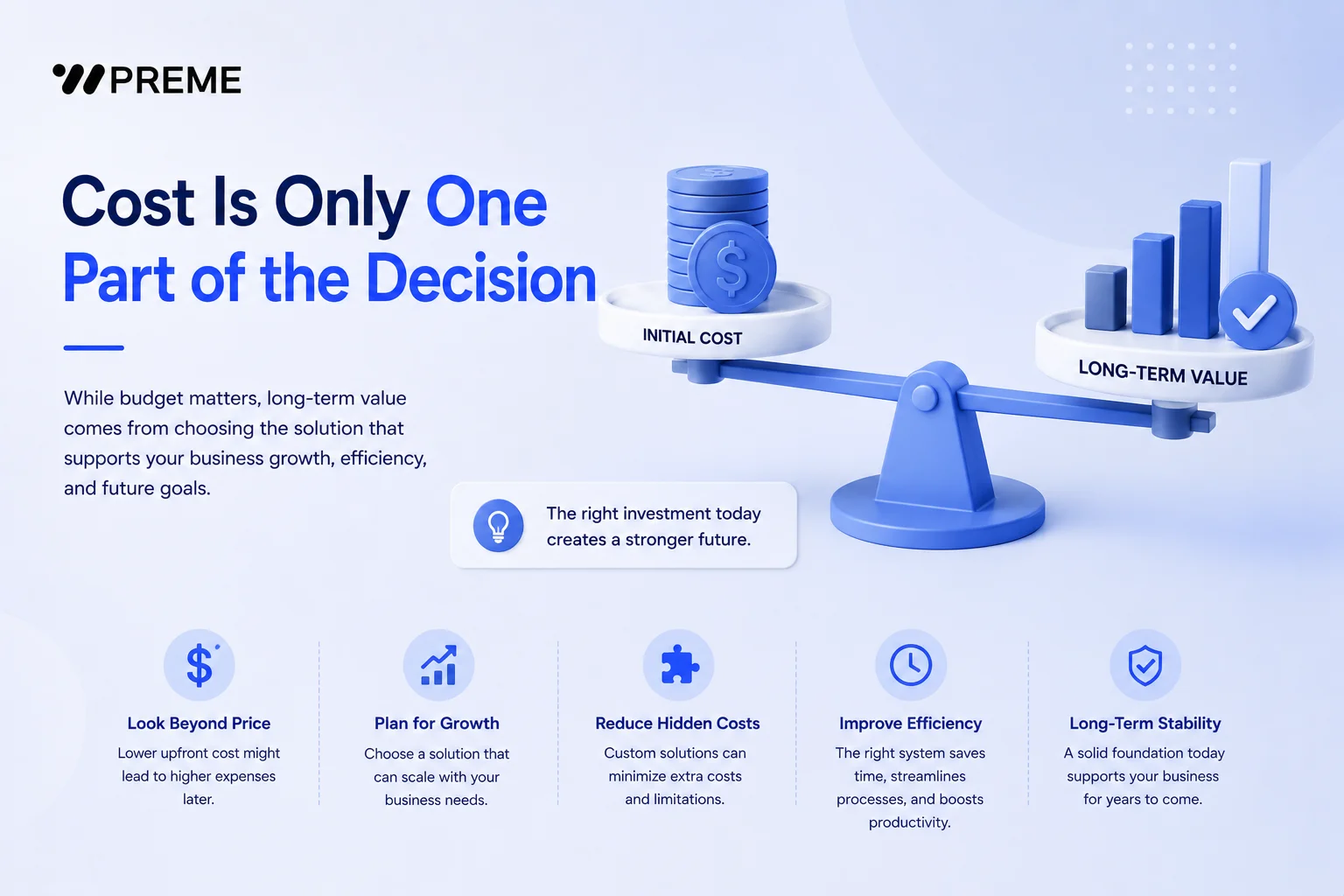
Many companies focus primarily on the initial development cost. While budget is certainly important, it should not be the only deciding factor.
A template website generally requires a lower upfront investment and can be launched much faster. However, businesses with growing operational requirements often face additional development costs later when new functionality becomes necessary.
Custom development usually involves a larger initial investment, but it provides greater flexibility, scalability, and long-term value. Instead of rebuilding the website as your business evolves, you can continue expanding the existing system.
Instead of asking,
> "Which option is cheaper?"
consider asking,
> "Which solution will continue supporting our business three or five years from now?"
This perspective often leads to a much smarter investment.
Choosing the Right Solution for Your Business
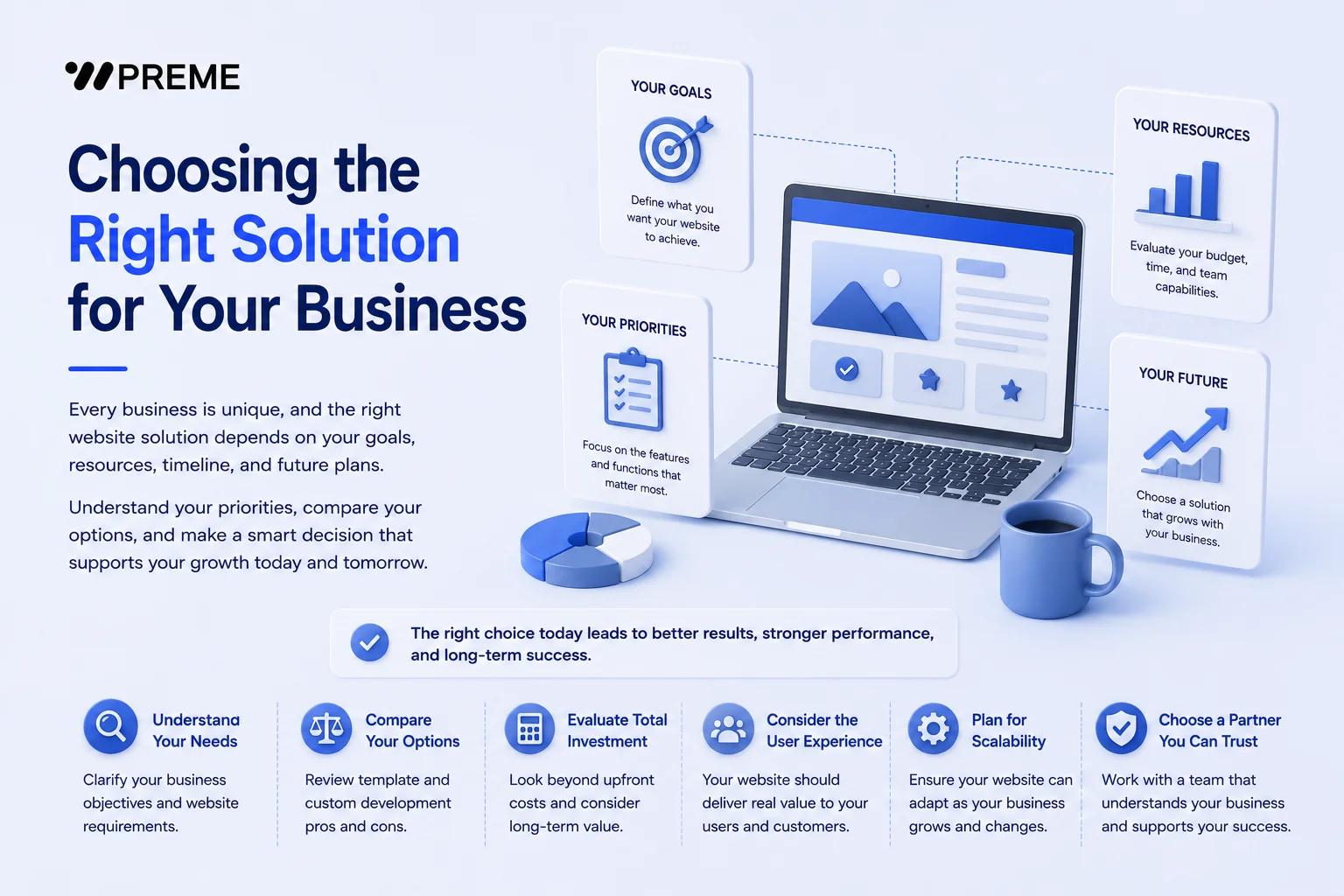
There is no universal answer to the template-versus-custom question. The right choice depends on your company's objectives, operational complexity, growth strategy, and long-term vision.
A template website can be an excellent solution for businesses that need a professional online presence with standard functionality. On the other hand, companies planning continuous growth, custom workflows, advanced integrations, or business-specific systems will often benefit from investing in custom development from the very beginning.
A successful website is not simply attractive—it should also grow alongside your business. Choosing the right development approach today helps ensure that your website remains a valuable business asset for years to come.
Every business has different priorities. Some companies focus on launching quickly, while others need advanced functionality that supports internal operations and future expansion. Taking time to evaluate both your current requirements and long-term business strategy will help you choose a website solution that continues delivering value as your organization grows.