Why Global Websites Often Fail Before Users Even Read
2026.05.22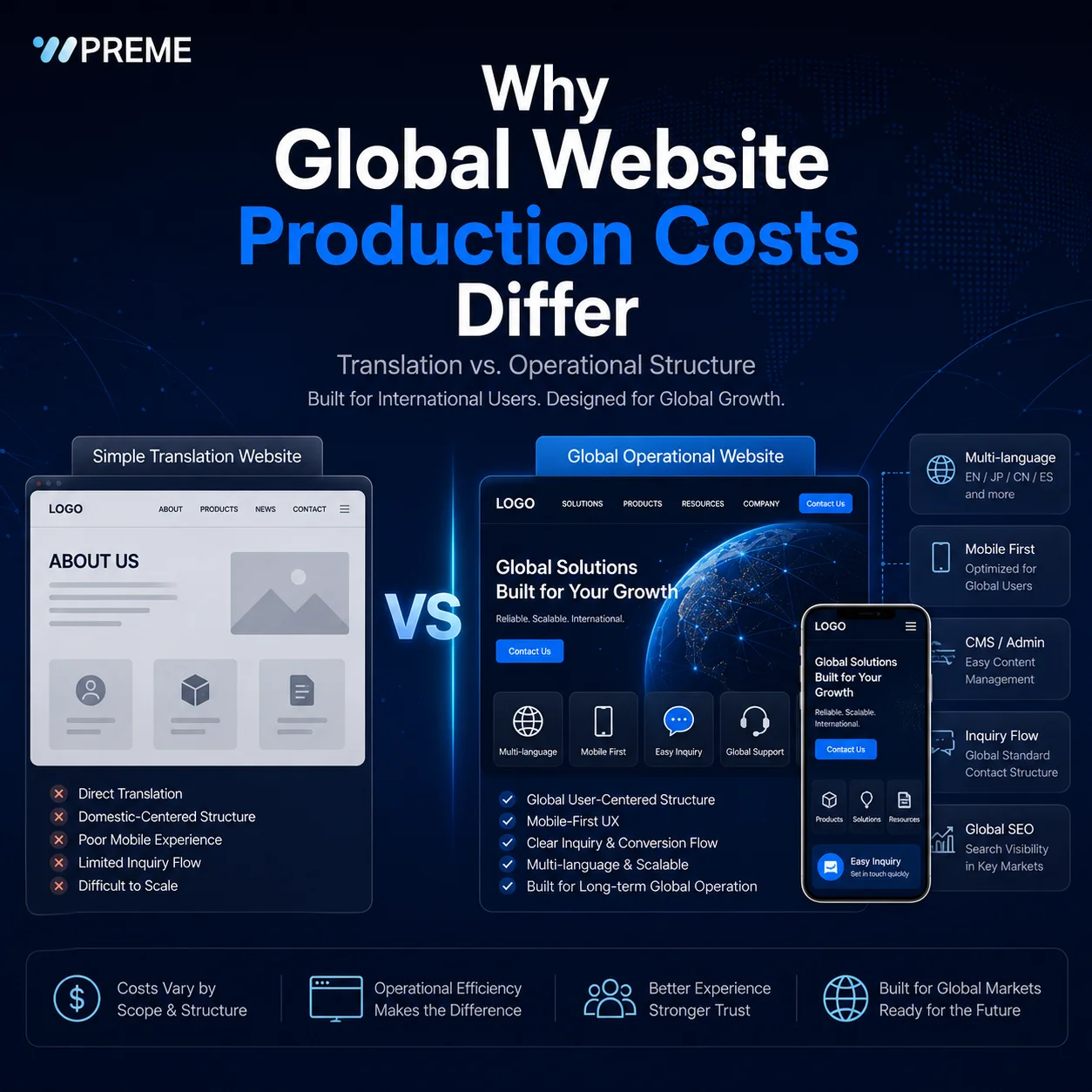
Many overseas users decide faster than businesses expect
International users often behave very differently from domestic users.
In many overseas markets, users compare multiple companies very quickly before making contact. They open several tabs at once, scan information rapidly, and leave if the structure feels difficult to understand.
Because of this, global websites are no longer judged only by visual design.
They are increasingly judged by how quickly users can understand the business itself.
For example, many overseas visitors immediately try to identify:
- What the company actually does
- Whether the business looks operationally stable
- Whether communication feels clear
- Whether the company seems trustworthy
- How quickly they can access key information
If these answers are not immediately visible, users often leave before reading further.
This is one reason why many companies underestimate the difficulty of global website production.
A website may look visually modern while still creating confusion for international users.
Especially in mobile environments, users rarely read carefully from top to bottom. Most visitors scan quickly while making rapid trust decisions.
Today, many international users experience the company for the first time entirely through mobile.
That means the first few seconds often decide whether users continue exploring the website or leave immediately.
Because of this, information clarity is becoming more important than many businesses initially expect.
Global websites usually require different information priorities
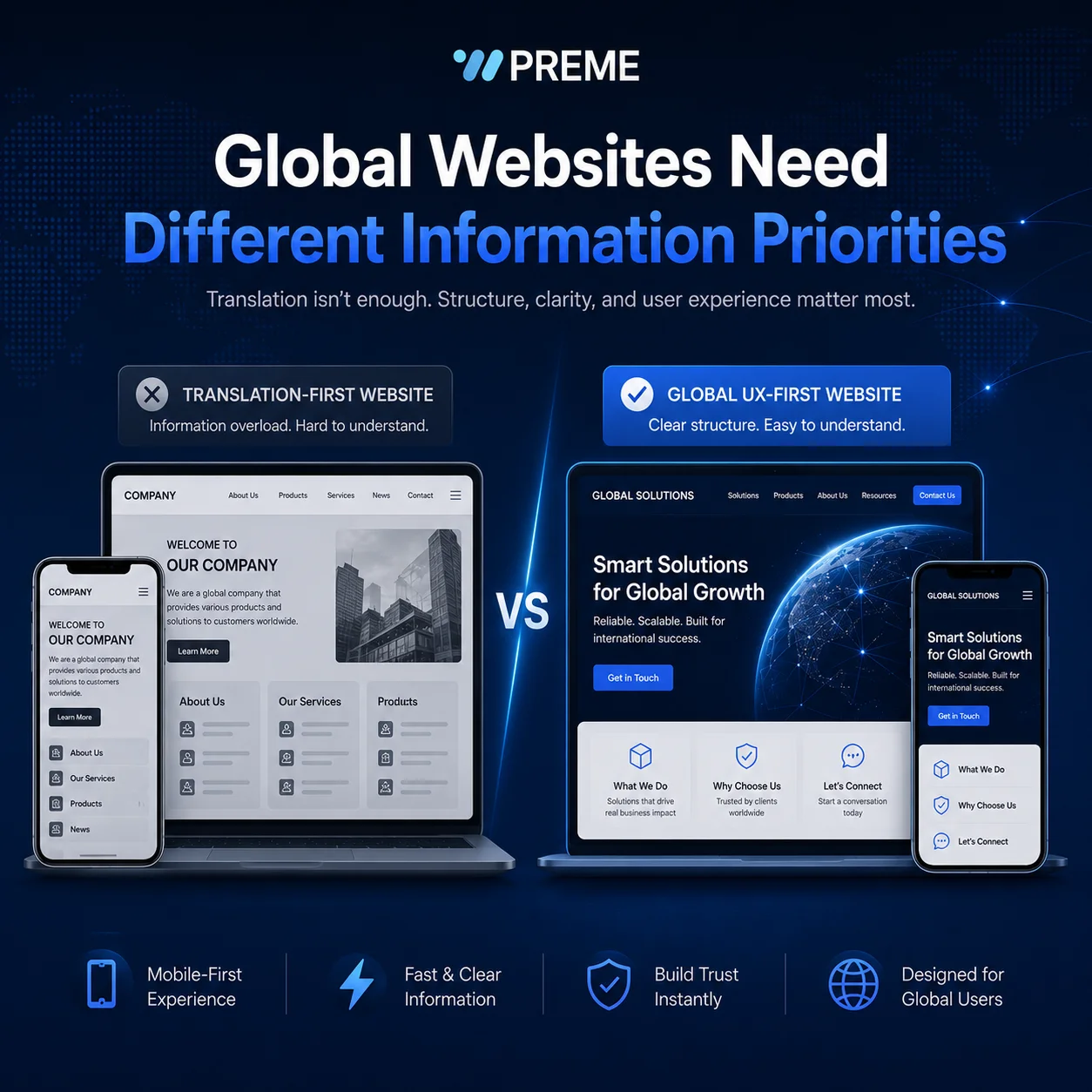
One of the biggest mistakes businesses make is assuming that translation alone is enough.
In reality, overseas users often expect completely different information structures.
For example, domestic users may already understand the company category, service process, or industry terminology. International users usually do not.
That changes how content should be organised.
In many overseas websites, users expect to understand the business within only a few seconds.
Because of this, global website projects often require:
| Global Website Factor | Why It Matters | | Mobile-first structure | Overseas traffic is heavily mobile-based | | Faster information hierarchy | Users scan quickly | | Simplified navigation | Reduces friction | | Clear inquiry flow | Improves trust and conversion | | International UX structure | Helps unfamiliar users understand faster |
This is also why many global websites today look structurally simpler than older corporate websites.
Cleaner layouts often perform better internationally because they reduce confusion.
Too much text, layered navigation, excessive animation, or complicated structures can quickly create fatigue for overseas users.
Especially in B2B industries, manufacturing, SaaS, logistics, consulting, and export businesses, clarity often matters more than visual complexity.
Interestingly, many businesses initially focus heavily on visual design during global website projects.
However, actual international user behaviour often depends more on usability than decoration.
A visually impressive website can still perform poorly if users cannot quickly understand the business.
Many companies continuously add more services, more menus, more pages, and more animations over time without reorganising the overall structure.
As a result, users often struggle to identify the most important information quickly.
On desktop these issues may feel manageable.
On mobile they often become overwhelming very quickly.
Mobile experience now influences trust more directly
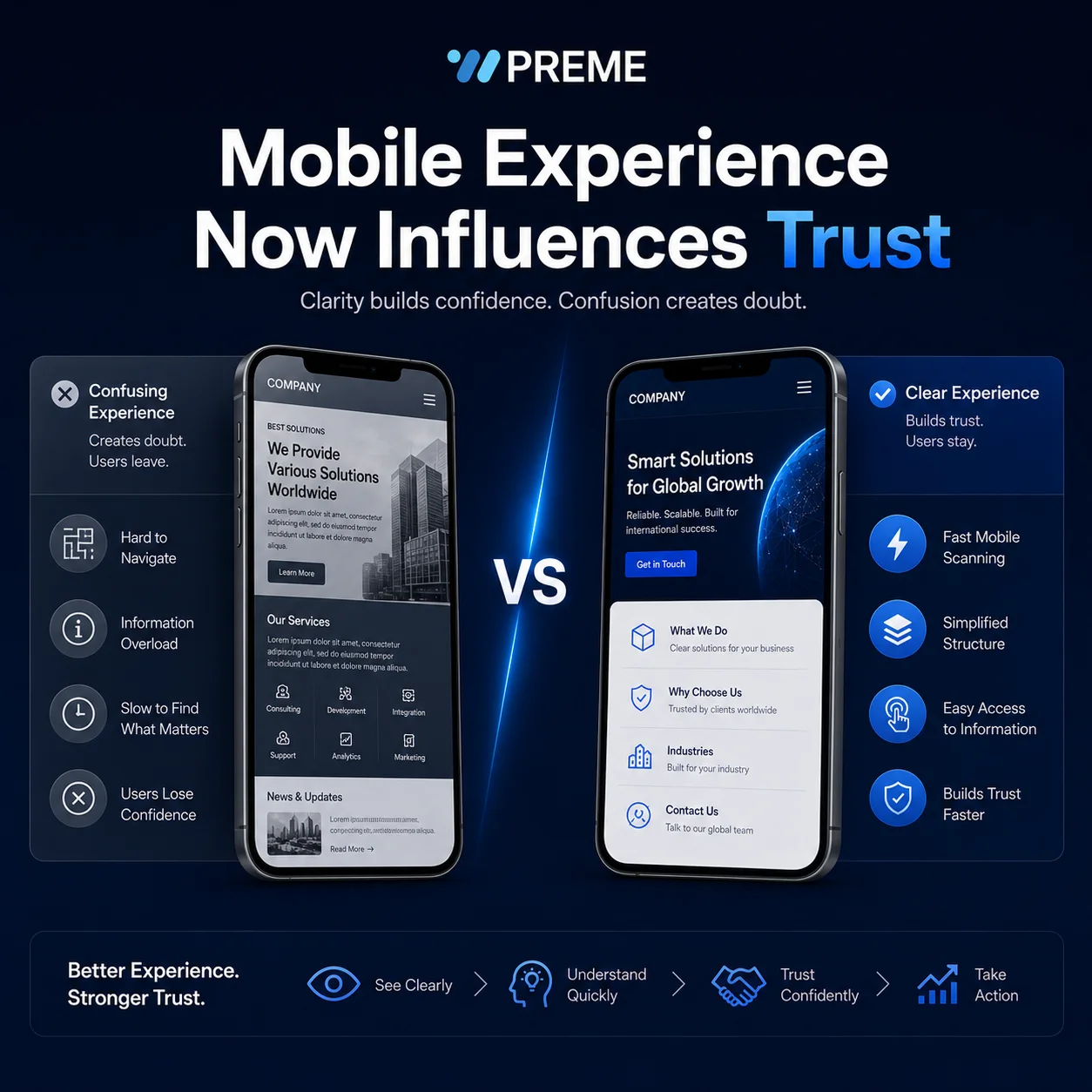
International users often associate website usability with business reliability.
That psychological connection is becoming much stronger in global markets.
For example, if navigation feels confusing or important information takes too long to locate, users often assume the business itself may also feel difficult to work with.
On the other hand, when the website feels organised, stable, and easy to navigate, users often assume the company is more experienced and operationally reliable.
This is why many international website projects now focus heavily on:
- Fast mobile scanning
- Simplified content structure
- Reduced navigation friction
- Faster inquiry access
- Cleaner operational UX
The goal is no longer only visual attractiveness.
The goal is reducing hesitation.
Especially for overseas users unfamiliar with the business, clarity often creates trust faster than decoration.
This is also why many modern global websites are moving toward cleaner structures rather than visually overloaded interfaces.
Simple layouts often perform better internationally because users can understand the business more quickly.
That does not mean websites should feel empty or generic.
It means every section should help users move toward understanding faster.
This difference becomes extremely important in international markets where users compare multiple businesses very rapidly.
Global website production is becoming closer to operational design
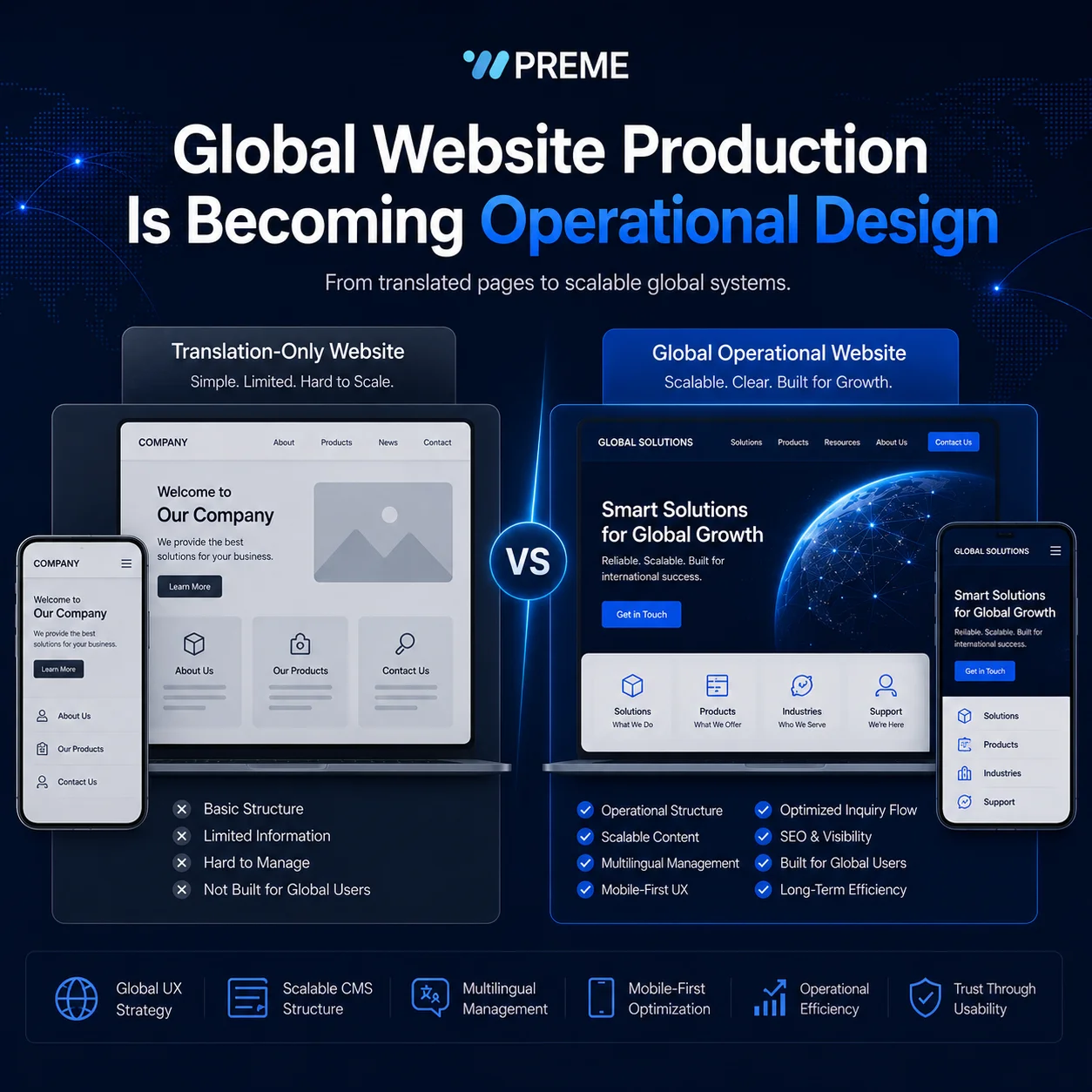
Modern global websites are no longer simple marketing pages.
They increasingly function as operational systems connected with multilingual communication, inquiry management, mobile-first UX, product organisation, regional customer expectations, and ongoing SEO visibility.
Because of this, website production costs often vary significantly depending on how deeply the operational structure is considered.
Some projects only require a translated presentation website.
Others require scalable international structures capable of long-term global operation.
That difference heavily affects:
- UX planning
- CMS structure
- multilingual management
- content scalability
- mobile optimisation
- inquiry flow
- operational efficiency
This is also why businesses increasingly look beyond visual design when choosing a web agency for international projects.
They want websites that remain manageable as the business grows.
Especially for export companies, manufacturers, SaaS businesses, consulting firms, and international service providers, websites often become part of daily operations rather than simple promotional tools.
As AI-driven search behaviour and mobile-first browsing continue evolving globally, businesses are beginning to realise that structure and usability now influence trust much more directly than before.
Ultimately, successful global websites are not simply “English websites.”
They are websites designed around how international users actually search, compare, understand, and trust businesses online.