Websites Designed for Local Users Often Fail Internationally
2026.05.13
Many businesses decide to create an English website only after overseas inquiries begin increasing. At first, the process often feels simple. Translate the existing website, change the language menu, and launch an international version. The problem is that international visitors often use websites very differently from local users. What works well for domestic visitors does not always work well for overseas buyers, distributors, or business partners. This becomes even more noticeable in B2B industries where websites are often treated as part of the company’s business credibility. In many cases, overseas visitors are not trying to fully “explore” the website. They are trying to quickly determine whether the company looks reliable enough to contact. That difference changes how international websites should be structured.
International visitors usually scan faster than local users
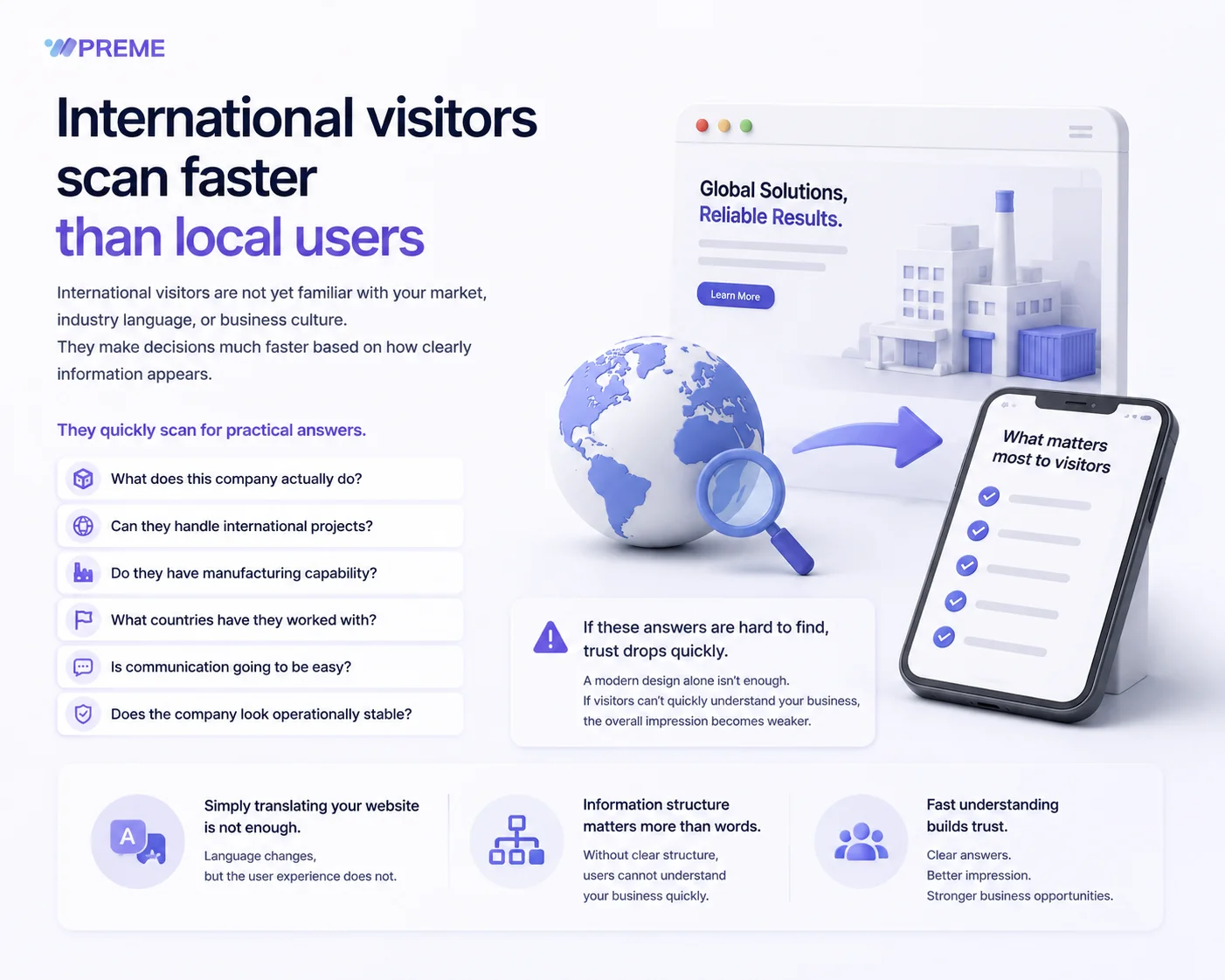
Local users are often already familiar with the market, industry language, or business culture. International visitors are not. This means they usually make decisions much faster based on how clearly information appears. Many overseas visitors do not read websites carefully from top to bottom. Instead, they quickly scan for answers to practical business questions. For example:
What does this company actually do?
Can they handle international projects?
Do they have manufacturing capability?
What countries have they worked with?
Is communication going to be easy?
Does the company look operationally stable?
If those answers are difficult to find, trust usually drops very quickly. This is why many international websites fail even when the design itself looks modern. A website may visually look professional, but if visitors cannot immediately understand the business, the overall impression still becomes weaker. This is especially common when companies directly translate domestic websites without reorganizing the information structure. The language changes, but the user experience does not.
Local website structures often delay important information
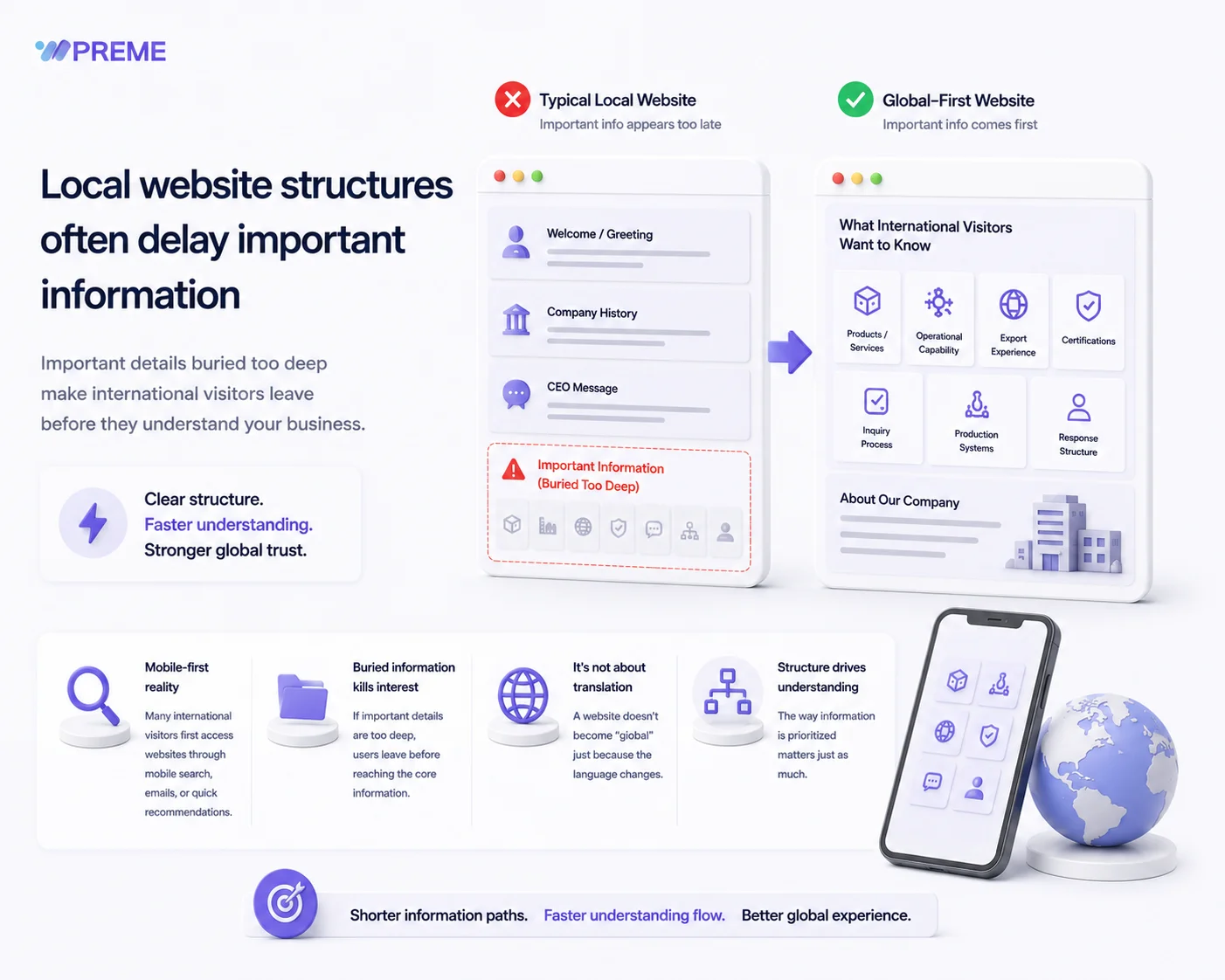
One of the most common problems is information order. Many local business websites place long introductions, greetings, or company history near the top of the page. While this may feel natural domestically, international users often expect something different. They usually want to understand the business first. That includes:
Products or services
Operational capability
Export experience
Certifications
Inquiry process
Production systems
Response structure
When these details appear too late, overseas visitors may leave before fully understanding the company. In many cases, businesses assume translation is the issue when the real problem is actually structure and clarity. A website does not become “global” simply because the language changes. The way information is prioritized matters just as much. This becomes more important on mobile devices. Many international users first visit business websites through mobile search, email links, or quick recommendations. If the important information is buried too deeply, users often leave before reaching the core details. This is why international websites usually need shorter information paths and faster understanding flow.
International websites often require different operational thinking
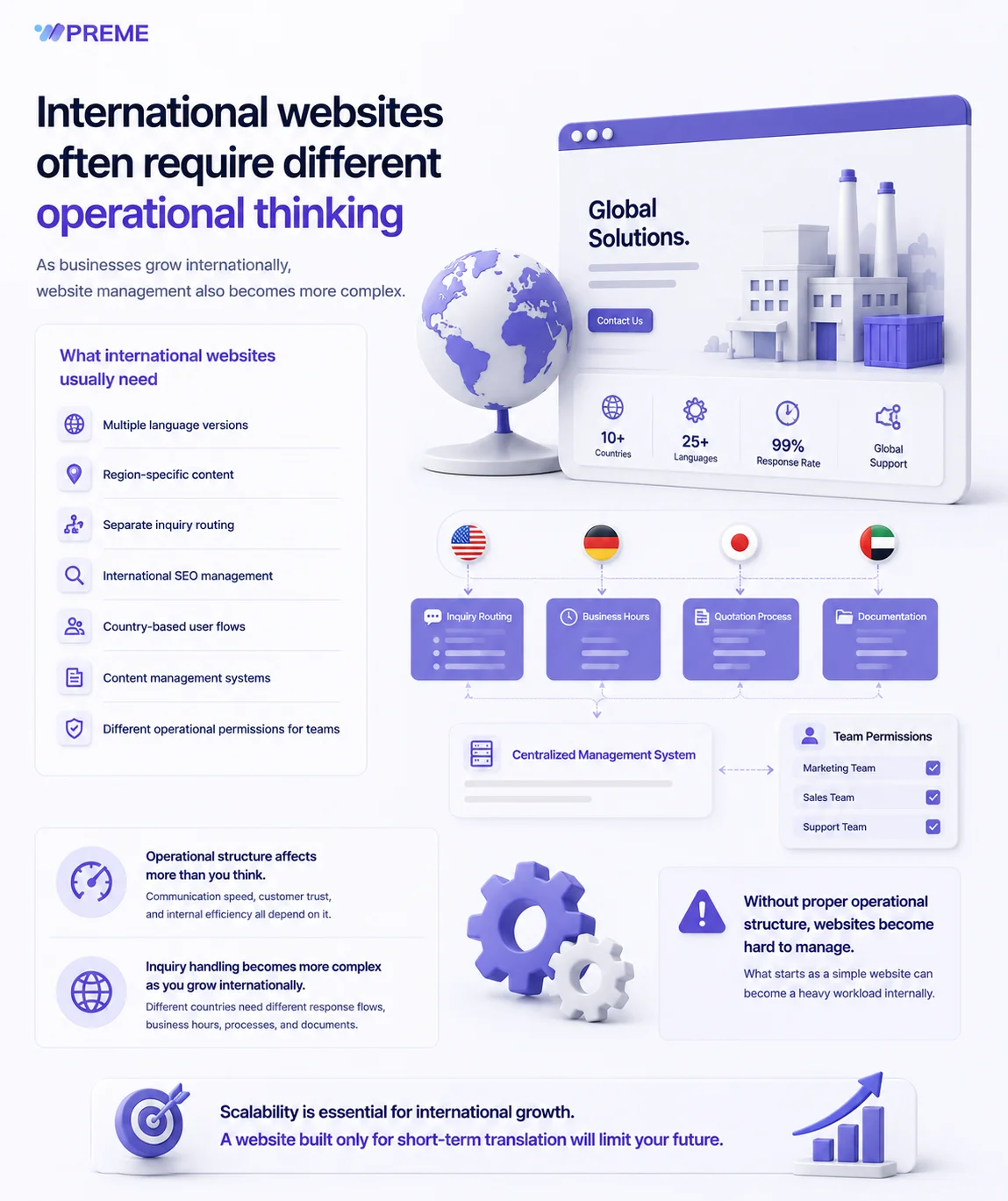
As businesses grow internationally, website management also becomes more complex. At first, a company may only need a simple English landing page. Later, they may need:
Multiple language versions
Region-specific content
Separate inquiry routing
International SEO management
Country-based user flows
Content management systems
Different operational permissions for teams
This is where many businesses begin realizing that multilingual websites are not just translation projects. They become operational systems. The structure behind the website starts affecting communication speed, customer trust, and even internal workflow efficiency. For example, inquiry handling alone can become significantly more complicated as international traffic increases. Different countries may require different response flows, business hours, quotation processes, or documentation structures. Without proper operational structure, websites eventually become difficult to manage internally as well. This is why scalability becomes increasingly important for international websites. A website built only for short-term translation often becomes restrictive later as the business expands.
Global users respond strongly to clarity
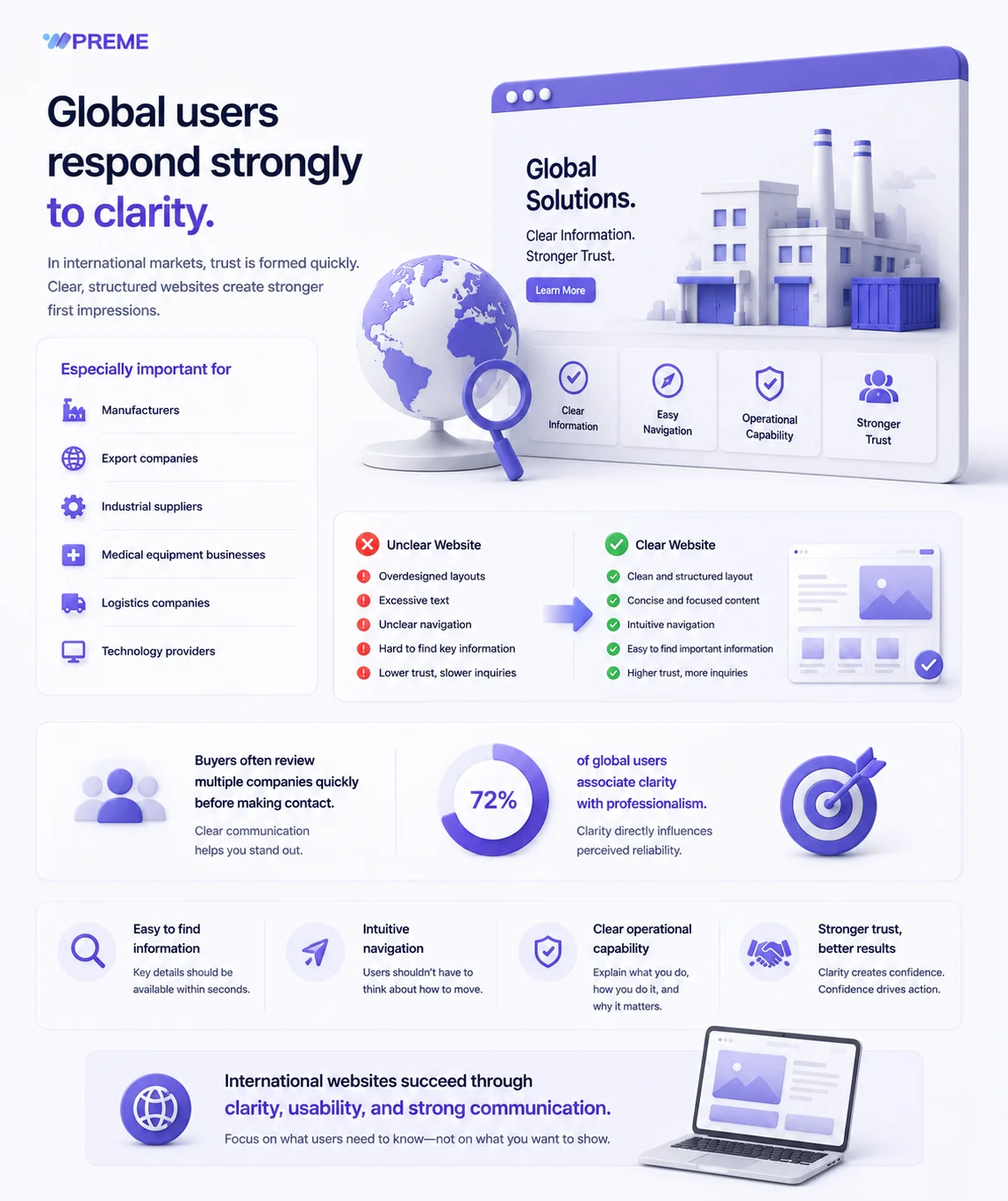
One important difference in international website design is how quickly trust is formed. In many overseas markets, users expect websites to feel clear and structured almost immediately. Overdesigned layouts, excessive text, or unclear navigation can make businesses appear less reliable, even when the company itself is highly capable. This is especially important for:
Manufacturers
Export companies
Industrial suppliers
Medical equipment businesses
Logistics companies
Technology providers
In these industries, buyers often review multiple companies quickly before making contact. The businesses that communicate clear
ly usually create stronger first impressions. Interestingly, many global users associate clarity with professionalism. When information is easy to find, navigation feels intuitive, and operational capability is explained clearly, the business itself often feels more trustworthy. This is why international websites today are increasingly focused on usability and communication rather than visual complexity alone.
A multilingual website should support business operations
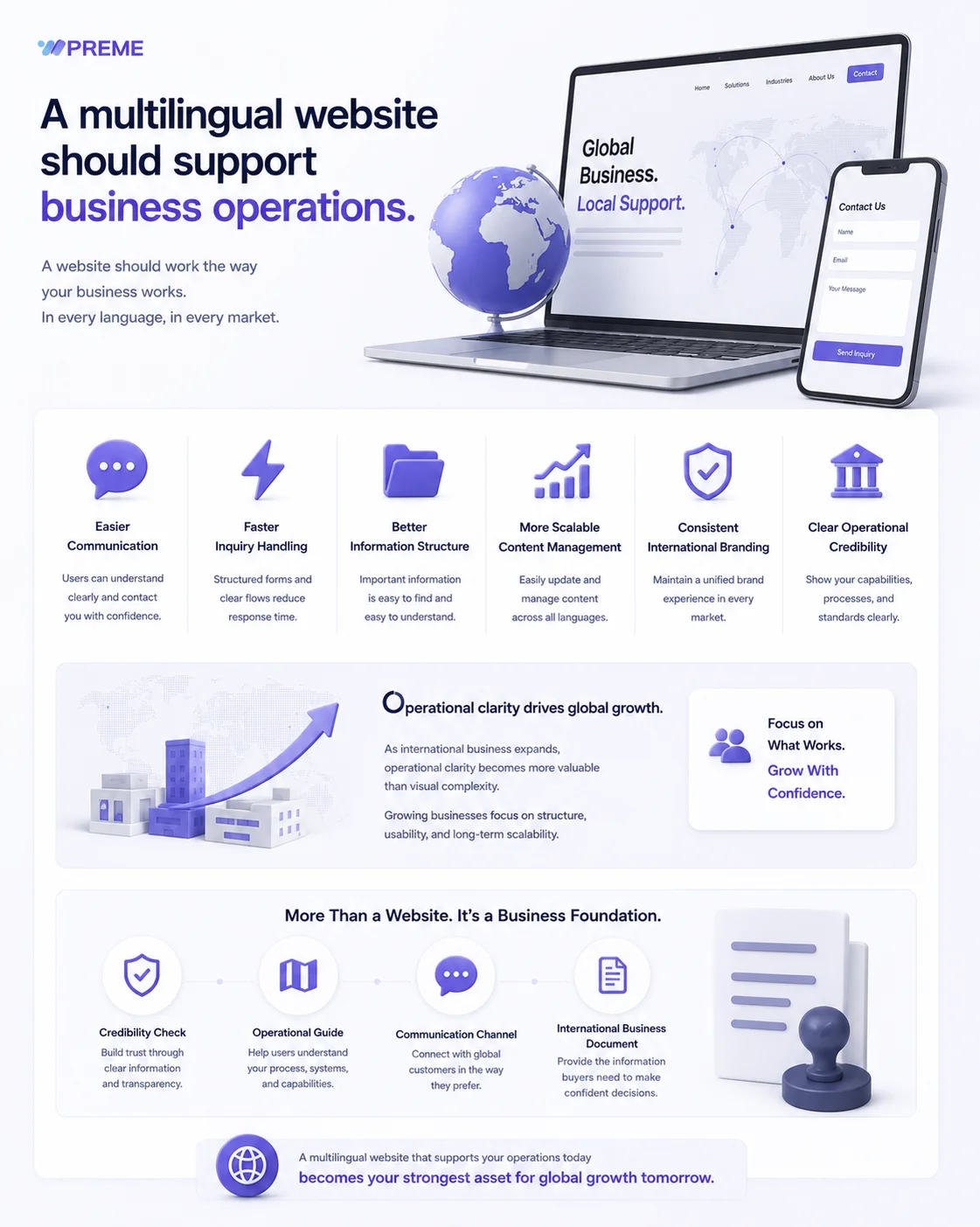
A multilingual website should not only “look international.” It should support how the business actually operates. That includes:
Easier communication
Faster inquiry handling
Better information structure
More scalable content management
Consistent international branding
Clear operational credibility
As international business expands, operational clarity becomes more valuable than visual complexity. This is why many growing businesses are moving beyond simple translated websites and focusing more on structure, usability, and long-term scalability. Today, international websites are becoming closely connected to overall business operations. The website is no longer just a marketing tool. For many businesses, it also functions as a credibility check, operational guide, communication channel, and international business document. At Webpreme, we focus on building websites that help international users understand businesses more clearly — not simply websites that look translated.