Business Website: Why Visitors Leave Without Contacting You
2026.04.27
Many businesses invest significant time and money into getting people to visit their website.
They run Google Ads campaigns, improve SEO rankings, post on social media, build brand awareness, and rely on referrals to send potential customers online. Traffic arrives. Visitors land on the homepage. Some click one or two pages.
Then they leave.
No enquiry. No phone call. No quote request. No booking.
This is one of the most common frustrations business owners face. In markets like New Zealand and Australia, where customers often compare several providers before making a decision, this issue becomes even more important.
The problem is not always traffic.
Very often, the problem is what happens after the visitor arrives.
A business website should do more than attract attention. It should help visitors feel confident enough to take the next step. If that confidence never forms, they leave quietly and continue searching elsewhere.
Why Visitors Leave Without Contacting You
Many business owners assume visitors leave because they were never serious buyers.
Sometimes that is true. But many qualified prospects also leave because the website creates hesitation, confusion, or doubt.
Common reasons include:
The homepage is unclear about what the business actually does Services are explained in vague or generic language There is little proof of results or credibility Contact details are difficult to find Mobile browsing feels awkward or slow Pages look outdated or neglected Too much information appears too early Visitors cannot quickly understand why this business is different Navigation feels confusing or inconsistent
Visitors usually do not analyse these issues consciously. They simply feel uncertain.
And when uncertainty rises, action drops.
Most people will not send feedback explaining why they left. They simply close the page and move to the next option.
That means businesses often lose leads without realising it.
Customers Decide Faster Than Most Owners Expect
Modern customers make rapid judgments online.
Within seconds of landing on a business website, many visitors are already asking themselves:
Does this company look trustworthy? Is it active and current? Can it solve my problem? Is it experienced enough for my project? Does it feel professional? Will contacting them be easy?
These questions are often answered emotionally before they are answered logically.
That is why a capable business can still lose opportunities if the website feels unclear, dated, or difficult to use.
This matters especially for service businesses, consultants, trades, healthcare providers, agencies, and B2B companies where trust strongly influences enquiries.
When several businesses offer similar services, customers often choose the option that feels easier and safer to contact.
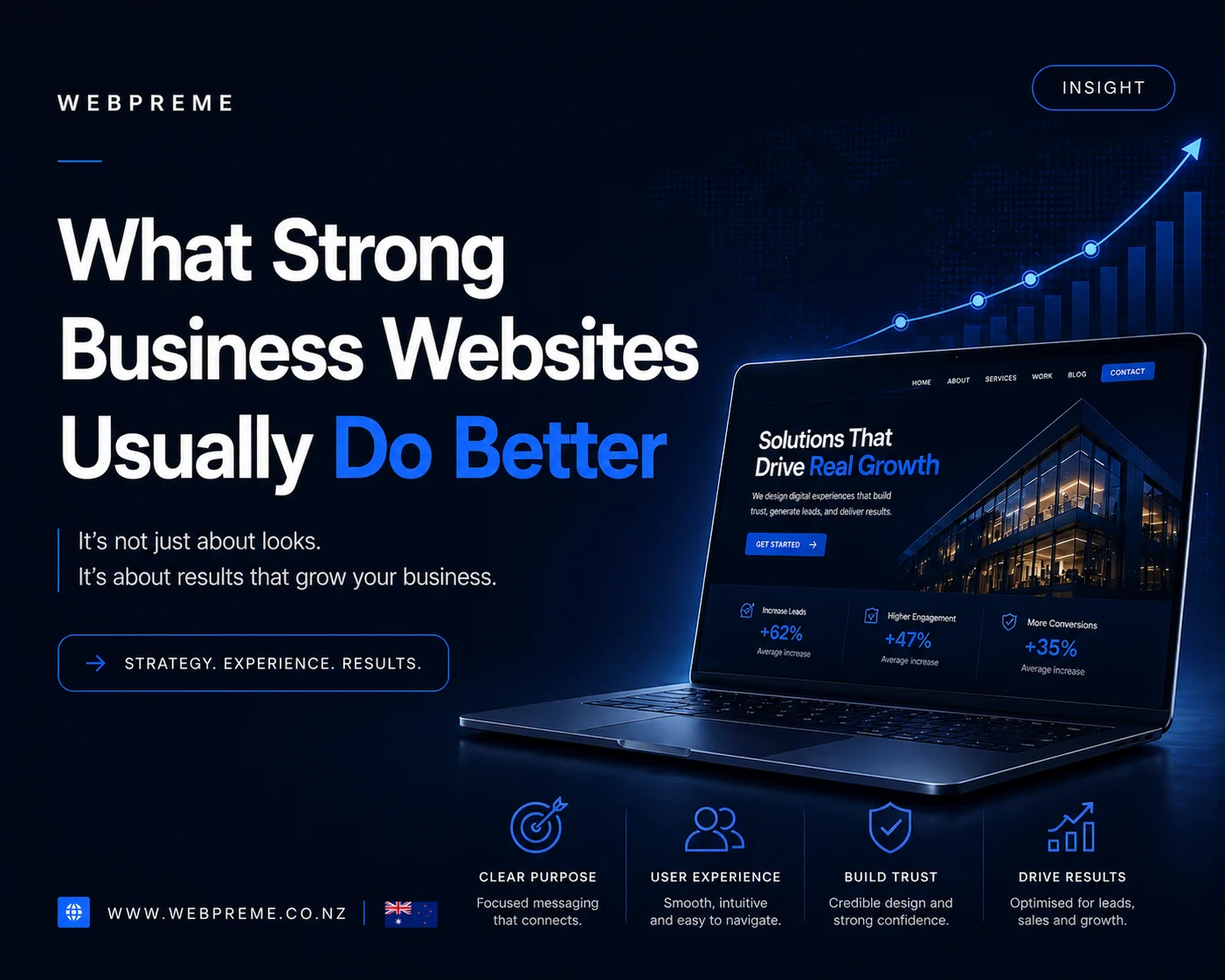
What Strong Business Websites Usually Do Better
A high-performing business website is rarely the most complex one.
It is usually the clearest one.
Strong websites often communicate the right signals quickly and consistently.
What Strong Websites Show Why It Matters Clear headline and offer Visitors understand quickly Specific services Reduces confusion Proof of results or experience Builds trust Modern design and usability Creates confidence Mobile-friendly pages Supports real browsing habits Easy contact buttons Removes friction Consistent messaging Makes decisions easier
Visitors do not need to read everything on a website.
They usually need enough confidence to continue.
That confidence may come from a clear message, a professional appearance, recent testimonials, visible case studies, or an easy contact option.
Simplicity often outperforms complexity because clarity reduces hesitation.
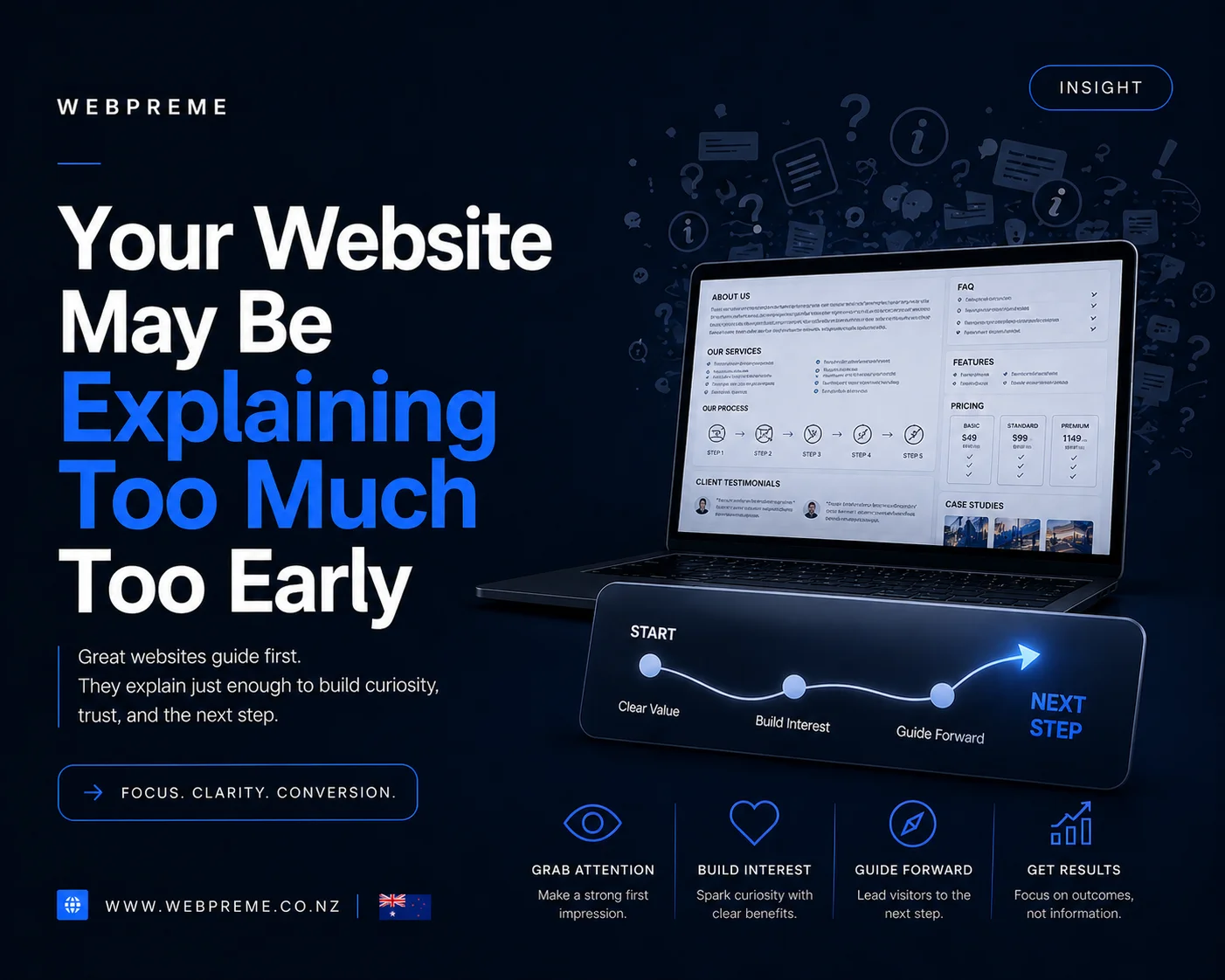
Your Website May Be Explaining Too Much Too Early
Many business websites try to say everything at once.
They include long introductions, too many services, internal company language, dense blocks of text, and multiple messages competing for attention near the top of the page.
Owners understand the content because they already know the business.
Visitors do not.
A better approach is to answer three questions first:
What do you do? Who do you help? Why should I trust you?
Once those answers are clear, visitors are far more willing to explore deeper pages, compare options, and make contact.
Clarity should come before detail.
Too much information too early often creates friction instead of confidence.
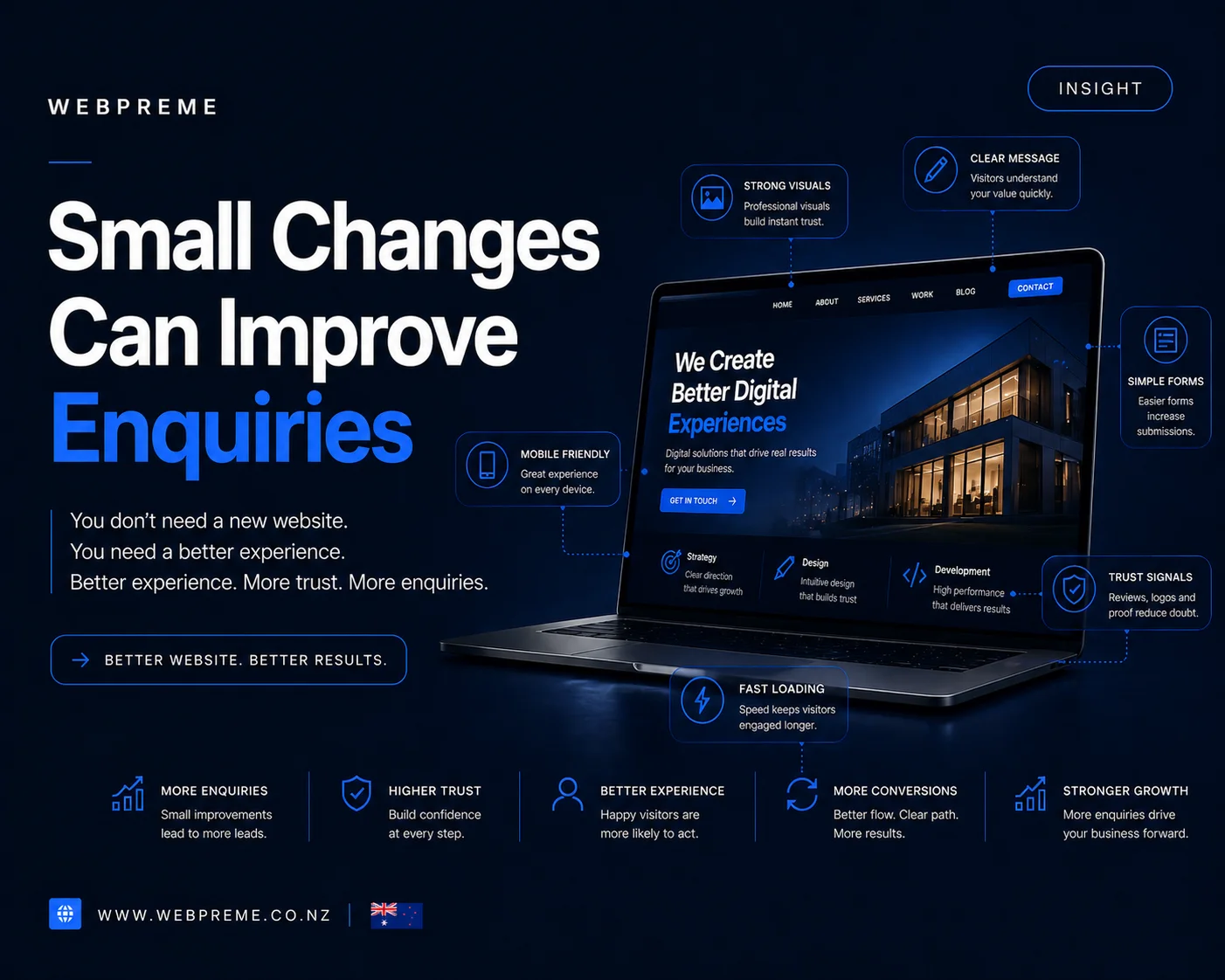
Small Changes Can Improve Enquiries
Improving website performance does not always require a full redesign.
Many businesses see meaningful gains from practical updates such as:
Rewriting the homepage headline Making contact buttons more visible Simplifying navigation menus Improving mobile spacing and speed Adding testimonials or recent projects Removing unnecessary text Clarifying service pages Updating imagery Using stronger calls to action
These changes may seem small, but they directly reduce hesitation.
When hesitation drops, enquiry rates often improve.
Sometimes the difference between a weak website and a strong one is not dramatic design. It is better communication.
Final Thoughts
If people are visiting your website but not contacting you, traffic may not be the real issue.
The real issue may be trust, clarity, or friction inside the website experience.
A business website should do more than exist online. It should help serious visitors feel ready to act.
That is especially true in markets like New Zealand and Australia, where customers compare businesses quickly and make decisions based on first impressions.
If your website creates doubt instead of confidence, leads can disappear quietly.
At WebPreme, we help businesses build websites that create stronger first impressions, reduce visitor hesitation, and turn more traffic into real enquiries.